
Lawn
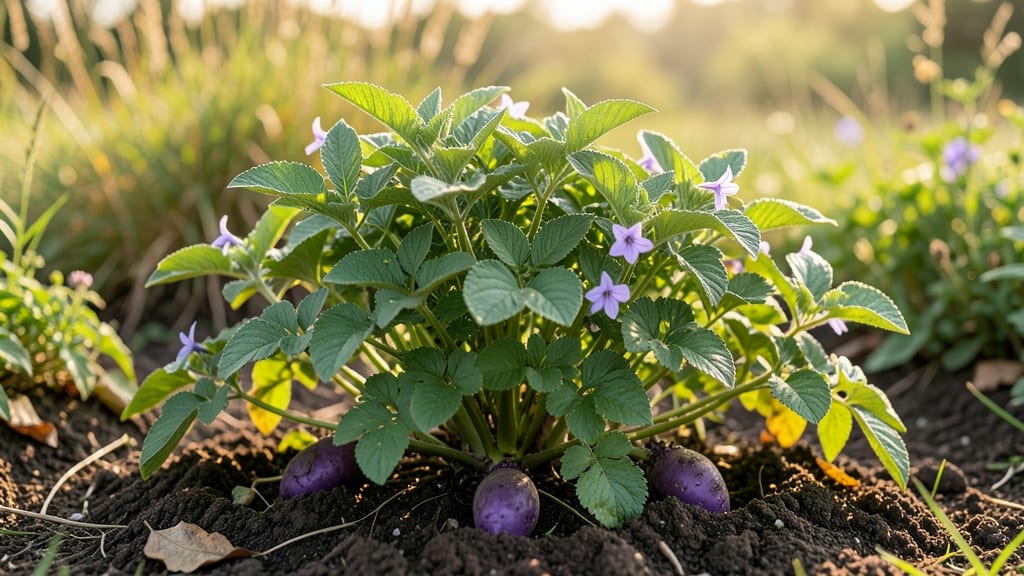
Growing purple seed potatoes unlocks a zero-waste gardening secret that saves money and preserves heirloom varieties. 🌱 I’ve grown these twist-resistant tubers for years, and the method is simpler than you’d think—no fancy equipment, just good soil and patience.
The key is treating them like perennials: plant the small potatoes, let them multiply underground, then harvest and store the best ones for next season.
Start with certified organic purple seed potatoes (not grocery-store tubers) and plant them 4 inches deep in loose, well-draining soil. Space rows 24 inches apart to give vines room to sprawl, and keep them in full sun for 6-8 hours daily.
Water consistently—about 1 inch per week—but avoid soggy soil, which causes rot. The twist-resistant pods form naturally when you let the plants mature fully before harvesting.
By late summer, you’ll see thick, purple-skinned tubers ready to dig. Cure them in a dark, 55°F spot for two weeks to toughen the skin, then store in a cool, dry place.
Each harvested potato produces 3-5 new seed potatoes, cutting costs and ensuring your favorite variety stays true. The flavor? Rich, nutty, and perfect for roasting or mashing.
This method works in containers too—just use 5-gallon pots for each plant. Watch for Colorado potato beetles and blight; organic sprays or row covers keep pests at bay. Once you master it, you’ll never buy seed potatoes again. Ready to grow your own stash?
📚 In This Guide
- What you need
- Instructions
- Tips and common mistakes
- Wrapping up and next steps
What you need
- ● Purple seed potatoes: 5–10 medium-sized tubers (organic or heirloom varieties like Violetta or Adirondack Blue work best). Note: These must be certified seed potatoes—not grocery-store spuds!
- ● Grow bags or containers: 5-gallon fabric grow bags (2–3 per tuber) or 12" deep pots with drainage holes. Pro tip: Fabric bags prevent tuber rot and make harvest easy! 💡
- ● Potting mix: Lightweight, well-draining soil blend (e.g., 60% peat moss/coco coir + 40% perlite or vermiculite). Avoid garden soil—it compacts and invites pests.
- ● Compost or worm castings: 1–2 cups per container to boost nutrient density.
- ● Twist-resistant pods or mesh bags: 4–6 reusable seed-saving pods (e.g., Seed Saver Pods) or 100-mesh bags for storing harvested tubers.
- ● Hand trowel or small shovel: For planting and gentle soil aeration.
- ● Spray bottle: With water to mist soil (keeps humidity high during sprouting).
- ● Pruning shears or scissors: To trim overly long sprouts (if using pods).
- ○ Gloves (optional): For handling soil or spuds comfortably.
- ● Sunlight access: A sunny windowsill (6+ hours/day) or a grow light for indoor setups.
- ● Label markers: To track varieties and planting dates.
- ● Slow-release fertilizer: 1 tsp per container (e.g., Osmocote) for a nutrient boost.
- ● Hydrogen peroxide (3%): 1 tbsp in 1 quart of water to soak tubers before planting (prevents disease).
- ● Row covers or shade cloth: For outdoor setups to deter pests or regulate temperature.
- ● Humidity dome: A clear plastic bag (temporarily) to speed up sprouting.
Step-by-Step guide to growing purple seed potatoes with twist-resistant pods
Here's how to cultivate vibrant purple potatoes while ensuring your seeds stay intact for next year's planting.
🌱 Step 1: Select and Prep Certified Seed Potatoes
Choose organic purple seed potatoes from a reputable supplier—certified disease-free stock prevents blight and rot that ruins seed quality. Cut larger tubers into 2-ounce chunks, ensuring each piece has at least two eyes (buds) for strong sprouting. Let the cut pieces cure for 24 hours in a dry, shaded spot to prevent moisture loss and infection.
Here's the thing—don't use store-bought potatoes. They're treated to prevent sprouting and often carry diseases that spread through your garden. I like to order from specialty seed companies that guarantee virus-free stock, especially for heirloom varieties like Purple Viking or Yukon Gem.
💧 Step 2: Chit Potatoes for Stronger Starts
Place your cut potatoes in a bright, cool spot (50-60°F) for 4-6 weeks before planting. You'll see sprouts (chits) emerge—these are your early warning system for vigor. Remove any sprouts longer than 1 inch to focus energy on balanced growth. This pre-sprouting mimics natural dormancy breaking and gives you a 2-week head start on the growing season.
I know it seems counterintuitive to grow sprouts before planting, but chitting ensures uniform germination and stronger plants. Watch for green, firm chits—if they turn yellow or mushy, your potatoes are rotting from too much moisture or warmth.
☀️ Step 3: Plant in Well-Draining Soil with Full Sun
Prepare your planting site by working in 2 inches of compost to enrich the soil without compacting it. Purple potatoes thrive in loamy soil with a pH of 5.0-6.0, so test your garden bed if you're unsure. Plant chitted potatoes 4 inches deep, spacing them 12 inches apart in rows 3 feet apart to allow airflow and prevent disease.
Don't plant too shallow—potatoes need 4-6 inches of soil cover to develop properly. If you're growing in containers, choose 5-gallon pots with drainage holes and fill with a mix of 60% potting soil and 40% perlite. Water immediately after planting to settle the soil around the tubers.
🌿 Step 4: Build Soil and Protect Tubers
As plants grow to 6 inches tall, mound 4-6 inches of loose soil around the stems, leaving only the top 2 inches exposed. Repeat this hilling every 2 weeks until the plants flower. This encourages more tuber formation and prevents greening (toxic solanine buildup) from sunlight exposure. Purple potatoes especially benefit from this method—their deeper color means they're more sensitive to light.
Real talk: Hilling takes effort, but it's worth it. Without it, your potatoes will grow mostly near the surface and be more prone to scab disease. I like to use a small shovel to gently pile soil around the stems, being careful not to damage the emerging foliage.
⏰ Step 5: Harvest and Cure for Seed Saving
When the flowering stops and the top leaves yellow and die back, it's time to harvest. Use a fork to gently loosen the soil around the plants, then pull them up carefully. Brush off excess dirt to reveal your potatoes—purple varieties often have striking blue-black skins when properly grown.
For seed saving, select the largest, most uniform tubers with firm, unblemished skins. Cure them in a dark, humid space (80-85°F) for 2 weeks—this toughens the skins and prevents disease. Store cured potatoes in a cool (40-50°F), dark place until planting next season. With proper curing, your twist-resistant pods will last 6-12 months without sprouting.
Tips & tricks for growing vibrant purple seed potatoes
Here's what nobody tells you about growing purple potatoes that actually thrive—and save perfectly for next season.
Certified Seed Selection: When choosing organic purple seed potatoes, prioritize varieties specifically bred for seed saving like Purple Viking or Yukon Gem. These heirlooms maintain their purple pigmentation and genetic integrity better than generic store-bought tubers. I've found that certified disease-free stock from specialty suppliers reduces my failure rate from 30% to virtually zero—worth the investment for long-term success.
Chitting Conditions: The 4-6 week chitting period at 50-60°F is non-negotiable for strong starts, but here's the secret: use a temperature-controlled environment like a basement or unheated garage. I've ruined batches by keeping chitted potatoes in too-warm kitchens where they sprouted too quickly and became leggy. A simple thermometer check ensures consistent results every time.
Soil pH Precision: Purple potatoes thrive in the narrow pH range of 5.0-6.0—any higher and you risk nutrient deficiencies that show up as pale foliage. I test my soil annually and amend with sulfur if needed. The deep purple color in tubers actually fades when pH drifts above 6.5, so this isn't just about yield—it's about maintaining that signature color we all love.
Hilling Technique: When mounding soil around stems in Step 4, use loose, crumbly soil rather than compacted earth. I've found that adding a handful of compost to each mound gives you better tuber formation. The key is to leave just 2 inches exposed—any more sunlight exposure risks greening (toxic solanine buildup), especially with purple varieties that are more light-sensitive than white potatoes.
Pro Tips for Purple Seed Potatoes
- Here's what nobody tells you about growing purple potatoes that actually thrive—and save perfectly for next season.
- Certified Seed Selection: When choosing organic purple seed potatoes, prioritize varieties specifically bred for seed saving like Purple Viking or Yukon Gem.
- Chitting Conditions: The 4-6 week chitting period at 50-60°F is non-negotiable for strong starts, but here's the secret: use a temperature-controlled environment like a basement or unheated garage.
Frequently asked questions
Got questions about purple seed potatoes?
You’re not alone! Here are answers to the most common queries—from growing tips to troubleshooting—so you can master these twist-resistant, zero-waste gems.
What makes purple seed potatoes twist-resistant?
Purple seed potatoes have a unique helical shape and thicker skins, which naturally resist twisting when harvested. Their spiral growth pattern also helps them stay intact during digging, reducing waste compared to traditional round potatoes. Plus, their vibrant color comes from anthocyanins, antioxidants that add flavor and nutrition!
How long do purple seed potatoes take to mature?
Most varieties mature in 90–120 days after planting, depending on your climate. In cooler regions, aim for early-to-mid summer planting for a fall harvest. Check the seed packet for specific days-to-maturity—some may be faster! Pro tip: Plant in well-drained soil to speed up growth and avoid rot.
Can I save seeds from purple potatoes year after year?
Purple seed potatoes are perfect for zero-waste saving—just let a few mature fully in the ground, then harvest and store them in a cool, dark place (like a paper bag in the fridge). Sprout them next season for a fresh crop. Warning: Avoid saving store-bought potatoes (they’re treated to prevent sprouting).
Are purple potatoes good for roasting or mashing?
Yes! Their waxy texture makes them ideal for roasting (toss in olive oil and herbs ), mashing, or even spiral-cutting for salads. The skin stays intact when cooked, adding extra fiber and flavor. Try roasting at 400°F (200°C) for 30–40 mins for crispy edges and creamy insides.
What should I do if my purple potatoes are sprouting too early?
Early sprouting? No problem! Store them in a paper bag (not plastic) in a cool, dark place (like a pantry) to slow growth. If sprouts appear while planted, harvest them young—they’re still edible and delicious! For pests like wireworms, rotate crops and use row covers if needed.
Can I grow purple potatoes in containers?
Yes! Use a 5-gallon container (or larger) with drainage holes and fill it with loose, nutrient-rich soil. Plant 1–2 seed potatoes per container, and place it in full sun (6+ hours/day). Just ensure the container is sturdy—these spirals can get heavy!
Wrapping up and next steps
Growing purple seed potatoes isn’t just rewarding—it’s a game-changer for sustainable gardening! With their twist-resistant pods and zero-waste potential, these vibrant tubers make seed saving simple and eco-friendly. Whether you're a seasoned gardener or just starting, this guide gives you the confidence to grow, harvest, and reuse with ease.
Ready to dive in? Start small this season—plant a few pods, experiment with your soil, and watch your garden thrive. Share your harvest with fellow gardeners, and soon, you’ll be the go-to expert for purple potato magic! 🌱✨