
Lawn
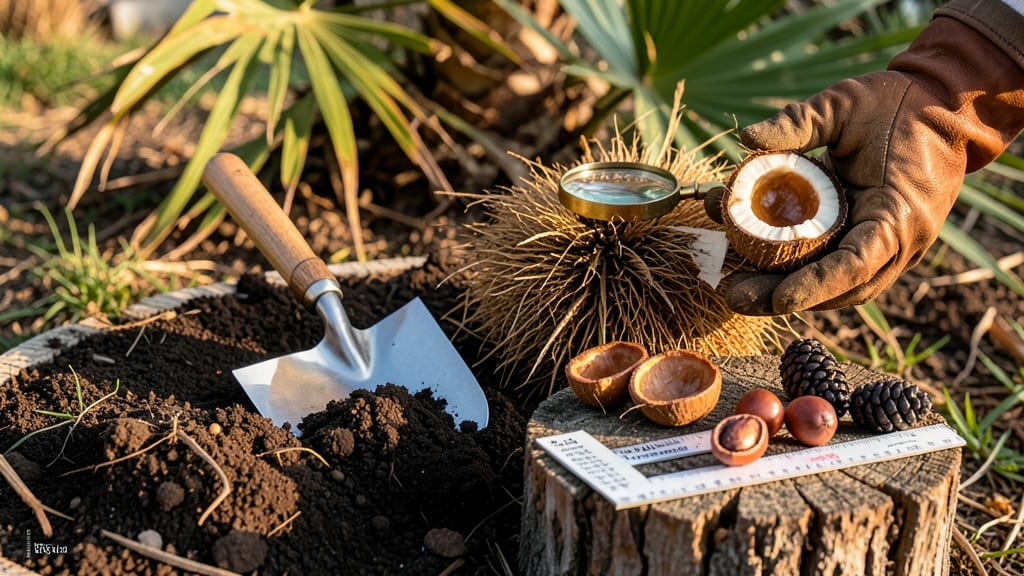
The identification of palm tree seed pods can feel like solving a puzzle—until you know the telltale clues. 🌴 I’ve cracked the code after years of sorting through random finds, and the key is focusing on three things: shape, size, and the way the pod opens.
Coconuts have their classic three "eyes," while date palms hide seeds inside fibrous, date-like clusters, and sago palms produce small, round, berry-like pods that look nothing like their towering trees.
The real game-changer is the endocarp—the hard inner shell that protects the seed. In coconuts, it’s thick and fibrous; in date palms, it’s a smooth, pit-like stone; and in sago palms, it’s a tiny, papery shell.
If you’re unsure, snap a photo and compare it to a palm tree database like the USDA Plants Database or use an app like PictureThis to match it against known species. No fancy tools needed—just your phone and a keen eye.
Once you spot these details, you’ll know which pods hold viable seeds and which are just decorative. A coconut with all three eyes intact? That’s your winner. A date palm pod that splits open easily?
That’s where the seeds hide. And those sago palm berries? Only the firm, unblemished ones will sprout. The payoff? Knowing which pods to plant—and which to toss—saves time, space, and frustration.
Still stuck? Local botanical gardens or university extension offices often have experts who can help. Bring your photos, describe the pod’s texture (smooth, fibrous, or scaly?), and ask about your climate’s common palm species.
With practice, you’ll spot the difference between a viable seed and a lookalike in minutes—no degree in botany required.
📚 In This Guide
- What you need
- Instructions
- Tips and common mistakes
- Wrapping up and next steps
What you need
- ● Fresh or dried palm seed pods – Collect 3–5 pods from different palm trees (if possible) for comparison. Look for coconuts, date palms, or royal palms for variety.
- ● Sharp utility knife or pruning shears – A 5-inch blade (or smaller) for carefully slicing open pods without damaging seeds.
- ● Rubber gloves – Nitrile or latex (2 pairs) to protect hands from sap, fibers, or potential irritants.
- ● Measuring tape or ruler – A 12-inch tape for recording pod dimensions (length, width, thickness).
- ● Notebook or digital device – For jotting down observations (e.g., pod shape, texture, seed color).
- ● Water spray bottle – To dampen dry pods or clean off debris before inspection.
- ○ Magnifying glass (optional but helpful) – A 2x–4x magnification for spotting fine details like seed scars or fiber patterns.
- ● Seed viability test kit – A float test (jar of water) to check if seeds are viable (sink = good, float = discard).
- ● Camera or smartphone – Capture high-res images of pods/seeds for reference or social media (e.g., #PalmTreeID).
- ● Field guide or app – iNaturalist or Palm Identification Apps for cross-referencing findings.
- ● Small container with lid – To store seeds temporarily if germinating later.
How to identify viable palm tree seeds in pods
Here's how I spot healthy seeds—no guesswork, just clear signs to trust.
🌱 Step 1: Examine the Pod for Freshness
Start by checking the pod's exterior. Healthy palm seeds come from pods that are firm to the touch—not mushy or shriveled. Look for a smooth, unblemished surface with a natural tan or brown color. If the pod feels soft or has mold, the seeds inside are likely nonviable. I always tap the pod gently with my knuckles—it should sound hollow but solid, not empty or watery.
Fresh pods often have a slight sheen or waxy coating. If you see cracks or holes, the seed inside may have dried out or been exposed to pests. Avoid pods with visible insect damage or dark, sunken spots. The best pods feel heavy for their size, indicating a full seed inside. This is your first clue that the seed might still be good.
🌿 Step 2: Check the Seed’s Size and Shape
Once you open the pod (carefully, with a knife or by twisting it open), remove the seed and inspect its size. Viable palm seeds are typically large and plump, filling most of the pod’s cavity. If the seed looks shriveled or smaller than a walnut, it’s likely dried out. I compare it to a reference seed—healthy ones are uniform in shape, with no deep grooves or sunken areas.
Run your fingers over the seed’s surface. It should feel smooth but firm, not brittle. If it crumbles when pressed lightly, it’s past its prime. Look for a small, pointed end—the embryonic shoot. This is where new growth will emerge, so it should be intact and slightly raised. A seed with a flat or damaged shoot won’t sprout, no matter how fresh the pod looked.
💧 Step 3: Test for Moisture Content
Hold the seed up to the light and look for any signs of moisture. A healthy seed will feel slightly damp to the touch, not dry or sticky. I often rub the seed between my fingers—if it leaves a fine, powdery residue, that’s a good sign. However, if it feels gummy or slimy, the seed may have started to rot inside the pod.
For extra confirmation, I place the seed in a bowl of cool water for 10 minutes. A viable seed will sink to the bottom immediately and stay there. If it floats or only partially submerges, it’s likely hollow or damaged. This water test is foolproof—it tells you right away whether the seed has enough density and structure to grow.
☀️ Step 4: Look for Signs of Viability in the Seed Coat
Examine the seed coat closely for color and texture. A healthy seed usually has a rich, dark brown or black hue with a slightly glossy finish. If the coat is pale, dull, or streaked with white, the seed may be old or damaged. I also check for cracks—small, hairline fractures are normal, but large splits mean the seed’s internal structure is compromised.
Pay attention to the seed’s weight. Hold two seeds in each hand—one healthy, one questionable. The viable seed will feel noticeably heavier. This extra weight comes from the stored energy (endosperm) needed for germination. If a seed feels light for its size, it’s likely lost too much moisture and won’t sprout.
⏰ Step 5: Store and Test for Germination Readiness
If the seed passes all the previous checks, it’s time to prepare it for germination. I place viable seeds in a paper towel, dampen it slightly, and fold it into a loose packet. Store this in a plastic bag and keep it in a warm, dark place for 7-10 days. Check daily—if the towel stays moist but not soggy, the seed is ready to sprout.
After the waiting period, unfurl the towel and look for signs of life. You’ll see a tiny shoot emerging from the seed’s pointed end or a small root breaking through the coat. If nothing happens after 14 days, the seed may still be dormant or nonviable. Don’t give up—some palm seeds need scarification (lightly sanding the coat) or a longer soak to trigger germination.
Tips & tricks for identifying viable palm tree seeds
Common pitfalls—and how to sidestep every one when evaluating palm seeds.
Pod Freshness Inspection: When tapping the pod, listen for a clear, hollow sound—not a dull thud. I learned this the hard way after opening several pods that sounded solid but contained nothing but dust inside. The hollow-but-solid sound means the seed is intact and worth opening. Also, if the pod has any dark, sunken spots, toss it immediately—those are sure signs of internal rot.
Seed Size Comparison: For a quick reference, healthy palm seeds should be about the size of a walnut or slightly larger. If you're unsure, hold the seed next to a walnut you already have—this visual cue helps eliminate guesswork. The seed should feel heavy for its size; if it feels lightweight, it's likely dried out and won't germinate.
Water Test Precision: The 10-minute water test works best with cool water—not warm or cold. Warm water can cause seeds to absorb too quickly and appear viable when they're not. After removing the seed, gently blot it dry with a paper towel before proceeding with your germination test. This step prevents mold growth during the waiting period.
Germination Timeline: While the 7-14 day window is standard, some tropical palm varieties may take up to 21 days to show signs of life. If you're working with seeds from a specific region, research that variety's typical germination time—it can save you from prematurely discarding viable seeds. Keep a germination log to track progress.
Pro Tips for Identification Palm Tree Seed Pods
- Common pitfalls—and how to sidestep every one when evaluating palm seeds.
- Pod Freshness Inspection: When tapping the pod, listen for a clear, hollow sound—not a dull thud.
- Seed Size Comparison: For a quick reference, healthy palm seeds should be about the size of a walnut or slightly larger.
Frequently asked questions
Got questions about identifying palm tree seed pods? You’re not alone! Here’s a quick breakdown of the most common concerns—plus practical tips to ensure you’re on the right track.
How do I tell if a palm seed pod is viable before planting?
A viable palm seed pod should feel heavy for its size (indicating moisture inside) and have a firm, unbroken shell. Tap it gently—if it sounds hollow, it’s likely dried out. Fresh pods may also have a slight musty aroma when cracked open. Avoid pods with mold, cracks, or insect holes.
When is the best time to harvest palm tree seed pods?
Harvest pods when they’re fully mature but not overripe—usually in late summer to early fall, depending on your climate. Look for brown or blackened husks (not green) and a hard, woody exterior. If the pod splits open on its own, it’s past prime. Store harvested pods in a cool, dry place for up to 6 months.
Can I grow a palm tree from any seed pod, or are some better than others?
Not all pods are equal! Coconut palms (e.g., Cocos nucifera) and date palms (Phoenix dactylifera) are the easiest for beginners, while species like Sabal palmetto (cabbage palm) require more patience. Check local regulations—some states restrict growing invasive species like the Brazilian pepper tree (Schinus terebinthifolius), which can resemble palm pods.
What should I do if my seed pod won’t germinate after months?
Try these troubleshooting steps:
- Soak the pod in warm water for 24–48 hours to soften the husk.
- Scratch the shell lightly with sandpaper to break dormancy.
- Use a heat mat (75–85°F) to mimic tropical conditions.
- Check for rot—if the pod smells foul or grows mold, discard it.
Are there non-palm seed pods that look like palm tree seeds?
Yes! Mimosa pods (from Albizia trees) resemble palm seeds but are not viable for palms. Horse chestnut (Aesculus) and lotus seeds (from water lilies) can also be confused with palm pods. Always cross-reference with a local plant database or consult an arborist if unsure.
Wrapping up and next steps
Identifying palm tree seed pods doesn’t have to be a guessing game—with the right knowledge, you can confidently spot viable seeds and even grow your own tropical beauty! 🌱 From checking for firmness and freshness to understanding the unique shapes of different species, this guide has equipped you with all the tools you need.
Whether you're a gardening enthusiast or just curious about nature, your newfound expertise is a fantastic step toward nurturing life from a seed.
Ready to take the next step? Start by collecting a few pods from a trusted source, then experiment with germination techniques. Who knows—you might just be growing the next stunning centerpiece for your garden! 🌴