
Propagation
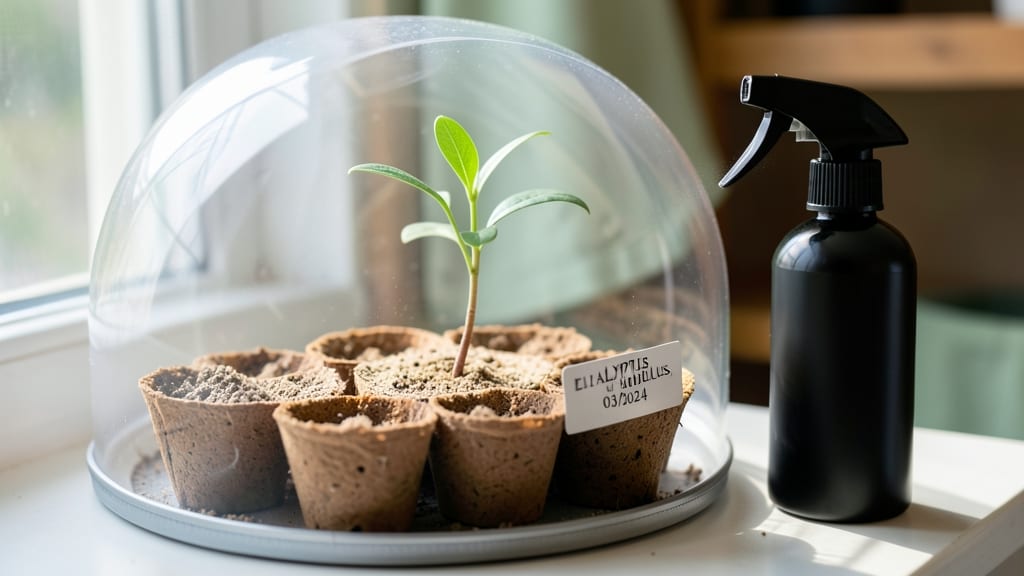
Eucalyptus seed propagation feels like unlocking a secret garden—stress-free germination in 60 days is totally doable with the right setup. I've struggled with slow-starting seeds before, but eucalyptus rewards patience with silvery-blue foliage that smells like a spa day. The key isn't fancy equipment; it's matching their native conditions right in your home or greenhouse.
You'll need well-draining soil mix (think 60% potting soil, 30% perlite, 10% sand), a shallow tray, and a spray bottle—no stratification or scarification required. After sowing, keep seeds in 75-80°F warmth under a humidity dome.
Most seeds sprout within 2-4 weeks, though some stubborn ones take the full 60 days. The trick is consistency: never let the soil dry out completely, but don't drown them either.
Once those first seedlings poke through, you'll see why it's worth the wait—delicate, glossy leaves that grow fast with proper light. Thin to 2 inches apart when they're 3 inches tall, and transplant to individual pots when they have 4-6 true leaves.
These aren't just pretty plants; they clean the air and attract pollinators all season long.
Works perfectly for sunny windowsills, greenhouses, or even outdoor sowing in Zone 8+ after the last frost. The same method grows dwarf varieties like 'Gumpo' just as easily as tall species. Here's how to keep those seedlings thriving through their first year—no black thumb required.
📚 In This Guide
- What you need
- Instructions
- Tips and common mistakes
- Wrapping up and next steps
What you need
- ● Eucalyptus seeds: Fresh, high-quality seeds (preferably from a trusted supplier). Aim for 50-100 seeds to account for germination variability.
- ● Seed trays or pots: 2-3 shallow trays (4-6 inches deep) or small pots (3-4 inches in diameter) with drainage holes. 6-12 cells per tray is ideal.
- ● Seed-starting mix: A lightweight, well-draining mix (e.g., 50% peat moss or coco coir + 50% perlite or vermiculite). Avoid garden soil—it’s too dense!
- ● Spray bottle: A fine-mist sprayer (16-32 oz) for gentle watering.
- ● Clear plastic dome or plastic wrap: To create a humidity tent (1-2 sheets, depending on tray size).
- ● Grow lights or sunny windowsill: A full-spectrum LED grow light (12-16 hours/day) or a south-facing window with bright, indirect light.
- ○ Thermometer (optional but helpful): To monitor soil temperature (65-75°F is ideal for germination).
- ● Heating mat: A seedling heating mat (set to 70-75°F) to speed up germination.
- ● Fungicide: A mild seed/fungicide treatment (e.g., hydrogen peroxide 3%) to prevent mold.
- ● Labeling tags: Small sticks or labels to track seed varieties and planting dates.
- ● Humidity tray: A shallow tray with pebbles and water to boost humidity levels.
- ● Tweezers or toothpick: For gently placing tiny seeds without crushing them.
Step-by-Step guide for eucalyptus seed propagation
Here’s how I’ve learned to coax eucalyptus seeds into strong seedlings—no fancy equipment required.
Prepare Seeds for Faster Germination
Eucalyptus seeds have a hard outer shell that slows germination. To speed things up, soak them in warm water for 24 hours before planting. Place seeds in a jar or bowl, cover with water, and let them sit on your counter. You’ll see the water turn slightly cloudy as the seeds absorb moisture—this is normal and necessary.
After soaking, drain the water and let the seeds air-dry for 30 minutes to prevent rot. This step is critical: damp seeds planted directly will suffocate and fail to sprout. I like to spread them on a paper towel while they dry, making it easy to separate them afterward for planting.
Use a Light, Well-Draining Growing Medium
Eucalyptus seedlings hate soggy roots, so avoid garden soil. Instead, mix 50% peat moss and 50% perlite to create a fast-draining medium. Fill small pots—2-3 inches deep—with this blend, leaving ½ inch of space at the top. Moisten the mix lightly with water until it feels like a damp sponge, not dripping.
Press the soil down gently to remove air pockets, but don’t compact it. The goal is loose, airy soil that lets roots grow freely. If you’re using seedling trays, fill each cell just enough to hold a single seed without burying it too deep.
Plant Seeds at the Correct Depth
Eucalyptus seeds are tiny—about ⅛ inch long—so handle them carefully. Plant each seed ¼ inch deep, just below the soil surface. Use a toothpick or pencil to make a small hole, drop the seed in, and cover lightly with more of the growing mix. Planting too deep delays germination, while too-shallow seeds may dry out.
Space seeds 1 inch apart in each pot to avoid overcrowding. Once planted, water gently with a spray bottle until the soil is evenly moist. Avoid soaking the seeds—excess water can cause them to rot before they sprout. Place the pots in a warm, shaded area (around 70-75°F) to encourage germination.
Maintain Ideal Conditions for Germination
Eucalyptus seeds take 30-60 days to germinate, depending on temperature and moisture. Keep the soil consistently moist but never soggy—water when the top ½ inch feels dry. A humidity dome or plastic wrap can help retain moisture, but remove it once sprouts appear to prevent fungal growth.
Place the pots in bright, indirect light—direct sun can overheat the soil and dry out the seeds. If using a grow light, position it 6 inches above the pots and keep it on for 12-14 hours daily. You’ll know germination is working when tiny green shoots break through the soil—this usually happens within 4-6 weeks if conditions are right.
Thin Seedlings and Provide Proper Care
Once seedlings reach 1-2 inches tall, thin them to the strongest one per pot. Use scissors to snip weaker sprouts at the base, leaving the healthiest seedling to grow. This step prevents competition for nutrients and ensures robust growth. After thinning, water deeply to help the remaining seedling establish roots.
Move seedlings to a sunny window or under grow lights once they’ve developed 2-3 sets of true leaves. At this stage, they’ll need full sun (6+ hours daily) to thrive. Fertilize lightly with a balanced, water-soluble fertilizer (10-10-10) diluted to half strength every 4-6 weeks to support steady growth.
Tips & tricks for perfect eucalyptus seed germination
A few key strategies will help you maximize your success rate with these finicky seeds—trust me, I've learned the hard way.
Soaking Science: During the 24-hour soak in Step 1, change the water after 12 hours to prevent bacterial growth. The cloudiness you see is actually the seed coats releasing tannins—this is normal and necessary for breaking dormancy. If you notice any foul smells, discard the water immediately and start fresh with clean, warm water.
Medium Mixing Technique: When creating your 50% peat moss and 50% perlite mix in Step 2, sift the perlite first to remove any large chunks that could create air pockets. I find using a fine-mesh strainer works perfectly. This ensures even moisture distribution throughout the growing medium, which is crucial for eucalyptus seeds that despise soggy conditions.
Planting Precision: For Step 3's ¼-inch planting depth, use the tip of a toothpick as your guide—it's exactly that measurement. When spacing seeds 1 inch apart, consider using a small ruler to maintain consistency. I've found that planting in a grid pattern makes thinning easier later on, as you can systematically remove weaker sprouts without disturbing the stronger ones.
Germination Environment: The 70-75°F temperature range in Step 3 is ideal, but if your home runs cooler, consider using a seedling heat mat set to 75°F. For humidity control in Step 4, I've had success with a simple plastic bag tied loosely around the pots—just remember to remove it immediately when you see the first signs of sprouts to prevent mold.
Pro Tips for Eucalyptus Seed Propagation
- A few key strategies will help you maximize your success rate with these finicky seeds—trust me, I've learned the hard way.
- Soaking Science: During the 24-hour soak in Step 1, change the water after 12 hours to prevent bacterial growth.
- Medium Mixing Technique: When creating your 50% peat moss and 50% perlite mix in Step 2, sift the perlite first to remove any large chunks that could create air pockets.
Frequently asked questions
Got questions about growing eucalyptus from seed?
You’re not alone! Here are answers to the most common queries—because even the best gardeners need a little help now and then.
How long does it take for eucalyptus seeds to germinate?
Most eucalyptus seeds sprout within 2–6 weeks under ideal conditions (warmth, moisture, and light). Some varieties, like Eucalyptus globulus, may take up to 8 weeks. Patience is key—don’t disturb the soil while waiting!
Can I speed up germination with scarification or stratification?
Eucalyptus seeds often have hard seed coats, so scarification (lightly nicking the seed) or soaking in warm water for 24–48 hours can help. Stratification (cold treatment) isn’t usually needed—focus on consistent warmth (70–80°F) instead.
What’s the best soil mix for eucalyptus seed propagation?
Use a well-draining mix like:
- 50% peat moss or coco coir
- 30% perlite or vermiculite
- 20% sand or orchid bark
Why aren’t my eucalyptus seeds sprouting? Troubleshooting tips.
Check these common issues:
- Cold soil (<60°F)? Use a seedling heat mat.
- Too dry? Mist daily and cover with plastic wrap.
- Old seeds? Eucalyptus seeds lose viability after 1–2 years.
- Fungal rot? Reduce moisture and ensure airflow.
Can I grow eucalyptus from seed in containers, or do I need a garden?
Start in 4–6 inch pots with drainage holes. Move seedlings outdoors only after they’ve developed 3–4 true leaves and temperatures stay above 50°F at night. Containers work great for dwarf varieties like Eucalyptus pauciflora.
Wrapping up and next steps
Propagating eucalyptus from seed is a rewarding journey that brings the beauty of these towering trees into your garden—without the wait! 🌱 With the right materials, patience, and a little care, you’ll see those first green shoots emerge in just 60 days.
Whether you’re a seasoned gardener or a curious beginner, this method opens doors to growing your own eucalyptus forest, one seed at a time.
Now that you’re armed with the know-how, take the next step: gather your supplies, create your seed-starting station, and dive in! Watching your eucalyptus seedlings grow will be the most satisfying part—so why wait? Get planting! 🌿