
Container Gardens
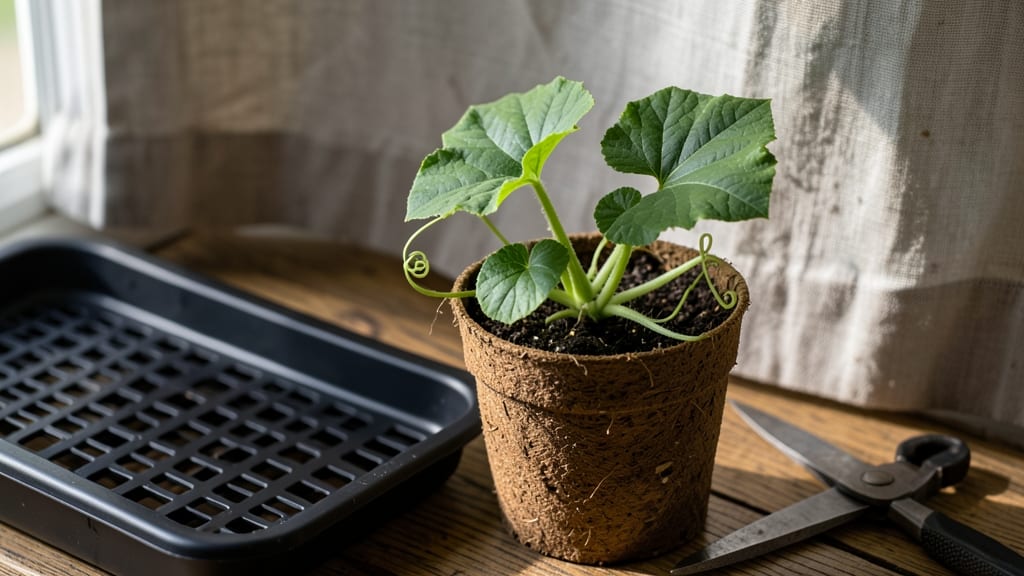
Starting winter squash seeds indoors 4-6 weeks before your last frost is the key to avoiding leggy seedlings or missed harvests — and yes, that window shifts wildly from Alaska to Arizona.
Picture this: you’ve got 6-foot-tall squash plants crammed into tiny pots because you started too early, or your seedlings still look like sprouts when frost hits because you waited too long.
Timing matters more than soil type or sunlight, and the right schedule keeps your 🎃 thriving from seed to pumpkin patch.
Most gardeners in USDA Zone 6a (like me) aim for early March starts, but if you’re in Zone 3, you’ll push that back to February. The trick?
Count backward from your last frost date, subtract the 80-100 days your squash needs to mature, and add a week for germination. No guesswork, just math.
Below, I’ll break down the exact weeks before frost for every zone, how to adjust for early/late years, and the one transplanting hack that saves 90% of seedlings from shock. Ready to plan your perfect harvest?
Zone-specific indoor starting times for winter squash seeds
Getting your winter squash seeds started indoors at the right time ensures robust seedlings ready for transplanting. The key is knowing your USDA zone and adjusting for regional frost variations.
Northern climates (Zones 3-5) face earlier frosts, while Southern zones (8-10) have longer growing seasons. Let’s break down the exact weeks before last frost for each zone.
Most winter squash varieties—like butternut, acorn, and hubbard squash—take 80-100 days to mature. Starting seeds indoors 4-6 weeks before last frost gives them enough time to develop strong roots and vine growth. However, cooler zones need an earlier start to compensate for shorter growing seasons.
Here’s a quick reference for your zone:
| USDA Zone | Weeks Before Last Frost | Recommended Start Date (Northern Hemisphere) | Notes |
|---|---|---|---|
| Zones 3-4 | 6-8 weeks | Mid-March to early April | Coldest zones; start earliest to avoid short season |
| Zones 5-6 | 5-7 weeks | Late March to mid-April | Balanced start for moderate climates |
| Zones 7-8 | 4-5 weeks | Early to mid-April | Longer seasons allow later starts |
| Zones 9-10 | 3-4 weeks | Late April | Warm climates; minimal frost risk |
For Northern climates, like Zones 3-4, aim to start seeds by mid-March. These areas have the shortest growing seasons, so early starts help seedlings mature before the first frost.
In contrast, Southern climates (Zones 9-10) can wait until late April because frost is rare, and the growing season extends well into fall.
If you live in a high-altitude area or experience early frosts, add an extra week to your starting time. For example, if your last frost is typically May 10, but you’ve had early frosts in past years, start seeds 7-8 weeks before instead of 6.
This buffer ensures your seedlings are ready to thrive outdoors.
Popular varieties like butternut squash and acorn squash have similar timelines, but hubbard squash may need an extra week due to its larger size. Always check the seed packet for variety-specific recommendations, as some heirloom or hybrid types mature faster or slower.
Adjust your starting time if you’re using grow lights instead of natural sunlight. Seedlings under lights grow faster, so you can start 1-2 weeks later than the table suggests.
Conversely, if your indoor space is cool (below 65°F), germination slows, and you should start seeds 2 weeks earlier to compensate.
Pro tip: Mark your last frost date on a calendar and count backward using the zone-specific weeks. This method guarantees you’ll have healthy, transplant-ready seedlings when the soil warms up. Don’t forget to harden off your seedlings for 7-10 days before moving them outdoors to avoid shock.
With these zone-specific guidelines, you’ll avoid the common pitfalls of starting too early (overcrowded seedlings) or too late (frost-damaged plants). Happy growing, and may your garden be filled with vibrant winter squash come harvest time! 🎃
How to calculate your perfect indoor starting date
Calculating the perfect indoor starting date for your winter squash seeds ensures strong, healthy seedlings ready for transplanting. The key is balancing your last frost date, the maturity timeline of your chosen variety, and the time needed for germination.
Without this formula, you risk seedlings that are either too leggy or too small for outdoor planting.
Start by finding your average last frost date for your region—this is the critical benchmark. For example, in Zone 5, this might be around May 15th, while in Zone 8, it could be as late as March 1st.
This date varies significantly by location, so always double-check local agricultural extensions or weather records.
Next, identify the days to maturity for your squash variety. Most winter squash, like butternut or acorn, take 80-100 days to reach harvest. Subtract this from your last frost date to determine when seedlings should be transplanted outdoors.
For instance, if your last frost is May 15th and your squash matures in 90 days, aim for a transplant date of August 14th.
- Find your last frost date (check local records or USDA zone maps).
- Determine your squash variety’s maturity days (e.g., 80-100 days for butternut).
- Add germination time (5-10 days for winter squash) to maturity days.
- Subtract the total from your last frost date to get your indoor start date.
Example: (May 15 – 100 days + 7 days) = February 24 start date.
Now, factor in germination time, which typically takes 5-10 days for winter squash. This extra window ensures your seeds have enough time to sprout before they need more space.
Using the same example, if your last frost is May 15th and your squash takes 90 days to mature, you’d start counting backward 97 days (90 + 7) to arrive at your indoor start date.
Don’t forget to account for container sizing—winter squash seedlings need 2-3 inches of space per plant by transplant time. If you’re starting in small cells, plan to transplant seedlings into larger containers 2-3 weeks before moving them outdoors. This prevents root-bound stress and ensures robust growth.
Finally, adjust for early or late frosts in your area. If your region has a history of unpredictable weather, err on the side of starting seeds 1-2 weeks earlier to create a buffer. This extra time gives you flexibility if frost arrives sooner than expected.