
Plants
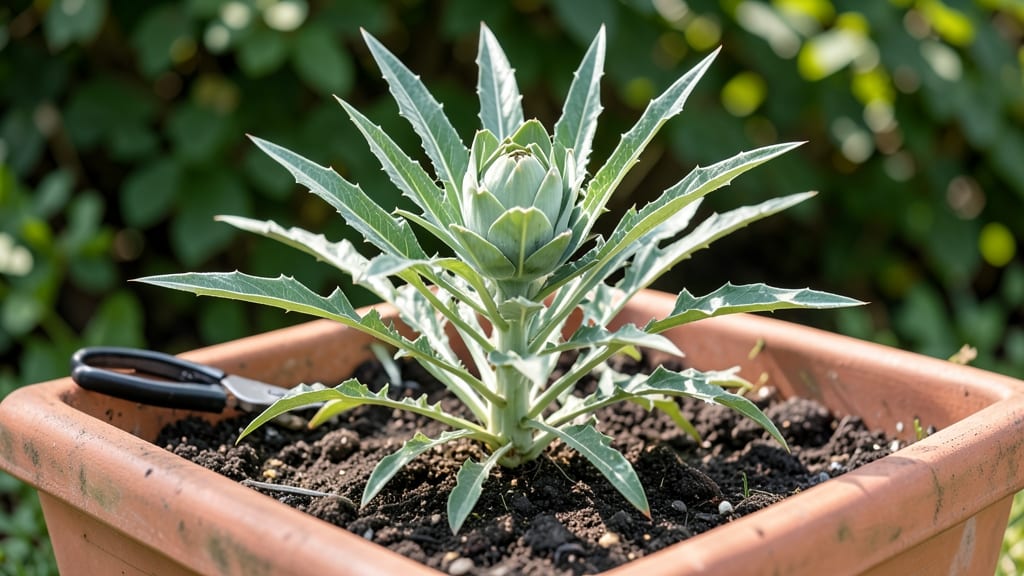
Artichoke seedlings look like tiny, elongated cotyledons with smooth, lance-shaped leaves emerging in pairs. As they mature, they develop deep green, fuzzy-edged foliage, and eventually form thistle-like buds with spiky bracts along sturdy stems, typically growing 6-12 inches tall in 4-6 weeks.
Recognizing artichoke seedlings early helps you avoid confusing them with weeds or other young plants. 🌱 The initial cotyledons are smooth and elongated, but the real giveaway comes when true leaves appear—deep green with slightly fuzzy edges.
Unlike thistles, which have spiky leaves from the start, artichoke seedlings develop their characteristic spiky bracts only as they mature. I always check for the sturdy stems and the way leaves grow in pairs along the stem, which is a key difference from plants like chard or purslane.
Once seedlings reach 4-6 weeks old, they start forming those iconic thistle-like buds, but they won’t look like full-sized artichokes yet. At this stage, they’re still quite small, often just 6-12 inches tall, with a more compact growth pattern.
Paying attention to these details makes it much easier to tell them apart from other young plants in your garden.
💡 In This Article
- Identifying Artichoke Seedlings by Leaf and Stem Characteristics
- Common Mistakes When Spotting Young Artichoke Plants
Identifying artichoke seedlings by leaf and stem characteristics
The very first clue that you're looking at an artichoke seedling is its cotyledons—the initial leaves that appear right after germination. These are smooth, elongated, and have a lance-shaped form, typically measuring about 1/2 to 1 inch long.
Unlike many other seedlings, artichoke cotyledons lack the fuzzy texture and emerge in pairs along the stem, which helps distinguish them from weeds like purslane or dandelions. 🌱
As the seedling matures, true leaves begin to form, and this is where the real identification magic happens. These leaves are deep green with a slightly fuzzy edge, almost like a soft velvet texture when touched.
The leaves grow in pairs along the stem, creating a symmetrical pattern that's a dead giveaway. By 3-4 weeks, the stem becomes more sturdy, reaching about 3-6 inches tall, and the leaves start to develop a slightly puckered appearance at the edges.
One of the most striking differences between artichoke seedlings and other plants is the way their stems develop. Artichoke stems are typically upright and firm, with a slight woody texture as they mature.
This is in stark contrast to thistles, which have spiky leaves from the very beginning, or chard, which has broader, more arrow-shaped leaves. The key is to look for the paired leaf arrangement and the gradual development of fuzzy edges, which are hallmarks of healthy artichoke seedlings.
By the time seedlings reach 4-6 weeks old, they start forming those iconic thistle-like buds. These buds are surrounded by spiky bracts, but at this stage, they’re still quite small—often just 1-2 inches in diameter.
The buds are tightly packed and have a silvery-green hue, which is a clear indicator that you're dealing with an artichoke and not a weed. This is also when the plant starts to resemble its mature counterpart, though on a much smaller scale.
To compare, mature artichoke plants can grow up to 4-5 feet tall with large, globe-shaped buds that can reach 4-6 inches in diameter. The leaves become broader and more robust, but the paired arrangement and fuzzy edges remain consistent throughout the plant's life cycle.
This consistency makes it easier to identify seedlings early, even when they're still quite small.
If you're still unsure, look for the sturdy stems and the way the leaves grow directly from the stem in pairs. This growth pattern is unique to artichokes and sets them apart from many other garden plants.
Paying close attention to these details will help you confidently identify your artichoke seedlings and give them the care they need to thrive. 🌿