
Planting
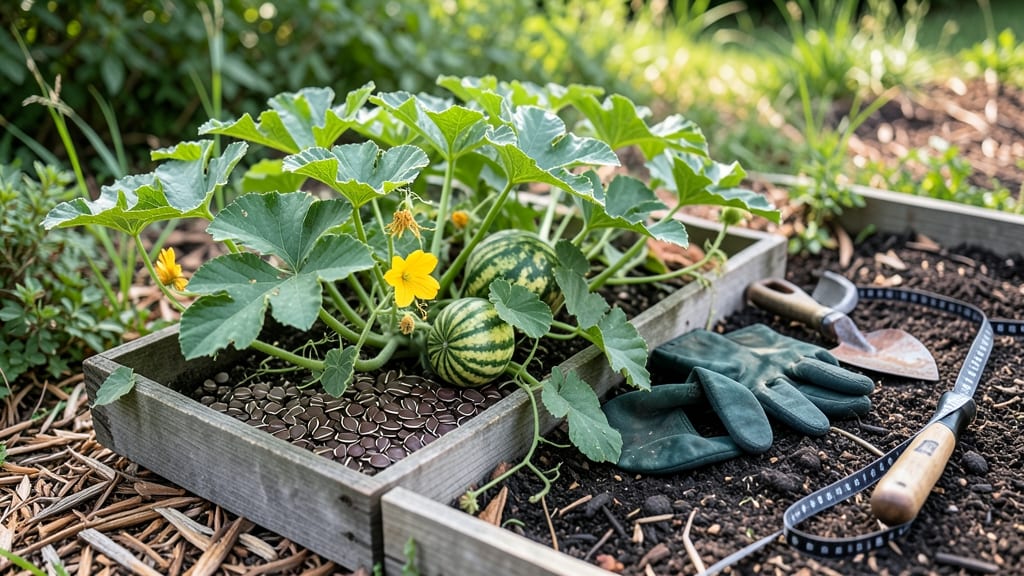
Precision watermelon seed spacing means the difference between a single sad fruit and a vine heavy with sweet, sun-ripened melons. 🌱 I learned this the hard way after cramming seeds too close—resulting in stunted growth, powdery mildew, and tiny, bitter melons that never reached full size.
The right spacing gives vines room to sprawl, leaves room to photosynthesize, and roots room to dig deep for moisture.
For most varieties, plant seeds 1–2 inches deep and 6–8 inches apart in rows spaced 5–7 feet apart. Smaller varieties like 'Sugar Baby' can handle tighter spacing (4–5 feet between rows), while giant varieties like 'Moon and Stars' need 8+ feet to avoid crowding.
My go-to setup uses 5-foot rows for standard varieties—it balances yield and manageability without sacrificing fruit size.
You’ll end up with vines that sprawl confidently, leaves that stay disease-free, and melons that ripen evenly—no more fighting for space or watching vines compete for sunlight. The key is giving roots enough room to establish before the first tendril appears, so they’re ready to support 20-pound fruits by midsummer.
Adjust for your garden’s size: raised beds can squeeze rows closer (3–4 feet apart), while trellised vines need only 2–3 feet between plants. Just remember—watermelons aren’t shy about spreading, so plan for their ambition from day one.
📚 In This Guide
- What you need
- Instructions
- Tips and common mistakes
- Wrapping up and next steps
What you need
- ● Watermelon seeds: Choose heirloom or hybrid varieties suited to your climate (e.g., 'Sugar Baby,' 'Crimson Sweet,' or 'Charleston Gray'). Aim for 3–5 seeds per hill (or 1–2 seeds per spot if direct-sowing).
- ● Well-draining potting mix or garden soil: Test soil pH (ideal range: 6.0–6.8). Amend with compost if needed (1–2 inches mixed into the top 6 inches of soil).
- ● Fertilizer: Balanced fertilizer (10-10-10): Apply 1–2 tbsp per planting hole at planting time.
- ● Organic options: Composted manure (aged, 1–2 cups per hill) or worm castings.
- ● Mulch: Straw, black plastic, or shredded leaves (2–3 inches thick) to retain moisture and suppress weeds.
- ● Watering can or hose with a gentle spray nozzle: Avoid disturbing seeds or seedlings.
- ● Garden trowel or transplanting spade: For digging holes (depth: 1 inch, spacing: 2–3 feet between hills or 6–12 inches between seeds in rows).
- ● Measuring tape or ruler: To ensure precise watermelon seed spacing (critical for vine health!).
- ○ Garden markers or stakes: Label varieties and mark planting dates (optional but helpful!).
- ● Pruners or scissors: For thinning seedlings to the strongest 1–2 plants per hill once they’re 3–4 inches tall.
- ● Row covers or frost cloth: Protect young seedlings from frost or pests (remove once true leaves appear).
- ● Drip irrigation system: For consistent moisture without overwatering.
- ● Epsom salt (magnesium sulfate): Dissolve 1 tbsp in 1 gallon of water for a foliar spray to boost plant vigor.
- ● Trellis or cages: If growing compact varieties (e.g., 'Sugar Baby'), use lightweight supports to save space.
Precision planting guide for watermelon seed spacing
Here's how to space watermelon seeds for maximum yield and vine health.
🌱 Step 1: Test Soil Temperature Before Planting
Watermelon seeds need soil that's warmed to at least 70°F to germinate properly. I use a soil thermometer to check daily—seeds won't sprout below 65°F, and waiting until 75°F gives the fastest, most uniform germination. Black plastic mulch laid 1-2 weeks before planting raises soil temperature by 5-10°F.
If your soil runs cooler, consider using a cold frame or row covers to create a microclimate. The moment soil hits 70°F, you're ready to plant—don't wait any longer, or you risk uneven germination. I've seen seeds take 10 days to sprout at 68°F versus 4 days at 75°F.
🌱 Step 2: Plant Seeds in Hills for Optimal Spacing
Watermelon vines need 3-4 feet between hills and 2-3 feet between plants within each hill. To create hills, mound soil into 6-inch tall pyramids spaced 6 feet apart in rows that are 8 feet apart. This spacing prevents overcrowding and makes harvesting easier.
Plant 2-3 seeds per hill, burying them just 1 inch deep. I like to use a dibble or pencil to make small holes—this ensures consistent depth. Cover seeds with soil and water gently to settle it around the seeds without displacing them. The extra seeds act as insurance; you'll thin to the strongest plant later.
🌿 Step 3: Thin Seedlings to One Strong Vine per Hill
Once seedlings reach 2-3 inches tall (about 10-14 days after planting), thin to the most vigorous plant per hill. Look for seedlings with thick stems and dark green leaves—these will produce the best yields. Use clean scissors to snip unwanted seedlings at soil level to avoid disturbing roots.
Here's the thing—don't rush this step. If you thin too early, the remaining plant may not have enough roots to support fruit later. Wait until you can clearly see which plant is dominant. I've seen weak seedlings suddenly surge ahead after a rain, so check weekly until vines start running.
☀️ Step 4: Train Vines Along Trellis or Ground Space
Watermelons can be grown on trellises to save space or allowed to sprawl on the ground. If trellising, install 6-foot tall stakes or netting at planting time. As vines reach 3 feet long, gently guide them upward and secure with soft ties. This keeps fruit clean and off the ground, reducing rot risk.
For ground planting, ensure each vine has 10-12 feet of clear space to sprawl. Mulch heavily with 4-6 inches of straw to retain moisture and prevent soil-borne diseases from splashing onto leaves. The key is consistency—vines need steady watering to develop properly, but overwatering causes blossom-end rot.
✂️ Step 5: Prune for Airflow and Fruit Development
When vines reach 6 feet long, begin pruning to improve airflow and direct energy to fruit production. Remove any tendrils growing toward the center of the plant—these compete with fruit for nutrients. Also, cut back the first few flowers that appear; this encourages the plant to develop a stronger root system first.
Leave only the strongest male flowers (they have long stems) and the first few female flowers (they have small fruit at the base). You'll see these developing within 4-6 weeks of planting. Pruning now prevents overloading the vine, which leads to small, underdeveloped melons. Real talk: I've seen vines collapse under 20-pound melons because I didn't prune early enough.
Tips & tricks for perfect watermelon vine spacing
These precision planting strategies will help you maximize your watermelon harvest while keeping your vines healthy and productive.
Soil Temperature Strategy: The 70°F soil temperature threshold is non-negotiable for germination. I've found that using a soil thermometer in the early morning gives the most accurate reading—soil warms up during the day. If your soil consistently runs cooler, consider planting in a raised bed, which warms up faster than ground soil. The 5-10°F boost from black plastic mulch makes all the difference in cooler climates—it's worth the small investment for faster, more uniform germination.
Hill Construction Technique: When creating your 6-inch tall hills, don't just mound soil—incorporate compost into the base. This gives your seedlings a nutrient boost right from the start. I like to make my hills slightly wider at the base (about 12 inches across) to provide stability as vines grow. This wider base also helps prevent erosion during watering and creates a natural reservoir for moisture.
Thinning Timing: The 10-14 day window for thinning might seem long, but patience pays off. I've learned to check seedlings every 3-4 days starting at 7 days after planting. Look for the seedling with the most vigorous growth—it should have the thickest stem and darkest green leaves. If you're unsure which to keep, give it an extra day or two; the strongest plant will become more obvious as time passes.
Pruning Insight: When you begin pruning at the 6 feet vine length mark, focus on removing tendrils that grow toward the plant's center. These tendrils compete with your developing fruit for nutrients. I've noticed that pruning in the early morning gives the plant time to recover before the heat of the day. Also, leave at least 3-4 male flowers for every female flower to ensure proper pollination—this ratio helps prevent fruit from falling off prematurely.
Pro Tips for Watermelon Seed Spacing
- These precision planting strategies will help you maximize your watermelon harvest while keeping your vines healthy and productive.
- Soil Temperature Strategy: The 70°F soil temperature threshold is non-negotiable for germination.
- Hill Construction Technique: When creating your 6-inch tall hills, don't just mound soil—incorporate compost into the base.
Frequently asked questions
Got questions about getting your watermelon seeds spaced just right? You’re not alone! Here are some of the most common queries—and their answers—to help you grow a thriving patch of juicy melons.
How close can I plant watermelon seeds if space is limited?
If you’re working with tight space, you can squeeze seeds 12–18 inches apart in rows spaced 3–4 feet apart. Just be prepared for smaller melons—crowding reduces airflow and increases disease risk. For best results, stick to the standard 2–3 feet between seeds in rows 5–6 feet apart.
When is the best time to space watermelon seeds after germination?
Thin seedlings to the correct spacing 2–3 weeks after germination, when they have 1–2 true leaves. This gives roots time to establish before competition kicks in. Use sharp scissors or a trowel to avoid disturbing the remaining plants’ roots.
Can I use mulch to help with seed spacing and weed control?
Apply 2–3 inches of organic mulch (straw or black plastic) after thinning to suppress weeds and retain moisture. Mulch also keeps soil temps stable—critical for watermelons—and reduces the need for hand-weeding in tight spaces.
What if my watermelon vines look stunted because of poor spacing?
Stunted growth often signals overcrowding. Prune excess vines to redirect energy to stronger plants, and space remaining vines wider (up to 4 feet apart). If soil is compacted, loosen it gently with a fork to improve root penetration. Yellowing leaves? Check for nutrient deficiencies too.
Are there alternative spacing methods for container or vertical growing?
For containers, plant 1–2 seeds per 5-gallon pot (thin to the strongest). Vertical trellises work too—space seeds 12–18 inches apart and train vines upward. Just ensure pots have drainage holes and trellises can support 20+ lb melons!
Wrapping up and next steps
Mastering watermelon seed spacing is your secret weapon for a bountiful harvest—think juicy, sweet vines thriving in harmony! 🌱 With the right distance (12–24 inches apart in rows), you’ve set the stage for healthy growth, fewer pests, and easier maintenance.
Now, it’s time to roll up your sleeves, plant with confidence, and watch your garden transform into a watermelon paradise.
Ready to take the next step? Start small—try a few hills this season, track your spacing success, and adjust as you go. Before you know it, you’ll be sharing slices of your homegrown success with friends (and maybe even selling extras at the farmers’ market!). Happy planting! 🍉✨