
Lawn
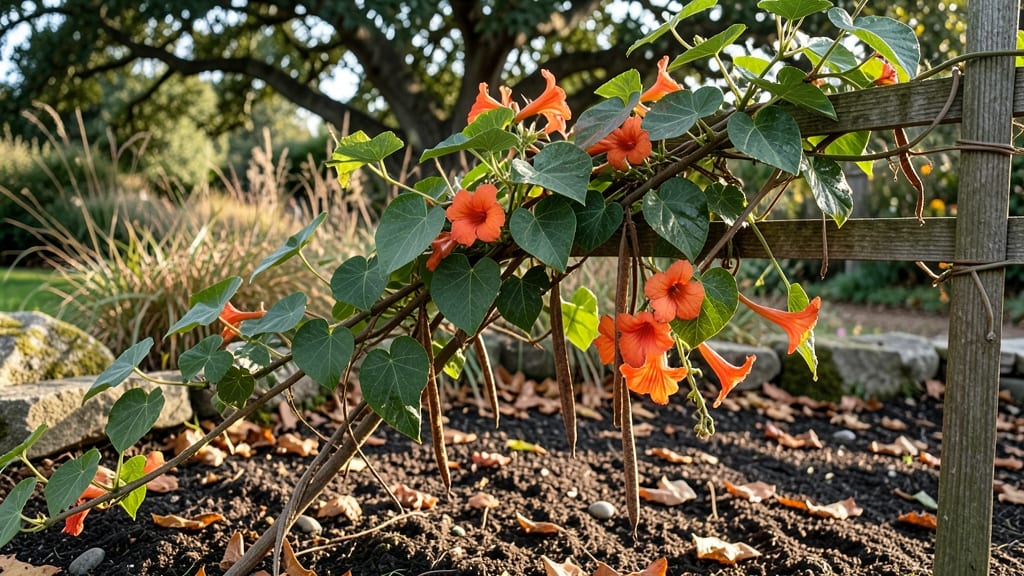
Cold-stratifying trumpet vine seed pods unlocks a 60-day shortcut to growing these bold climbers from scratch. 🌱 I’ve struggled with store-bought trumpet vine seedlings that never thrived—until I learned the secret of mimicking winter’s natural dormancy period.
The process turns hard-to-germinate seeds into sturdy plants that’ll climb your trellis in a single season.
Here’s the game-changer: those papery seed pods don’t just need moisture—they need cold. After harvesting them in late fall (or buying fresh pods), you’ll extract the seeds and nestle them in damp paper towels inside a sealed bag.
Tuck the bag in your fridge’s crisper drawer for 60 days, checking occasionally to ensure they stay damp but not soggy. This mimics the freeze-thaw cycles nature uses to break seed dormancy.
By day 60, you’ll see tiny roots peeking out—proof the seeds are ready to sprout. Plant them ½ inch deep in well-draining soil, keeping them consistently moist (not drenched) until true leaves appear.
Young trumpet vines grow fast once established, but they’ll need strong support early on or they’ll flop like overgrown weeds.
Watch out for slugs and aphids—they love tender new growth. But the real trick is patience: trumpet vines take 2-3 years to reach their full 30-foot glory, so give them space to stretch. Once they bloom, though, the crimson trumpet-shaped flowers make every cold winter wait worthwhile.
📚 In This Guide
- What you need
- Instructions
- Tips and common mistakes
- Wrapping up and next steps
What you need
- ● Mature trumpet vine seed pods: 3–5 fresh, fully dried pods (harvested in late fall/winter for best results).
- ● Cold-stratification supplies: 1 small plastic bag (resealable, quart-sized) or a paper towel + ziplock bag.
- ● 1–2 cups moistened peat moss or sphagnum moss (or a mix of both).
- ● 1 label maker or marker to tag your seeds.
- ● Planting containers: 3–4 small pots (4–6 inches deep) with drainage holes, or a seed tray with cell packs.
- ● Potting mix: 1 bag of well-draining seed-starting mix (avoid garden soil—it’s too dense!).
- ● Spray bottle (for gentle watering).
- ○ Grow lights or sunny windowsill: A south-facing window or a LED grow bulb (optional but helpful for weak light).
- ● Heating mat: A seedling heat mat (set to 70–75°F) to speed up germination.
- ● Humidity dome: A clear plastic cloche or humidity tent to retain moisture.
- ● Fertilizer: A balanced liquid fertilizer (5-5-5 or 10-10-10) diluted to half-strength for post-germination care.
- ● Pruning shears: For trimming leggy seedlings later.
- ● Journal/notebook: To track stratification progress and germination dates!
How to cold-stratify trumpet vine seed pods for reliable germination
Here's my battle-tested method to break dormancy and ensure strong, viable trumpet vine seedlings in just 60 days.
🌱 Step 1: Harvest and Prepare Mature Seed Pods
Collect fully mature trumpet vine seed pods when they turn brown and begin splitting open naturally. The pods should feel dry and papery to the touch, indicating the seeds inside have completed their natural drying process. I harvest pods in late fall when they've fallen from the vine, then store them in a cool, dry place until stratification begins.
Open the pods carefully with a small knife or your fingers, extracting the flat, dark brown seeds inside. Each pod typically contains 3-5 seeds. Remove any seeds that appear shriveled or damaged—these won't germinate. The viable seeds will have a glossy, slightly waxy coating that protects them during dormancy.
⏰ Step 2: Perform Cold Stratification for 60 Days
Place the prepared seeds in a sealed plastic bag with a damp paper towel. The paper towel should be moist but not dripping—squeeze it gently to test. Add a few ice cubes to the bag and seal it tightly. This creates a cold, moist environment that mimics winter conditions in the wild.
Store the bag in your refrigerator's crisper drawer where temperatures hover around 35-40°F. Check the seeds every 10 days to ensure the paper towel remains damp. If it feels dry, lightly mist it with water and reseal the bag. After 60 days, the seeds will have completed their stratification period and be ready for planting.
🌿 Step 3: Plant Stratified Seeds in a Controlled Environment
Fill small pots with a well-draining seed-starting mix and plant the stratified seeds about ¼ inch deep. I use 2-3 inch pots for trumpet vine seeds because they have long taproots that need room to develop. Space seeds 1 inch apart in each pot to avoid overcrowding as they germinate.
Cover the pots with clear plastic wrap to maintain humidity and place them in a warm spot with indirect light. Trumpet vine seeds germinate best at 70-75°F. You'll see the first signs of germination in 10-20 days as tiny green shoots push through the soil surface. Remove the plastic wrap immediately once sprouts appear to prevent fungal growth.
☀️ Step 4: Provide Optimal Growing Conditions
Move the germinated seedlings to a bright location with 6-8 hours of direct sunlight daily. A south-facing window or grow light setup works best. Trumpet vine seedlings grow quickly and need consistent moisture, so water the soil when the top inch feels dry to the touch. Avoid letting the soil become soggy, as this can cause root rot.
Fertilize seedlings lightly with a diluted liquid fertilizer every 2 weeks once they develop their first true leaves. You'll notice the seedlings grow rapidly, with vines beginning to emerge within 4-6 weeks after germination. This is when you'll need to provide support, such as small stakes or a trellis, to guide their climbing growth.
🪴 Step 5: Harden Off and Transplant Seedlings
Two weeks before your last frost date, begin hardening off the seedlings by gradually exposing them to outdoor conditions. Start with 1-2 hours of outdoor time daily in a sheltered spot, then slowly increase the duration over 10-14 days. This process helps the seedlings adjust to temperature fluctuations and wind exposure.
Transplant the hardened-off seedlings into the garden after all danger of frost has passed. Choose a location with full sun and well-draining soil. Trumpet vine thrives in warm climates and can tolerate poor soil conditions once established. Space plants 8-10 feet apart to allow for their vigorous growth and sprawling habit.
Tips & tricks for perfect trumpet vine seed germination
Here's what nobody tells you about maximizing your trumpet vine seed success—these tricks make all the difference between waiting years for germination and seeing strong seedlings in just 60 days.
Seed Selection Matters: In Step 1, when harvesting mature pods, focus on those that split open naturally—they contain the most viable seeds. I've found that pods with a papery texture and a slight crack along the seam yield the highest germination rates. Discard any pods that feel hard or green, as those seeds are still immature and won't break dormancy properly.
Stratification Environment: For Step 2, the key to successful stratification lies in maintaining consistent moisture and temperature. I've learned the hard way that using a damp paper towel is crucial—too dry and seeds won't germinate, too wet and they'll rot. The refrigerator's crisper drawer at 35-40°F mimics natural winter conditions perfectly, but if your fridge runs cooler, you can add a small heating pad underneath the bag for consistent warmth.
Planting Depth and Pot Size: When planting in Step 3, the ¼-inch depth and 2-3 inch pots aren't arbitrary—they're designed to accommodate trumpet vine's long taproots. I've noticed that planting too deep can cause the seedlings to struggle to reach the surface, while using smaller pots restricts root development. The 1-inch spacing between seeds also prevents overcrowding, which is especially important since trumpet vine grows vigorously.
Germination Timing: The 10-20 day window for germination in Step 3 can be tricky to predict. I've found that seeds stratified at cooler temperatures (closer to 35°F) often take the full 20 days, while those at the warmer end (40°F) may germinate in as little as 10 days. Keep the plastic wrap on until you see the first green shoots—this maintains the humidity they need to break through the soil surface.
Pro Tips for Trumpet Vine Seed Pods
- Here's what nobody tells you about maximizing your trumpet vine seed success—these tricks make all the difference bet...
- Seed Selection Matters: In Step 1, when harvesting mature pods, focus on those that split open naturally—they contain...
- Stratification Environment: For Step 2, the key to successful stratification lies in maintaining consistent moisture ...
Frequently asked questions
about trumpet vine seed pods—here’s what you need to know before diving in! Whether you're troubleshooting germination or curious about alternatives, we’ve got you covered.How do I know when trumpet vine seed pods are ready for harvesting?
Harvest seed pods when they turn brown and papery (not green) and split open naturally—usually in late fall or winter. Avoid harvesting if pods are still green or moist, as seeds may not be fully mature. Store them in a dry, cool place until cold stratification.
What’s the best way to cold-stratify trumpet vine seeds?
Place seeds in a moistened paper towel inside a sealed plastic bag, then refrigerate for 60 days at 35–40°F (2–4°C). Check weekly for mold—if present, dry seeds slightly and reseal. After stratification, sow in well-draining soil and keep moist until germination (4–8 weeks).
Can I grow trumpet vine from store-bought seeds, or do I need wild pods?
Yes! Store-bought seeds work, but wild-harvested pods may have higher viability. If using store-bought, ensure they’re labeled for trumpet vine (Campsis radicans) and follow the same cold-stratification steps. Avoid hybrid varieties if you want true-to-type vines.
Why aren’t my trumpet vine seeds germinating after cold stratification?
Check these common issues:
- Improper stratification: Seeds may have dried out or been too warm.
- Poor soil: Use a mix of peat moss + perlite for drainage.
- Temperature shock: Avoid sudden heat changes post-stratification.
- Old seeds: Viability drops after 1–2 years; harvest fresh pods.
Are trumpet vine seed pods invasive? Should I avoid growing them?
Trumpet vine is highly invasive in many regions (e.g., U.S. Southeast). If containment is a concern, consider growing in large containers or use root barriers. Research your local regulations—some areas ban it entirely. For non-invasive alternatives, try crossvine (Bignonia capreolata) or coral honeysuckle (Lonicera sempervirens).
Wrapping up and next steps
Trumpet vine seed pods may seem finicky, but with the right cold-stratification technique, you can coax them into thriving plants in just 60 days! 🌱 Whether you’re a seasoned gardener or a curious beginner, this method unlocks the secret to faster germination—no guesswork required.
Now that you’re armed with the how-to and answers to common questions, it’s time to roll up your sleeves and give these vibrant vines a try.
Ready to transform your garden? Gather your supplies, follow the steps, and watch those seed pods spring to life! 🌿