
Lawn
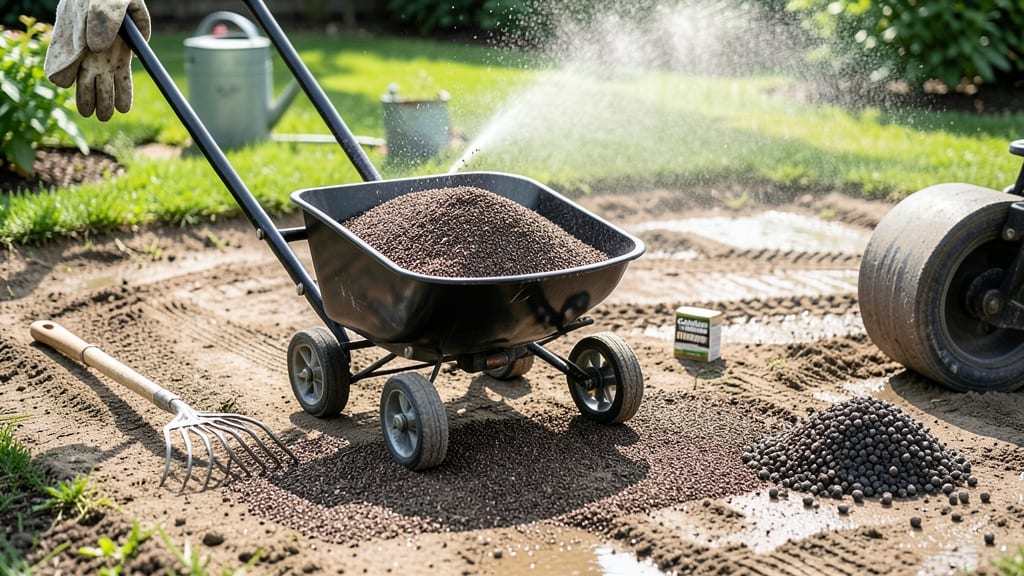
Seed a new lawn in fall to give cool-season grasses a 6-week head start before winter dormancy—something spring planting can't match. 🌱 I've seeded lawns in both seasons, and fall always delivers thicker, greener results with less weeding. The secret lies in cooler temperatures, consistent moisture, and fewer weeds competing with your grass. Soil prep is where most people stumble. Test your pH first—ideal range is 6.0 to 7.0—and amend with compost or lime if needed. Choose seed blends labeled for your climate zone, and avoid high-nitrogen fertilizers right after planting (they burn tender seedlings). My go-to mix combines Kentucky bluegrass, fine fescue, and perennial ryegrass for durability. You'll see sprouts in 7-21 days, depending on temperature, and a lush lawn by spring if you keep it watered (1/2 inch per week) and protected from foot traffic. The key is patience—fall's cooler temps mean slower growth, but that's when roots establish deep for winter survival. Works for Northern climates (late August to October) and Southern Hemisphere spring (March-May). Just time it so seedlings get 4-6 weeks of growth before hard frost. Here's how to nail the timing and care.
📚 In This Guide
- What you need
- Instructions
- Tips and common mistakes
- Wrapping up and next steps
What you need
- ● Seed: Cool-season grass seed (e.g., Tall Fescue, Kentucky Bluegrass, or Perennial Ryegrass). Quantity: 5–10 lbs per 1,000 sq ft (check seed bag for exact coverage rates).
- ● Soil Amendment: Starter fertilizer (10–20 lbs nitrogen per 1,000 sq ft, e.g., 24–0–6 or 30–0–4 blend).
- ○ Compost or peat moss (¼–½ inch layer for soil improvement, optional but recommended).
- ● Tools: Lawn rake (bendable tines for aeration).
- ● Garden hose with walk-behind sprinkler or soaker hose.
- ● Broadcast spreader (drop or rotary, calibrated for seed size).
- ● Handheld spreader (for edges or small areas).
- ● Gloves (heavy-duty, nitrile-coated for grip).
- ● Knee pads (trust us, your knees will thank you!).
- ● Soil Test Kit: Check pH and nutrient levels (ideal pH: 6.0–7.0 for cool-season grass).
- ● Lime: If soil test shows pH 20–50 lbs per 1,000 sq ft).
- ● Erosion Control Blanket: For sloped or sandy areas (secure with landscape staples).
- ● Lawn Roller: Lightweight (50–100 lbs) to press seed into soil (use sparingly).
- ● Weed Barrier Fabric: If overseeding an existing lawn with weeds (biodegradable preferred).
- ● Mulching Mat: Protects seed from birds and erosion (remove after germination).
- ● Weather Check: Aim for 48–72 hours of dry forecast after seeding.
- ● Soil Prep: Remove debris (rocks, sticks, weeds).
- ● Aerate compacted soil (core aerator recommended).
- ● Loosen top 2–3 inches of soil with a rake.
- ● Existing Lawn? Mow short (1–1.5 inches) and dethatch if needed.
Step-by-Step instructions for establishing a fall lawn from seed
Fall’s mild weather and frequent rains create ideal conditions for cool-season grasses—here’s how to transform bare soil into lush turf.
🌱 Step 1: Prepare the Soil for Optimal Germination
Rake the existing soil to a depth of 4 inches, breaking up any compacted layers. You’re aiming for a fine, crumbly texture that mimics the feel of loose potting mix—this ensures seeds make direct contact with moisture and nutrients. Remove all debris, rocks, and weeds, as even small roots will compete with your new grass for resources.
Test the soil pH using a kit—cool-season grasses thrive in a range of 6.0 to 7.0. If your soil is too acidic or alkaline, apply lime or sulfur as directed, then water deeply and wait 7-10 days before seeding. This adjustment period prevents seed damage from sudden pH shifts.
🌿 Step 2: Spread Seed Evenly for Uniform Growth
Divide your seed into two equal portions—this two-pass method prevents clumping. Use a broadcast spreader set to the recommended rate for your grass type, walking in opposite directions like a crosshatch pattern. For a 1,000 sq ft lawn, you’ll need about 5-10 lbs of seed, depending on the variety.
Lightly rake the area again to work seeds into the top ¼ inch of soil without burying them. Press the soil gently with a lawn roller or your feet to ensure good seed-to-soil contact. This step is critical—seeds need darkness to germinate but must stay in place to avoid washing away during watering.
💧 Step 3: Water Strategically to Encourage Germination
Water immediately after seeding, applying enough to moisten the soil 2-3 inches deep. Keep the surface consistently damp—like a wrung-out sponge—until germination occurs, typically in 7-21 days. Use a sprinkler with fine mist settings to avoid dislodging seeds. Watering lightly but frequently prevents seeds from drying out or floating away.
Once sprouts appear, reduce frequency but increase depth to ½ inch per week. You’ll know you’re on track when new growth appears uniformly and the lawn feels springy underfoot. Avoid walking on the area until the grass reaches 3 inches tall—this prevents soil compaction and root damage.
✂️ Step 4: Maintain New Growth Through Establishment
Wait until the grass reaches 3-4 inches tall before your first mowing. Set the blade to 3 inches and never remove more than ⅓ of the blade height at a time. This rule prevents scalping, which stresses young roots. Mow when the grass is dry to avoid clumping and disease spread.
Apply a starter fertilizer with low nitrogen content (around 10-20-10 ratio) once the grass is 2 inches tall. This promotes root development without encouraging top growth too quickly. Continue watering deeply 2-3 times per week until the lawn is fully established, usually by early winter.
☀️ Step 5: Transition to Winter Care for Long-Term Health
As temperatures drop below 50°F at night, reduce watering to 1 inch per week unless rainfall provides adequate moisture. Cool-season grasses enter dormancy naturally, so avoid fertilizing after October 1st—this prevents winter burn. Rake up any fallen leaves promptly to prevent smothering and fungal growth.
By late fall, your lawn should have a dense, uniform appearance with no bare spots. This is your reward for patience—cool-season grasses establish deeper roots in fall, giving you a head start on spring’s challenges. Next spring, you’ll enjoy a lawn that’s already stronger than many summer-seeded competitors.
Tips & tricks for perfect fall lawn establishment
Fall lawn seeding is where patience meets precision—here's how to maximize your success without the common pitfalls.
Soil Preparation Insight: For Step 1, don't just rake—think "seed bed." Use a garden fork to gently loosen the soil's sub-surface layers (about 2-3 inches deeper than the 4-inch recommendation) to improve drainage. This hidden step prevents water pooling that can drown seeds. I've seen lawns fail because of this exact oversight—seeds need both air and moisture, but not soggy conditions. Test your soil's moisture after loosening: it should feel like a damp sponge, not mud.
Seed Distribution Technique: In Step 2, the two-pass method is non-negotiable, but here's the pro move: after your second pass, walk diagonally across the lawn to catch any missed spots. I learned this the hard way when I missed a 4-foot strip in my first attempt—now I double-check with a grid pattern. Also, calibrate your spreader on pavement first to ensure even distribution. Uneven seeding leads to patchy growth that's nearly impossible to fix later.
Watering Strategy: The 2-3 inch deep watering in Step 3 requires attention to timing. Water in the morning (before 9 AM) to prevent evaporation and fungal risks. Use a rain gauge or tuna can to measure—you'd be surprised how often sprinklers deliver inconsistent coverage. I've seen seeds wash away because people watered at night or used improper sprinkler settings. For the first 7-21 days, check soil moisture daily: stick your finger 1 inch down—if it's dry, water again. This consistency is what transforms bare soil into lush grass.
Winter Transition Wisdom: When temperatures drop below 50°F in Step 5, cool-season grasses actually benefit from cooler nights. The key is monitoring leaf accumulation—remove leaves within 48 hours of falling to prevent thatch buildup. I've seen lawns smothered by leaves turn brown because homeowners waited too long. Also, consider a light raking (not scalping) every 2-3 weeks to aerate without disturbing roots. This fall maintenance sets up your lawn for spring dominance.
Pro Tips for Seed New Lawn In Fall
- Fall lawn seeding is where patience meets precision—here's how to maximize your success without the common pitfalls.
- Soil Preparation Insight: For Step 1, don't just rake—think "seed bed."
- Seed Distribution Technique: In Step 2, the two-pass method is non-negotiable, but here's the pro move: after your second pass, walk diagonally across the lawn to catch any missed spots.
Frequently asked questions
Got questions about seeding your lawn in the fall? You’re not alone! Here are some of the most common concerns—and their straightforward answers—to help you tackle your project with confidence.
Why is fall the best time to seed a new lawn?
Fall is ideal because cool-season grasses thrive in cooler temperatures (60–75°F) and benefit from fall rains, reducing watering needs. Warm soil and mild weather also help seeds germinate faster and establish deeper roots before winter dormancy. Plus, weeds are less aggressive, giving your grass a competitive edge!
How long does it take for grass seed to grow in the fall?
Germination typically takes 7–21 days, depending on grass type, soil moisture, and weather. Cool-season grasses like tall fescue or Kentucky bluegrass may show visible growth in 2–3 weeks, while ryegrass can sprout even faster (5–10 days). Patience pays off—wait until the grass is 3–4 inches tall before mowing!
Do I need to water my new lawn seed every day?
Yes! Keep the soil consistently moist (like a damp sponge) for the first 2–3 weeks. Water lightly 2–3 times daily (early morning is best) to avoid washing seeds away. Once seedlings are 1–2 inches tall, reduce to 1 inch per week. A sprinkler timer can save time and ensure even coverage.
What if my lawn has weeds or bare spots before seeding?
Start by removing weeds with a pre-emergent herbicide (if seeding soon) or manually pull them. For bare spots, lightly rake the area to loosen soil, then spread seed evenly. If weeds persist, consider a pre-seeding herbicide like corn gluten meal, which suppresses weeds without harming grass. Pro tip: Overseed thin areas in late summer/early fall for best results!
Can I seed a lawn in fall without renting equipment?
You can use a broadcast spreader (for seed) and a hand rake to cover soil. For larger areas, a garden hose-end spreader or even a shovel works in a pinch. Renting a core aerator (if needed) for 1–2 days is optional but helps seeds reach the soil faster. DIY tools keep costs low while ensuring great results!
Wrapping up and next steps
Fall is the perfect time to seed a new lawn—cool-season grasses thrive in these mild conditions, giving you a lush, healthy yard with less effort. By following the right steps—prepping soil, choosing quality seed, and keeping it moist—you’ll set the stage for a stunning spring lawn. 🌱
Ready to take action? Grab your supplies, pick a weekend, and get started! Your future lawn will thank you—one seed at a time. 🌟