
Propagation
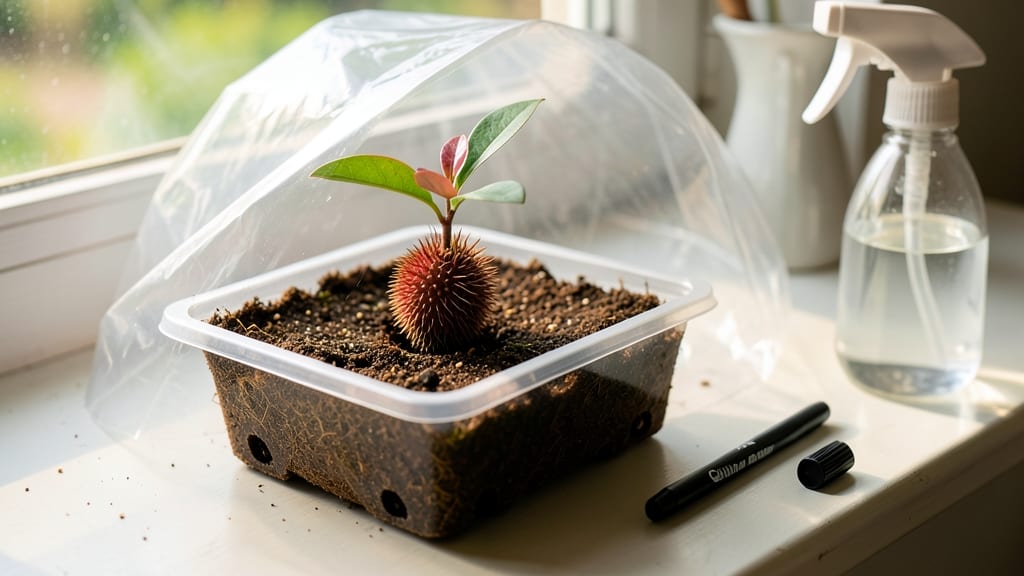
Rambutan seed germination is easier than you think—no fancy equipment, just patience and the right setup. 🌱 I’ve turned store-bought fruit into thriving seedlings using nothing but a plastic bag, warm spot, and a spray bottle. The key is breaking dormancy first, then mimicking tropical humidity without drowning the seed.
Start by soaking the seed for 24 hours in warm water to soften the hard shell, then gently rub the outer coating with sandpaper (this mimics natural scarification). Plant it 1 inch deep in moist potting mix, keeping it in 75-85°F conditions—my kitchen windowsill works perfectly.
Within 2-4 weeks, you’ll see the first signs of life.
Once sprouted, transplant carefully into a 3-inch pot with well-draining soil. Young rambutan seedlings love bright, indirect light and 60% humidity—a clear plastic dome or misting routine keeps them happy. By 30 days, you’ll have a sturdy seedling ready for its forever home.
Indoor starters can move outdoors after the last frost, but harden them off first. The real magic? Watching those first leaves unfurl—proof that tropical fruit trees start with a single seed. Here’s how to avoid common pitfalls like mold or stunted growth.
📚 In This Guide
- What you need
- Instructions
- Tips and common mistakes
- Wrapping up and next steps
What you need
- ● Fresh rambutan seeds: 3–5 healthy, plump seeds (harvested from ripe fruit). Pro tip: 💡 Choose seeds with a firm, unblemished shell!
- ○ Small pots or containers: 4–6 (4–6 inches deep) with drainage holes. Optional: Biodegradable pots for transplant ease!
- ● Well-draining potting mix: 2–3 bags (sterilized, peat-based or coconut coir blend). 🔥 Avoid heavy clay soil—roots need airflow!
- ● Watering can or spray bottle: For gentle hydration.
- ● Plastic wrap or clear lid: To create a humidity dome.
- ● Label markers: To track seed varieties (if testing multiple seeds).
- ● Scissors or knife: For trimming seeds (if removing excess fruit flesh).
- ○ Fungicide (optional): 1 small bottle (to prevent mold). 🌡️ Use sparingly—only if humidity feels excessive!
- ○ Heat mat (optional): For faster germination in cooler climates (set to 75–85°F).
- ○ Grow lights (optional): If natural light is limited (12–14 hours/day).
Step-by-step guide to germinating rambutan seeds
Here's how to coax those stubborn rambutan seeds into sprouting with minimal fuss.
🌱 Step 1: Prepare the Seeds for Faster Germination
Start by selecting fresh, plump rambutan seeds—older seeds germinate poorly. Scrub off any remaining fruit flesh with warm water, then soak them in a glass of water for 24 hours. This softens the tough outer shell and kickstarts the germination process. I like to add a pinch of cinnamon to the water to prevent mold, though it's optional.
After soaking, gently rub the seeds between your fingers to loosen the shell further. You'll see a slight give when it's ready—don't force it or you'll crack the seed inside. Place them between two paper towels in a sealed plastic bag and store in a warm spot (75-85°F) for 5-7 days. Check daily for moisture; if the towels dry out, mist lightly with water.
💧 Step 2: Plant the Germinated Seeds Properly
Once you spot a tiny white root (¼ inch long), it's time to plant. Fill a small pot (at least 4 inches deep) with a mix of 50% peat moss and 50% perlite—this ensures fast drainage while retaining enough moisture. Make a hole 1 inch deep and place the seed with the root pointing downward, covering it lightly.
Press the soil gently around the seed to secure it without compacting. Water until the surface feels damp but not soggy—you want the soil to hold moisture without pooling. Place the pot in a warm, shaded area (70-75°F) where it gets indirect light. Avoid direct sunlight at this stage; it can dry out the seed too quickly.
☀️ Step 3: Provide Ideal Conditions for Sprouting
Keep the soil consistently moist but never waterlogged—stick your finger in the soil up to your first knuckle. If it feels dry, water lightly. Within 2-4 weeks, you should see the first true leaves emerge, signaling successful germination. This is the moment that matters: patience pays off here.
Once the seedling reaches 3-4 inches tall, introduce it to brighter, indirect light. A south-facing window with sheer curtains works well. Avoid cold drafts or sudden temperature swings—rambutan seedlings are sensitive to stress. If the leaves start yellowing, it’s a sign of overwatering or poor drainage.
⏰ Step 4: Transplant and Encourage Strong Growth
After 6-8 weeks, when the seedling has 4-5 leaves, it’s ready for its first transplant. Choose a slightly larger pot (6 inches deep) and use a well-draining mix of 60% potting soil, 20% perlite, and 20% compost. Dig a hole deep enough to bury the seedling up to its first set of true leaves—this stabilizes the stem.
Water thoroughly after transplanting and place the pot in a spot with bright, indirect light. Gradually acclimate it to more sunlight over 2 weeks to avoid leaf scorch. Real talk: rambutan seedlings grow slowly, so don’t rush it. Focus on keeping the soil moist and the environment warm—these are the keys to success.
Tips & tricks for perfect rambutan seed germination
Here's what nobody tells you—those seemingly small details make all the difference with rambutan seeds.
Seed Selection Matters: Don't just grab any rambutan seeds! Look for ones that are plump, firm, and free of cracks or soft spots. I've found that seeds from fully ripe fruit (deep red/purple) germinate most reliably. The 24-hour soak is your first critical step—this softens the tough outer shell, but if your seeds float, they're likely hollow and won't sprout. Discard those immediately to avoid wasting time.
The Warmth Factor: Maintaining that 75-85°F temperature range during the 5-7 day paper towel stage is absolutely crucial. I keep mine on top of my fridge (not inside) where it stays consistently warm. If your kitchen runs cold, consider using a seedling heat mat set to low—just be careful not to overheat, as temperatures above 85°F can actually inhibit germination. A simple thermometer helps monitor this perfectly.
Planting Precision: When you're ready to plant in Step 2, pay close attention to the ¼ inch root you're waiting for. This tiny indicator means your seed is ready to transition from paper towels to soil. The 1 inch deep planting depth might seem shallow, but rambutan seeds need this specific depth to avoid rotting while still allowing the root to access moisture efficiently. Gently press the soil around the seed rather than packing it down—you want to create a cozy nest, not a compressed tomb.
Light Transition Strategy: The shift from warm, shaded conditions to brighter light at the 3-4 inch stage requires patience. I've seen beginners rush this and end up with scorched leaves. Start with just 2-3 hours of morning sunlight, then gradually increase exposure. Think of it like sunbathing—you wouldn't go from zero to full sun immediately, would you? A sheer curtain provides perfect diffusion for those first few weeks of acclimation.
Pro Tips for Rambutan Seed Germination
- Here's what nobody tells you—those seemingly small details make all the difference with rambutan seeds.
- Seed Selection Matters: Don't just grab any rambutan seeds! Look for ones that are plump, firm, and free of cracks or...
- The Warmth Factor: Maintaining that 75-85°F temperature range during the 5-7 day paper towel stage is absolutely cruc...
Frequently asked questions
Got questions about germinating rambutan seeds?
You’re not alone! Here are some of the most common queries—plus quick, actionable answers to keep your sprouting journey smooth.
How long does it take for rambutan seeds to germinate?
Rambutan seeds typically sprout in 3 to 6 weeks, depending on conditions like warmth (70–85°F), moisture, and seed freshness. Some seeds may take longer—patience is key! Pre-soaking for 24 hours can speed things up. Pro tip: Check daily for tiny root cracks (a sign of life!).
What’s the fastest way to germinate rambutan seeds?
Boost success with these tricks:
- Warmth: Use a seedling heat mat or place near a sunny window.
- Humidity: Cover the pot with plastic wrap (remove daily to prevent mold).
- Fresh seeds: Older seeds (over 6 months) germinate slower—use recently harvested ones.
- Scarification: Lightly sand the seed’s hard shell to help water penetrate.
Why won’t my rambutan seed sprout?
Common culprits include:
- Dormancy: Rambutan seeds need warmth and moisture—try a bottom heat method (place pot on a warm surface).
- Rot: Overwatering or poor drainage causes mold. Let the soil dry slightly between waterings.
- Old seeds: Viability drops after 3–6 months. Test with a float test (sink = viable; float = discard).
- Cold temps: Below 60°F stalls germination. Use a grow light or move indoors.
Can I grow a rambutan tree from a store-bought fruit’s seed?
Yes! Store-bought rambutan seeds will germinate, but the resulting tree may not produce fruit identical to the parent (due to cross-pollination). For consistent fruit, graft a known variety onto your seedling later. Tip: Buy seeds from tropical nurseries if you want a higher chance of true-to-type fruit.
Where should I plant a germinated rambutan seedling?
Rambutan seedlings thrive in warm, humid climates (USDA zones 10–12). Start indoors in pots with well-draining soil (mix peat and perlite). After sprouting, transplant to a 5-gallon container before moving outdoors. Warning: Rambutans hate cold—never expose seedlings to temps below 50°F. Use a greenhouse or move indoors if needed.
Wrapping up and next steps
Germinating rambutan seeds is a rewarding journey that connects you to nature’s growth cycle—and you’ve got this! 🌱 With the right tools, patience, and a little care, you’ll watch those tiny seeds transform into thriving saplings in just 30 days.
Whether you’re a gardening newbie or a green-thumb enthusiast, this process is your gateway to growing your own rambutan tree.
Now that you’re armed with knowledge, take the next step: grab those seeds, set up your germination station, and let the magic happen! Share your progress with fellow plant lovers—your success story might inspire someone else to start their own tropical adventure. 🌿