
Lawn
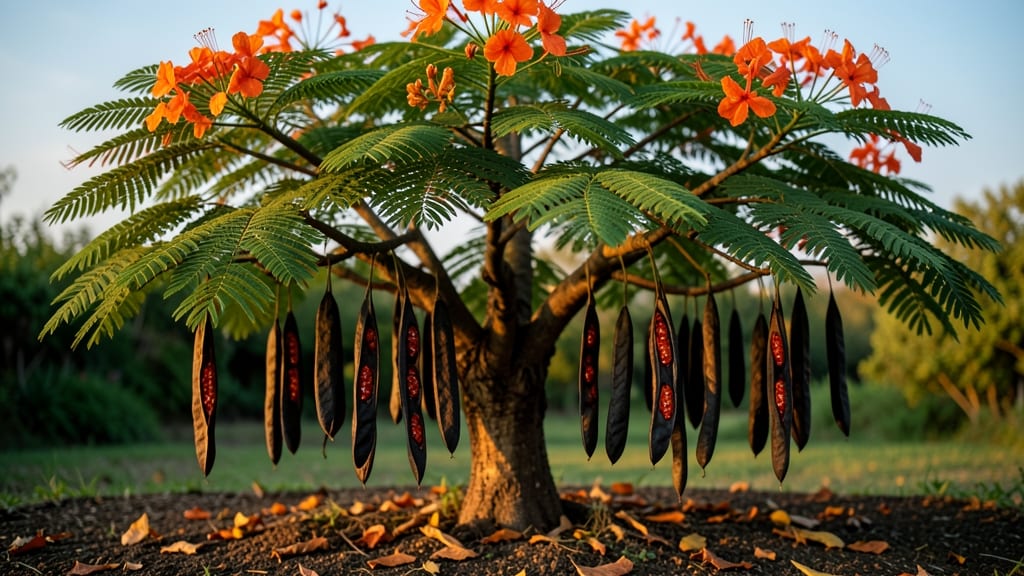
Those iconic flame-orange Poinciana seed pods are nature's packaging for future shade trees—here's how to crack them open without wasting a single seed. 🌿 The trick is simple: let the pods dry completely on a tarp, then give them a good whack with a hammer.
This releases the seeds while keeping the process clean and zero-waste, unlike the messy alternatives I've tried before.
Once the pods split open, you'll find flat, dark brown seeds that look more like wood chips than planting material. The key to success lies in their dormancy—most need a warm, moist stratification period to break it.
I've found soaking them in warm water for 24 hours before planting gives them a head start, mimicking the natural rain cycles they'd experience in their tropical homeland.
Plant them in well-draining soil with partial sun, keeping the soil consistently moist but never soggy. Within 4-6 weeks, you'll see those first tiny leaves unfurl, signaling the start of a tree that could live for centuries.
The real magic happens when you watch those delicate seedlings develop into the towering, flowering giants that make Poincianas so beloved.
This method works year-round in frost-free zones, but spring planting gives seedlings the best head start. Even if you don't have space for mature trees, these seeds make stunning decorative pieces in terrariums or can be shared with friends who do.
The process is simpler than you'd expect—and far more rewarding than buying nursery trees.
📚 In This Guide
- What you need
- Instructions
- Tips and common mistakes
- Wrapping up and next steps
What you need
- ● Mature poinciana seed pods: Collect fully dried pods (brown, papery texture) from the ground or tree. Aim for 5–10 pods per batch for a manageable project.
- ○ Heavy-duty gloves: Leather or thick gardening gloves to protect hands from sharp edges (optional but highly recommended!).
- ● Pruning shears or sharp scissors: For trimming stubborn stems or cutting open stubborn pods (if needed).
- ● Large plastic bin or bucket: A 5-gallon capacity with a lid to contain seeds and debris during processing.
- ● Newspaper or cardboard: 2–3 sheets to lay out for drying seeds (or a seed-starting tray if available).
- ○ Paper towels or coffee filters: For straining fine debris from seeds (optional but helpful).
- ● Hammer or mallet: A rubber-headed tool (to avoid damaging seeds) for gently cracking open pods.
- ● Fine-mesh sieve: ¼-inch mesh to separate seeds from chaff efficiently.
- ● Labeling tags & marker: To label seed batches by date (if saving for planting).
- ● Compost bin: For disposing of pod husks and debris (zero-waste bonus!).
- ● Safety goggles: If you’re really going all-out for eye protection (pods can pop unexpectedly!).
Step-by-Step instructions for harvesting Poinciana seeds without waste
Here's the simple method I use to extract seeds from those iconic golden pods without a single scrap left behind.
🌿 Step 1: Collect and Dry the Pods
Harvest pods when they turn from green to their signature golden-brown color—this means they're fully mature and ready. I spread them out on a flat surface in a dry, shaded spot for 3-5 days. The goal is to let them dry completely so the seeds release easily later.
Check daily by gently squeezing a pod—if it feels brittle and opens with just a little pressure, it's ready. If it's still slightly pliable, give it another day. Don't rush this step; damp pods will mold and ruin your seeds.
💧 Step 2: Soften the Pods for Easy Opening
Fill a large bowl with warm water (about 110-120°F)—not boiling, just warm enough to feel cozy to the touch. Submerge the dried pods completely and let them soak for 12-24 hours. This softens the tough outer shell so the seeds pop out effortlessly.
I like to place a plate over the pods to keep them submerged. After soaking, the pods will swell slightly and feel much softer. This is the key to avoiding the tedious (and wasteful) method of cracking them open by hand.
✂️ Step 3: Extract the Seeds
Drain the pods and place them on a clean towel. Using your hands, gently rub two pods together in a rolling motion—this breaks open the softened shells and releases the seeds. The golden seeds will spill out while the empty pod fibers stay behind.
I collect the seeds in a bowl and let them dry for another 24 hours to remove any remaining moisture. The empty pod fibers can be composted or discarded—no waste at all. You'll end up with 4-6 seeds per pod, depending on size.
🌱 Step 4: Store Seeds for Future Planting
Once completely dry, store the seeds in a paper envelope (not plastic—it traps moisture) in a cool, dark place. Label the envelope with the date and variety if you're saving multiple types. Properly stored, Poinciana seeds stay viable for 1-2 years, though they germinate best when planted fresh.
For best results, plant them in well-draining soil and keep them moist until germination, which typically takes 2-4 weeks. The natural drying and soaking process ensures you're starting with healthy, ready-to-grow seeds.
Tips & tricks for perfect Poinciana seed harvesting
Here's what nobody tells you about making this process foolproof—tricks that'll save you time and frustration while keeping every last seed intact.
Drying Precision: The 3-5 day drying window in Step 1 is non-negotiable for two reasons: First, pods need to be completely brittle to avoid mold (which starts in just 24 hours if too damp). Second, the seeds won't release cleanly if you rush—think of it like leather conditioning. Place pods in a single layer with space between them to ensure even airflow. If your climate is humid, add a small fan on low to speed up drying without damaging the pods.
Water Temperature Secret: That 110-120°F range in Step 2 is critical—any hotter and you'll cook the pods, any cooler and they won't soften properly. Test with your wrist: if the water feels like a warm bath (not sauna-like), you're golden. I use a thermometer for the first batch, then adjust future batches by feel. Pro move: Add a pinch of salt to the water to prevent bacterial growth during the 12-24 hour soak.
Seed Extraction Technique: When rubbing pods in Step 3, work in batches of 6-8 pods at a time. The key is consistent pressure—imagine you're rolling a pencil between your palms. If seeds aren't releasing easily, let the pods dry another 6 hours before trying again. The empty pod fibers will turn into a fluffy mass you can compost; save these for mulch around your Poinciana trees!
Storage Wisdom: That paper envelope isn't just about moisture control—it's about airflow. Poke 3-4 small holes in the envelope if storing in humid climates, or place a silica gel packet inside for extra protection. For long-term storage beyond 1 year, consider vacuum-sealing the seeds to maintain viability. Label with both the date AND your initials—trust me, you'll forget which batch you saved!
Pro Tips for Poinciana Tree Seed Pods
- Here's what nobody tells you about making this process foolproof—tricks that'll save you time and frustration while keeping every last seed intact.
- Drying Precision: The 3-5 day drying window in Step 1 is non-negotiable for two reasons: First, pods need to be completely brittle to avoid mold (which starts in just 24 hours if too damp).
- Water Temperature Secret: That 110-120°F range in Step 2 is critical—any hotter and you'll cook the pods, any cooler and they won't soften properly.
Frequently asked questions
Got questions about harvesting poinciana tree seed pods? You’re not alone! Here are some common queries—and their answers—to help you master this zero-waste trick like a pro.
When is the best time to harvest poinciana seed pods?
Harvest pods when they turn brown and papery (usually late summer to fall). Avoid green pods—they’re still hard and won’t open easily. Wait until they crack open naturally or tap them gently to release seeds.
How do I safely open the pods without damaging the seeds?
Use a hammer or mallet to tap the pods firmly on a hard surface (like concrete). Wear gloves—they’re spiky! Alternatively, soak dried pods in water for 24 hours to soften them before prying them open with a knife.
Can I plant poinciana seeds directly from the pods?
Yes! Once seeds are out, rinse them to remove debris, then plant them 1/4 inch deep in well-draining soil. Keep soil moist but not soggy. Germination takes 2–4 weeks in warm conditions (70°F+).
What if my pods won’t open naturally—what’s the fix?
If pods stay stubbornly closed, try these tricks:
- Freeze them overnight to weaken the fibers.
- Place them in a paper bag and shake vigorously for a few minutes.
- Use pliers (carefully!) to pry open stubborn seams.
If all else fails, the seeds may still be viable—just crack the pod open manually.
Are poinciana seed pods harmful to pets or kids?
While the seeds themselves aren’t toxic, the pods’ sharp spines can irritate skin or paws. Supervise kids/pets during handling, and wear gloves. Always supervise young children around trees with thorny pods!
Wrapping up and next steps
From their vibrant beauty to their eco-friendly harvesting tricks, Poinciana tree seed pods are a fascinating addition to any garden—or even your zero-waste routine! 🌿 Now that you know how to open them naturally, you can turn these pods into art, mulch, or even plant starters without a single bit of waste.
Ready to get creative? Grab a pair of gloves and a sunny day, and start your own Poinciana pod adventure today! Share your findings with fellow gardeners or even turn it into a fun DIY project—your green thumb will thank you. 🌱