
Lawn
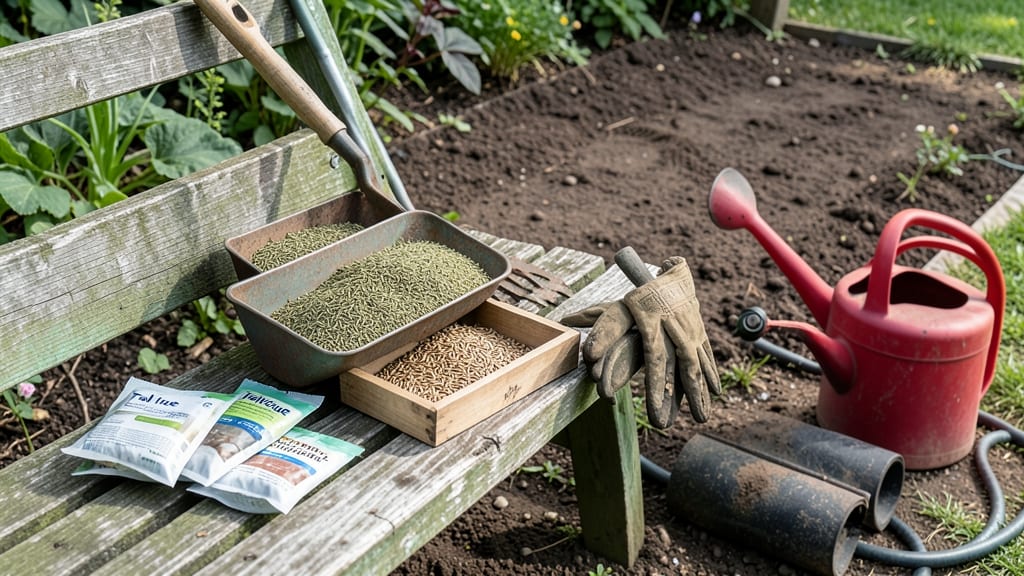
Autumn is the secret weapon for a lawn so thick and green your neighbors will ask for your recipe. 🌱 The cooler weather and consistent rainfall give grass seeds the perfect chance to establish deep roots before winter—something spring planting just can’t match.
After my first autumn overseeding, my patchy lawn transformed into a uniform carpet by May, and the secret isn’t expensive tools or fancy seeds, but timing and patience.
You’ll need cool-season grass seed (like fescue or ryegrass), a rake, a lawn roller, and a water source you can check daily. The real prep work happens before you even spread seed—fixing compacted soil, removing debris, and aerating if your lawn feels like concrete.
Most people skip this step, and that’s why their new grass struggles to take hold. I learned that the hard way when my first attempt sprouted unevenly because of buried thatch.
By the time spring rolls around, you’ll have a lawn that’s thicker, darker, and more resilient than anything you could buy in sod. The key is keeping the soil moist (not soggy) for the first three weeks, then letting nature take over.
You’ll see the first green shoots in about 7-14 days, and by winter, your lawn will be dormant but alive and ready to explode in growth when temperatures rise.
Works for every climate zone that grows cool-season grasses—just adjust your timing slightly north or south. The same principles apply whether you’re fixing bare patches or giving your entire lawn a refresh. Here’s how to make it happen without the guesswork.
📚 In This Guide
- What you need
- Instructions
- Tips and common mistakes
- Wrapping up and next steps
What you need
- ● High-quality grass seed: Quantity: 10–20 lbs per 500 sq ft (adjust based on seed type—cool-season grasses like Kentucky Bluegrass or Fescue are ideal for autumn).
- ● Type: Choose a blend suited to your climate and sunlight (full sun, partial shade, etc.).
- ● Lawn soil amendments: Compost or organic matter (2–3 inches spread evenly).
- ● Starter fertilizer (low-nitrogen, high-phosphorus for root growth, e.g., 10-20-10 ratio).
- ● Tools: Rake (bow rake for large areas, leaf rake for debris).
- ● Garden hose or sprinkler (with adjustable nozzle for gentle watering).
- ● Broadcast spreader (for even seed distribution) OR hand spreader (for smaller areas).
- ○ Lawn roller (10–15 lb, optional but helps seed-to-soil contact).
- ● Weather: Aim for cool temperatures (50–70°F) and no rain in the forecast for 24–48 hours after planting.
- ● Soil prep: Test soil pH (ideal range: 6.0–7.0) and amend if needed (lime to raise pH, sulfur to lower).
- ● Existing lawn: Remove debris, dethatch (if thatch layer is >0.5 inches), and aerate (core aeration recommended).
- ● Water source: Ensure consistent access to water for 10–15 minutes, 2x daily for the first 2 weeks.
- ● Erosion control blanket (for slopes or bare spots).
- ● Seed germination mat (for faster sprouting in cooler climates).
- ● Organic mulch (straw, not hay, to prevent weeds).
- ● Soil test kit (DIY pH/NPK testing for precision).
Step-by-Step instructions for planting grass seed in autumn
Autumn is the perfect time to plant grass seed—cooler temps and steady rains create ideal conditions for strong root growth.
🪴 Step 1: Prepare the Soil for Planting
Start by removing any existing grass or weeds using a shovel or sod cutter. You want bare soil to ensure your new seed makes direct contact with the earth. I like to work in small sections—about 4 feet by 4 feet—so I can focus on getting the prep just right.
Loosen the top 4-6 inches of soil with a garden fork or tiller. This breaks up compaction and lets roots penetrate easily. Smooth the surface with a rake, removing rocks and debris. The goal is a fine, crumbly texture—like cake batter, but for dirt. If your soil is heavy clay, mix in a 1-inch layer of compost to improve drainage and fertility.
💧 Step 2: Choose and Spread the Grass Seed
Select a seed blend suited to your climate and sun exposure—cool-season grasses like Kentucky bluegrass or fescue thrive in autumn planting. For a 1,000-square-foot area, you’ll need about 4-6 pounds of seed. I use a broadcast spreader for even coverage, walking in overlapping passes to avoid thin spots.
Lightly rake the seed into the soil with a stiff-bristle rake, pressing it just enough to make contact with the earth. The seed should be covered by no more than ¼ inch—any deeper, and it won’t have enough light to germinate. If you’re planting on a slope, work across the grade to prevent erosion.
☀️ Step 3: Water Gently and Consistently
Water immediately after planting to settle the seed into the soil. Use a gentle sprinkler or hose with a fine mist setting to avoid displacing the seed. Keep the soil moist—like a wrung-out sponge—for the first 2-3 weeks. You’ll know it’s right when the top inch stays damp but doesn’t puddle.
Water lightly twice daily—once in the morning and once in the evening—to encourage germination. Avoid heavy watering, which can wash away seed or create crusting on the soil surface. Once the grass reaches 2-3 inches tall, you can gradually reduce watering to 1 inch per week, letting the roots develop deeper.
✂️ Step 4: Maintain and Protect New Growth
Keep the area free of foot traffic for at least 4-6 weeks to prevent damaging tender new shoots. If birds or animals become a problem, cover the area with lightweight netting until the grass is established. I’ve found that a thin layer of straw mulch helps retain moisture and insulate the seed from temperature swings.
Once the grass reaches 3-4 inches tall, mow it to 3 inches to encourage a thicker, denser lawn. Avoid cutting more than ⅓ of the blade height at a time—this prevents stress and promotes strong growth. In late autumn, reduce watering slightly but keep the soil from drying out completely.
Tips & tricks for planting grass seed in autumn
These simple tricks will help you avoid common pitfalls and get that perfect lawn foundation.
Soil Prep is Everything: In Step 1, when loosening that top 4-6 inches of soil, don't rush it. Think of it like fluffing a pillow—you want that soil to be airy and inviting for roots. I've found that using a garden fork instead of a tiller gives me more control over the depth, especially in clay-heavy soil. That 1-inch compost layer makes all the difference for drainage and fertility—don't skip it if your soil feels dense.
Seed Placement Matters: During Step 2, that ¼-inch coverage rule is critical. I've seen too many people bury seed too deep, only to watch it fail to germinate. Use your rake like you're dusting powder on a cake—just enough to make contact. For slopes, working across the grade prevents erosion and ensures even distribution. Pro tip: Walk backward when spreading to avoid stepping on freshly seeded areas.
Watering Wisdom: The 2-3 week watering schedule in Step 3 can be tricky. I've learned to check moisture by grabbing a handful of soil—it should feel like a damp sponge, not a soggy washcloth. Morning watering prevents fungal issues, while evening watering helps seeds absorb moisture overnight. Once you see those first sprouts, reduce to 1 inch per week, but keep that soil consistently moist like a wrung-out sponge.
Protection Pays Off: That 4-6 week foot traffic rule in Step 4 is non-negotiable. I've seen too many people step on new shoots and create bare patches. The straw mulch isn't just for looks—it helps retain moisture and insulates against temperature swings. If birds become an issue, lightweight netting is worth the temporary hassle for that perfect lawn.
Pro Tips for Planting Grass Seed In Autumn
- These simple tricks will help you avoid common pitfalls and get that perfect lawn foundation.
- Soil Prep is Everything: In Step 1, when loosening that top 4-6 inches of soil, don't rush it.
- Seed Placement Matters: During Step 2, that ¼-inch coverage rule is critical.
Frequently asked questions
Got questions about timing, prep, or troubleshooting? You’re not alone! Here are answers to the most common concerns about planting grass seed in autumn—so you can tackle your project with confidence.
What’s the best time of autumn to plant grass seed?
The ideal window is late summer to early fall (around 6–8 weeks before your area’s first frost). Aim for when daytime temps are 60–75°F (15–24°C)—cool enough to avoid drought stress but warm enough for germination. In most regions, September through early October is perfect!
How long does it take for grass seed to grow in autumn?
Germination typically takes 7–21 days, depending on the seed type, soil moisture, and weather. Cool-season grasses (like fescue or ryegrass) sprout faster in autumn’s mild temps. For full coverage, expect 4–6 weeks of consistent care (watering, mowing, and fertilizing). Patience pays off with a thick, resilient lawn by spring!
How often should I water grass seed in autumn?
Keep the soil consistently moist (not soggy!) for the first 2–3 weeks. Water lightly 2–3 times daily (10–15 minutes per session) to encourage germination. Once seedlings emerge, switch to 1 inch (2.5 cm) per week, including rainfall. Morning watering reduces evaporation and fungal risks.
Can I overseed an existing lawn in autumn?
Autumn is prime time for overseeding. Mow your lawn short, remove debris, and aerate (rent a core aerator if needed) to loosen compacted soil. Spread seed evenly, then top-dress with compost or straw. This fills thin spots and strengthens weak areas—no need to tear up the whole lawn!
What if squirrels or birds eat my grass seed?
Use seed with a protective coating (like polymer-coated seed) or apply a thin layer of straw or peat moss after sowing. For stubborn critters, try bird netting or a temporary fence. Avoid over-seeding in one spot—scatter seed lightly and widely to minimize loss.
Will frost kill newly planted grass seed?
No—established seedlings can handle light frost, but newly germinated grass is vulnerable. Plant early enough to give roots time to anchor (aim for 4–6 weeks before hard frost). If frost hits, cover seedlings with a lightweight blanket or straw until temps rise. Most cool-season grasses thrive with autumn’s chill!
What’s the best grass seed for autumn planting?
Choose cool-season grasses like:
- Tall fescue – Drought-tolerant, shade-friendly.
- Fine fescue – Low-maintenance, great for thin lawns.
- Perennial ryegrass – Fast germination (ideal for quick coverage).
- Kentucky bluegrass – Lush but needs more care.
Wrapping up and next steps
Autumn is the perfect time to plant grass seed—cooler temps, fewer weeds, and consistent moisture set the stage for a thick, vibrant lawn by spring. 🌱 By following the right steps—preparing soil, choosing the best seed, and maintaining patience—you’re already ahead of the game.
Now’s your chance to transform your yard into a lush oasis with minimal effort.
Ready to take the next step? Grab your gloves, pick a seed blend, and get planting—your future lawn will thank you! For extra tips, check out our seasonal lawn care guide to keep your grass thriving year-round.