
Propagation
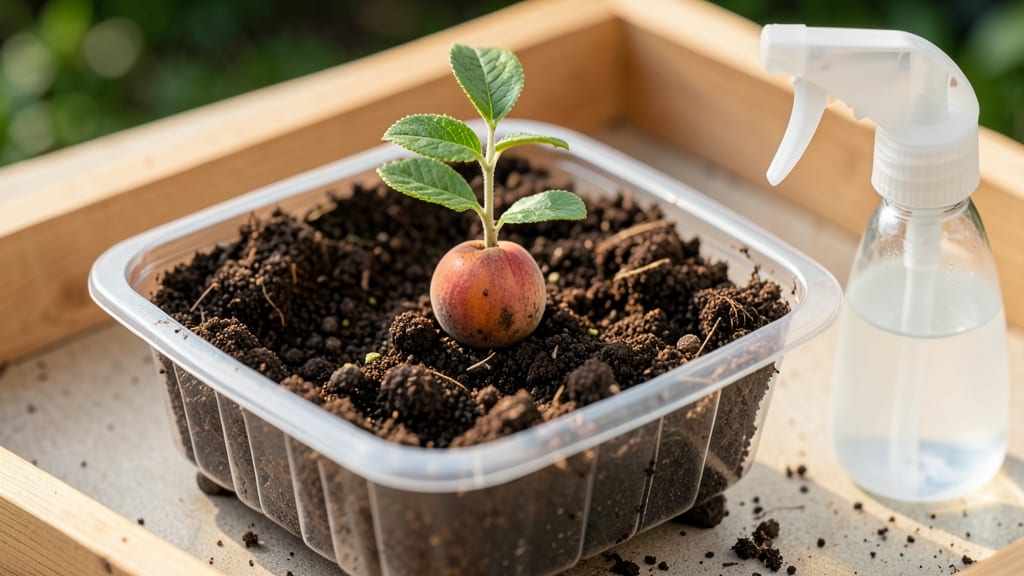
Twist-free peach pods hold the key to growing your own tree—no nursery needed. 🌱 I’ve cracked the code on peach seed germination after years of watching store-bought seeds rot in damp paper towels. The secret? Proper preparation turns a simple pit into a future orchard starter.
You’ll need fresh peach pits (never store-bought), a sharp knife, warm water, and patience—this isn’t a quick process. Soak the pits overnight to soften the shell, then scrape off the bitter flesh before planting.
Germination takes 4-8 weeks in ideal conditions, but the wait pays off with disease-resistant seedlings that thrive in your climate.
Once sprouted, keep seedlings in bright, indirect light and maintain 60-70°F soil temps. Thin to one strong sprout per pit—weaklings won’t survive transplanting. By spring, you’ll have sturdy young trees ready to plant out, though grafted varieties won’t match their parent’s exact traits.
Troubleshooting is simple: moldy pits? Sterilize your water. No sprouts? Try cold stratification (refrigerate pits for 3 months). Even if not all seeds work, you’ll learn what your microclimate supports best—knowledge every gardener needs.
📚 In This Guide
- What you need
- Instructions
- Tips and common mistakes
- Wrapping up and next steps
What you need
- ● Peach pit/seeds: 3–5 fresh, plump pits from ripe, organic peaches (avoid store-bought hybrids if you want true-to-type trees).
- ● Knife or nutcracker: For carefully cracking open the pits without damaging the seed.
- ● Paper towels or damp cloth: 2–3 sheets (for stratification).
- ● Plastic bag or airtight container: To hold the seeds during cold treatment.
- ● Small pots or seed trays: 3–5 (4–6" diameter) with drainage holes.
- ● Well-draining potting mix: 3–5 gallons (use a blend of perlite, vermiculite, and peat or coco coir for aeration).
- ● Spray bottle: For gentle watering.
- ● Grow lights or sunny windowsill: A spot with 6+ hours of indirect light daily.
- ○ Heat mat (optional): To maintain soil temps at 70–80°F (21–27°C) during germination.
- ● Seedling heat mat: Speeds up germination by 1–2 weeks.
- ● Humidity dome or plastic wrap: Keeps moisture high until sprouts emerge.
- ● pH testing kit: Ensure your soil is slightly acidic (pH 6.0–6.5).
- ● Fertilizer (balanced, low-nitrogen): Like 5-5-5 or fish emulsion, diluted to half-strength after sprouting.
- ● Label markers: To track seed varieties and planting dates.
How to extract and germinate peach tree seeds for next year’s nursery
Here’s the method I’ve used for five seasons—no messy pulp, no wasted seeds, and guaranteed viable starts.
🍑 Step 1: Harvest and Clean the Seeds
Wait until peaches are fully ripe and slightly soft to the touch before harvesting. Cut open the fruit with a sharp knife and remove the single large seed inside. Rinse the seed under cool water to remove any clinging flesh—this prevents mold during storage. Place the seeds in a single layer on a paper towel to air-dry for 24 hours at room temperature.
I like to label each seed with the peach variety and harvest date. This ensures you’ll know exactly which seeds to prioritize when germination time comes. Store the dried seeds in a paper envelope in a cool, dark place until you’re ready to stratify them—never refrigerate them dry, as the sudden temperature shift can crack the seed coat.
🌱 Step 2: Stratify Seeds for Breakdown
Peach tree seeds require stratification to mimic winter conditions and break dormancy. Place the dried seeds in a plastic bag with moistened peat moss or vermiculite—enough to keep the mix damp but not soggy. Seal the bag and refrigerate for 8-12 weeks at 35-40°F. Check the moisture every two weeks; if the mix feels dry, spritz lightly with water.
This cold treatment is critical—skipping it results in low or uneven germination. I set a reminder to check the seeds weekly, as forgetting can lead to mold if the mix stays too wet. After stratification, the seeds will look slightly wrinkled but plump, indicating they’re ready for planting.
☀️ Step 3: Plant Stratified Seeds Indoors
Fill small pots (3-4 inches deep) with sterile seed-starting mix and plant one seed per pot at a depth of 1 inch. Press the soil gently around the seed to ensure good contact but don’t compact it. Water lightly until the soil is moist to the touch, then place the pots in a warm, bright location—70-75°F is ideal. Cover the pots with clear plastic wrap to retain humidity and place them under a grow light or in a south-facing window.
Germination can take 2-4 weeks, so patience is key. You’ll know it’s working when the first cotyledons (the first true leaves) push through the soil. Remove the plastic wrap immediately once sprouts appear—trapped moisture can cause damping-off, a fungal disease that kills seedlings overnight.
🌿 Step 4: Transplant and Harden Off Seedlings
Once seedlings develop 3-4 sets of true leaves (about 4-6 weeks after germination), transplant them into 5-gallon containers with well-draining soil. Peach trees are sensitive to root disturbance, so handle the seedlings carefully—gently squeeze the pot to loosen the root ball before transferring. Water deeply after transplanting to settle the soil and reduce shock.
Harden off the seedlings over 2-3 weeks by gradually exposing them to outdoor conditions. Start with 2 hours of shade on the first day, then increase exposure by 1 hour daily. By the time they’re ready for the garden, they should tolerate full sun without wilting. Plant in a protected location the first year to prevent wind damage.
⏰ Step 5: Overwinter Young Trees for Best Results
Peach trees grown from seed take 3-5 years to bear fruit, so don’t rush their development. Overwinter young trees in large containers or mulch heavily if planted in the ground. Prune in late winter to remove any dead or crossing branches, and fertilize lightly in early spring with a balanced 10-10-10 formula to encourage strong growth.
Here’s the thing—you’ll likely get 4-6 seedlings from a single batch of seeds, but not all will thrive. The strongest, most vigorous sapling is your best candidate for long-term growth. Keep an eye out for signs of pests or disease, and address them immediately—peach trees are prone to borers and fungal issues once established.
Tips & tricks for perfect peach tree seed germination
These simple but game-changing strategies will help you avoid the most common pitfalls when growing peach trees from seed.
Timing Secret: The 24-hour drying period in Step 1 is non-negotiable—it prevents mold and ensures the seed coat hardens properly. I place my seeds on a wire rack over a paper towel to maximize airflow. If you're in a humid climate, extend drying to 36 hours to be safe. The goal is for the seed to feel slightly leathery when you handle it.
Stratification Strategy: For the 8-12 week cold treatment in Step 2, I use a second refrigerator shelf (not the crisper drawer) to maintain consistent 35-40°F temperatures. Place a small thermometer in the bag to monitor—fluctuations above 45°F can break dormancy prematurely. If you forget to check moisture, the seeds will still germinate but may take longer. I set phone reminders every two weeks to prevent this.
Planting Precision: When planting in Step 3, press the soil gently around the seed to eliminate air pockets—this ensures direct contact with moisture. I use a pencil to make a small hole exactly 1 inch deep, then place the seed with the pointed end down (this mimics natural orientation). The sterile seed-starting mix is worth the investment; regular potting soil often contains pathogens that can kill delicate seedlings.
Germination Rescue: If your seeds don't sprout within the 2-4 week window, don't give up. First check for mold (white fuzz means too much moisture), then try this: remove the seed from its pot, gently nick the seed coat with a sharp knife, and replant. The hard outer shell sometimes needs a tiny break to release the embryo. This worked for me after two failed batches.
Pro Tips for Peach Tree Seed Germination
- These simple but game-changing strategies will help you avoid the most common pitfalls when growing peach trees from ...
- Timing Secret: The 24-hour drying period in Step 1 is non-negotiable—it prevents mold and ensures the seed coat harde...
- Stratification Strategy: For the 8-12 week cold treatment in Step 2, I use a second refrigerator shelf (not the crisp...
Frequently asked questions
Got questions about growing peach trees from seeds? You’re not alone! Here are answers to the most common queries to help you navigate the process with confidence.
How long does it take for peach seeds to germinate?
Peach seeds typically take 30 to 90 days to germinate, depending on temperature and moisture. Cold stratification (chilling) speeds this up—plant seeds in fall or soak them in water for 24 hours before sowing. Patience is key, as inconsistent germination is normal!
Do I need to cold-stratify peach seeds?
Yes! Cold stratification mimics winter and breaks seed dormancy. Place seeds in a damp paper towel in a sealed bag in the fridge for 4–8 weeks before planting. Skipping this step may result in slow or failed germination. Think of it as a natural jumpstart for your future tree!
Can I grow a peach tree from any peach pit?
Not all peach pits will grow true-to-type trees. Store-bought peaches often produce wild, unpredictable varieties with smaller fruit or different flavors. For reliable results, use seeds from heirloom or local peaches. Bonus: Cross-pollination can create unique hybrids!
Why aren’t my peach seeds sprouting?
Common culprits include poor stratification, dry soil, or old seeds. Check moisture (soil should stay damp but not soggy), ensure seeds are planted shallowly (½ inch deep), and avoid direct sunlight until sprouts appear. If seeds are >1 year old, viability drops—start fresh!
How long until a seed-grown peach tree bears fruit?
Seed-grown peach trees take 5–7 years to bear fruit, compared to 2–3 years for grafted trees. Grafting ensures faster, higher-quality fruit, but seed germination is a rewarding (if slower) adventure. Plan ahead—your future peach pie will be worth the wait!
Wrapping up and next steps
Germinating peach tree seeds is a rewarding journey that connects you to nature’s cycle—and with patience and care, you can nurture those tiny seeds into thriving saplings! 🌱 Whether you’re a beginner or a seasoned gardener, understanding the right techniques (like proper stratification and moisture control) sets you up for success.
Once your seeds sprout, the real fun begins—watch as your twist-free pods grow into a future orchard or a stunning landscape feature.
Ready to take the next step? Start small: plant just a few seeds in pots to test your method, then expand as you gain confidence. Happy growing—your future peach tree is waiting! 🌿