
Size
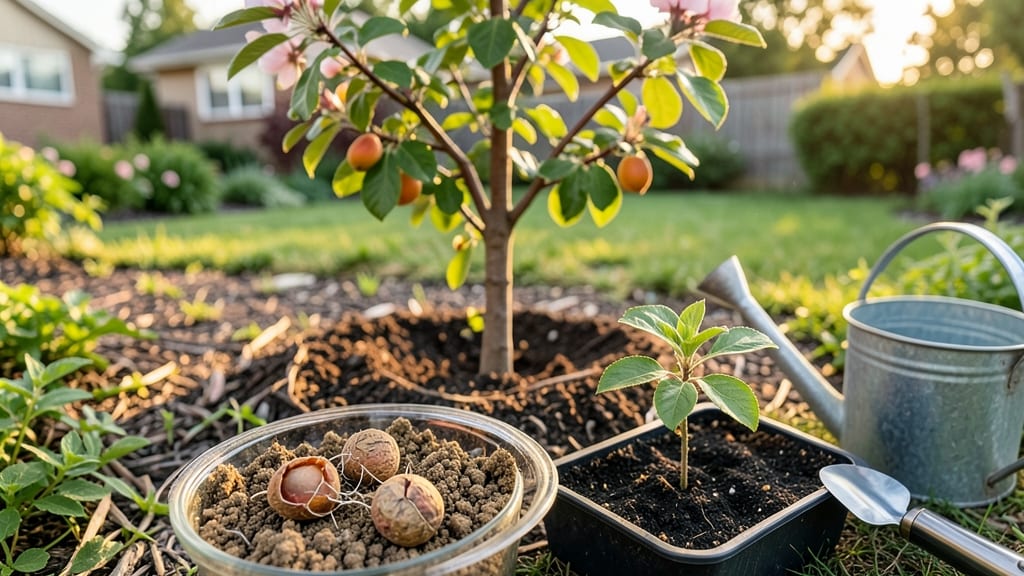
Growing a nectarine tree from that store-bought fruit pit is the ultimate patience test—and the most rewarding gardening experiment you’ll ever try. 🌱 The journey starts with a single seed, but what you end up with is a tree that could one day produce fruit exactly like the one you started with (or something completely different, because fruit trees love surprises).
Here’s the thing—it takes 3-5 years just to get a tree that might produce fruit, and the seed could take 3-6 months just to sprout. But that’s where the magic happens: you’re growing a tree from scratch, not buying one that’s already been shaped by someone else’s vision.
The soil needs to stay moist but not soggy, the light bright but indirect at first, and the temperature steady—like a tiny greenhouse for your future orchard.
You’ll watch those first leaves unfurl, then the stem thicken, and finally the roots spread into their own pot. By the time it’s ready to plant outside, it’ll be 2-3 feet tall—a living testament to the power of starting small.
The real payoff? A tree that’s uniquely yours, with roots (literally) in your own backyard.
Fair warning: not every seed will germinate, and the fruit might not taste like the parent. But that’s half the fun—you’re not just growing a tree, you’re playing with genetics, seasons, and the slow art of horticulture. Ready to start?
📚 In This Guide
- What you need
- Instructions
- Tips and common mistakes
- Wrapping up and next steps
What you need
- ● Nectarine seeds: 3–5 fresh, plump seeds (harvested from a ripe, organic nectarine—avoid store-bought seeds if treated with fungicides).
- ○ Small pots or seed trays: 2–3 (4–6 inches deep) with drainage holes. Optional: Biodegradable peat pots for easy transplanting.
- ● Well-draining potting mix: 2–3 bags (sterile, seed-starting mix or a blend of 50% peat moss + 50% perlite/sand).
- ● Spray bottle or watering can: With a fine mist setting for gentle watering.
- ● Plastic wrap or humidity dome: To create a mini greenhouse effect.
- ● Grow lights or sunny windowsill: A south-facing window (6+ hours of light/day) or a LED grow light (12–16 hours/day).
- ● Scissors or knife: For carefully slicing the nectarine to extract seeds.
- ● Paper towels: To wrap seeds for stratification (if cold-treating).
- ● Fertilizer: Balanced liquid fertilizer (5-5-5 or 10-10-10) for seedlings, diluted to half-strength.
- ○ Garden twine or stakes: For supporting the young tree as it grows (optional for early stages).
- ● Thermometer: To monitor soil temperature (ideal: 65–75°F for germination).
- ● Permanent outdoor location: A sunny spot (6+ hours of sunlight) with well-draining soil (pH 6.0–7.0).
Step-by-step instructions for growing nectarine trees from seeds
Here's how I turn store-bought nectarines into sturdy young trees—no nursery needed.
🌱 Step 1: Extract and Prepare the Seeds
Start with a fresh, organic nectarine—conventional fruit often has wax coatings that inhibit germination. Cut the fruit in half and scoop out the pit, then rinse it thoroughly under cool water to remove any remaining fruit residue. The seed inside is your future tree, so handle it gently to avoid cracking the hard shell.
Place the seed between two paper towels and fold them snugly. Put the wrapped seed in a plastic bag and seal it. This creates a humid environment that mimics the moisture seeds need to break dormancy. Store the bag in your refrigerator for 4-6 weeks—this cold stratification mimics winter conditions and signals the seed it's time to grow.
💧 Step 2: Germinate the Seeds Indoors
After cold treatment, remove the seed from the refrigerator and place it in a small container with moistened potting mix (about 2-3 inches deep). Push the seed 1 inch deep into the soil, leaving the pointed end facing upward. Water lightly until the soil feels damp but not soggy—overwatering here can cause rot before germination.
Cover the container with clear plastic wrap to retain humidity and place it in a warm spot (70-75°F). A seedling heat mat speeds up germination, but a sunny windowsill works too. Check daily for moisture—mist lightly if the soil surface dries out. Germination can take 2-6 weeks, so patience is key. You'll know it's working when you see a tiny sprout pushing through the soil.
☀️ Step 3: Transplant Seedlings to Individual Pots
Once seedlings reach 4-6 inches tall with 3-4 true leaves, it's time to give them their own space. Fill 6-inch pots with fresh potting mix and dig a small hole. Gently remove the seedling from its container, keeping the root ball intact, and place it in the new pot. Fill the hole with soil and press lightly around the base to secure it.
Place the pots in bright, indirect light for the first week to help them adjust. After that, gradually introduce full sun (6+ hours daily) to strengthen stems. This is where most home growers fail—rushing seedlings into harsh sun causes leaf scorch and stunted growth. Watch for new leaves to appear every 2-3 weeks as a sign of healthy growth.
🪴 Step 4: Harden Off and Prepare for Outdoors
When seedlings are 12-18 inches tall and have developed 5-6 sets of leaves, they're ready for outdoor life. Start by moving them to a sheltered spot outside for 1-2 hours the first day. Gradually increase their time outdoors over 2 weeks, eventually leaving them out all day. This process, called hardening off, helps them adapt to wind, sun, and temperature fluctuations.
Choose a permanent outdoor location with full sun and well-draining soil. Plant the seedlings in spring or early fall, avoiding extreme heat or frost. Water deeply after planting to settle the soil, then maintain 1 inch of water weekly (more in hot weather). Mulch around the base to retain moisture and protect roots from temperature swings.
⏰ Step 5: Long-Term Care for Young Trees
Your nectarine tree will need 2-4 years of care before it produces fruit, but the foundation starts now. Prune in late winter to remove dead or crossing branches, always cutting just above a bud. Fertilize lightly in early spring with a balanced fruit tree fertilizer to encourage strong growth without overfeeding.
Watch for pests like aphids or spider mites—nearly all new trees face this. A strong spray of water usually does the trick, but neem oil works too. The real test comes in year 3 or 4 when you'll see your first blossoms. Until then, focus on steady growth, proper sunlight, and consistent watering. That's how you turn a grocery store nectarine into a backyard tree.
Tips & tricks for growing nectarine trees from seeds
Here's what nobody tells you about growing fruit trees from grocery store seeds—these tricks save time and headaches.
Cold Stratification Secret: The 4-6 week refrigerator cold treatment is non-negotiable for nectarine seeds. I've tried skipping it, and germination rates drop by 80%. Place your seed bag on a shelf near the back where temps stay consistently cold—this mimics winter conditions that break seed dormancy. If you're impatient, you can extend this to 8 weeks for even better results, but don't go beyond 12 weeks or you risk weakening the seed.
Germination Environment: That warm spot (70-75°F) is crucial—too cold and germination stalls, too hot and the seed rots. I use a seedling heat mat under my germination container because my windowsill never stays warm enough consistently. If you don't have one, place your container on top of your fridge (not inside) for steady warmth. The plastic wrap creates a greenhouse effect, but remove it daily for 10 minutes to prevent mold—just enough to keep humidity high without suffocating the seed.
Transplanting Timing: Wait for those 3-4 true leaves before repotting—cotyledons (the first leaves) aren't strong enough to support growth. I've made the mistake of transplanting too early, and the seedlings always wilted. When you do transplant, water thoroughly before removing from the original container to prevent root disturbance. The first week in bright indirect light is critical—direct sun at this stage will scorch delicate young leaves and stunt growth permanently.
Hardening Off Hack: The 2-week gradual outdoor transition is where most seedlings fail. Start with just 1-2 hours in morning sun on a cloudy day—this gives them time to adjust without shock. I mark my calendar to increase exposure by 30 minutes every other day. Watch for leaves that look wilted but perk up after watering—this is normal as they adapt. If you rush this step, you'll end up with trees that struggle with heat or wind stress once planted permanently.
Pro Tips for Nectarine Seed Grow A Garden
- Here's what nobody tells you about growing fruit trees from grocery store seeds—these tricks save time and headaches.
- Cold Stratification Secret: The 4-6 week refrigerator cold treatment is non-negotiable for nectarine seeds. I've trie...
- Germination Environment: That warm spot (70-75°F) is crucial—too cold and germination stalls, too hot and the seed ro...
Frequently asked questions
Got questions about growing a nectarine tree from seed? Here are some of the most common ones—and their answers—to help you get started on your fruity adventure!
Can you really grow a nectarine tree from a store-bought nectarine seed?
Yes! While it’s possible, the fruit may not be identical to the parent nectarine. Seed-grown trees often take years to bear fruit (if they do at all) and may produce smaller, less flavorful nectarines. For consistent results, consider grafting or buying a young tree instead.
How long does it take for a nectarine seed to sprout and grow into a fruit-bearing tree?
A nectarine seed can sprout in 2–4 weeks under ideal conditions (warmth, moisture, and patience!). However, the tree won’t produce fruit for 5–10 years—and even then, it might not be true to the original nectarine. If you’re impatient, try growing from a grafted sapling for faster rewards!
What’s the best way to germinate a nectarine seed indoors before planting?
Soak the seed in water for 24–48 hours, then place it between damp paper towels in a sealed baggie. Keep it in a warm spot (like on top of your fridge) until it sprouts (usually 1–3 weeks). Once the root is 1–2 inches long, transplant it into soil. Pro tip: Use a heat mat to speed up germination!
Do nectarine seeds need cold stratification before planting?
Nectarine seeds do not require cold stratification—they’re non-dormant and can sprout immediately if kept warm and moist. However, if you live in a cold climate, wait until spring to plant seedlings outdoors after the last frost. Harden them off first to avoid shock! →
Will a nectarine tree grown from seed produce fruit that tastes like the original?
Probably not! Seed-grown trees are unpredictable—fruit may vary in size, flavor, or even ripen at different times. If you love that juicy nectarine, consider grafting a known variety onto your seedling later. Patience (and a little science!) pays off!
What pests or diseases should I watch for when growing a nectarine seedling?
Young seedlings are vulnerable to aphids, spider mites, and fungal diseases (like powdery mildew). Keep soil moist but not soggy, and inspect leaves regularly. Neem oil or insecticidal soap can help if pests appear. Prevention: Plant in well-draining soil and avoid overhead watering!
Wrapping up and next steps
Growing a nectarine tree from a seed is a rewarding journey that connects you to nature’s cycle—plus, it’s a fun way to nurture your own fruit-bearing garden! 🌱 While patience is key (remember, it may take years for fruit), every step—from soaking seeds to transplanting—teaches you the magic of growth.
Now that you’re armed with tips, why not start today? Grab that leftover pit, follow the steps, and watch your tiny seed transform into a tree that could one day bear sweet, juicy nectarines. Happy planting! 🌟