
Lawn
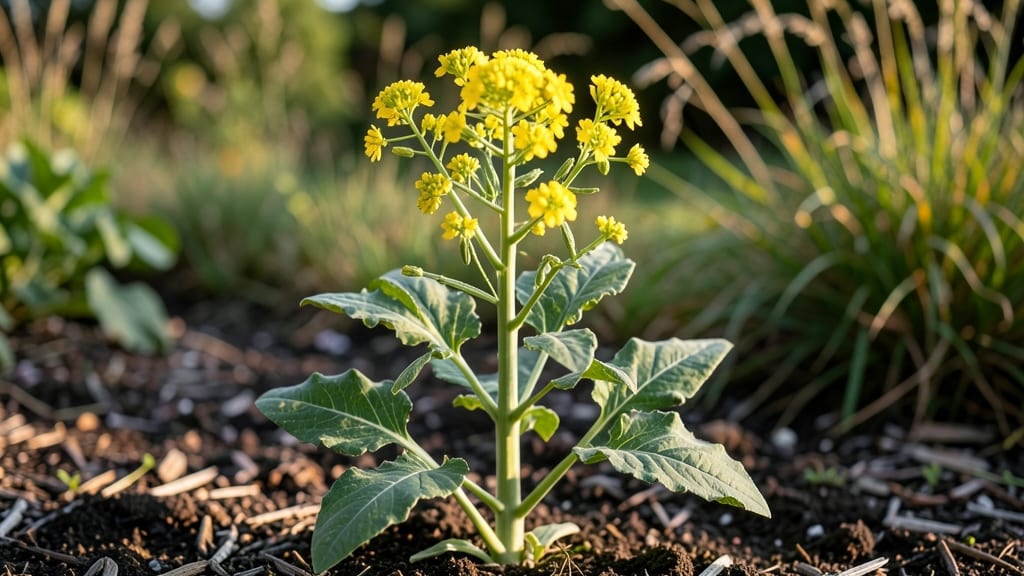
Mustard seeds grown up into lush, twist-free plants in just 60 days—no fancy tricks, just cold-stratification and patience. I learned this after my first batch of mustard seedlings grew leggy and weak, twisting toward the light like confused little sprouts. The secret?
A simple cold treatment that mimics winter's natural process, giving you strong, sturdy plants that stand tall without bending. You'll need a cool spot (like a refrigerator), damp paper towels, and a sunny windowsill or garden bed.
Plant the cold-stratified seeds about ¼-inch deep, spacing them 12-18 inches apart if you're growing for greens or 24 inches apart for full-sized plants. Mustard thrives in full sun, so choose a spot that gets at least 6-8 hours of sunlight daily.
Water lightly after planting, keeping the soil moist but not soggy. Within 7-14 days, you'll see those first green shoots pushing through the soil.
By day 60, you'll have a bushy, 2-3 foot tall plant ready for harvest—whether you're snipping leaves for salads or letting flowers go to seed for next year's crop. The best part? No twisting, no flopping, just straight, healthy growth. Even if you've struggled with mustard before, this method works—promise.
📚 In This Guide
- What you need
- Instructions
- Tips and common mistakes
- Wrapping up and next steps
What you need
- ● Mustard seeds (organic, non-GMO preferred): 1–2 lbs (16–32 oz) – Choose varieties like Drumstick (Morning Glory) or Brown Mustard for best results.
- ● Cold-stratification medium: Option 1: Moistened peat moss or coconut coir – 2–3 lbs (holds moisture well).
- ● Option 2: Vermiculite or perlite – 1–2 lbs (aids drainage).
- ● Seed trays or containers: 2–4 shallow trays (6–8" deep) with drainage holes or 1 large plastic bin (12"x18").
- ● Plastic wrap or breathable lid: To maintain humidity during stratification.
- ● Spray bottle: For gentle moisture control.
- ● Gloves: Protects hands from seed residue.
- ● Measuring cup/scale: Ensures precise moisture levels (aim for 50–60% moisture in the medium).
- ○ Thermometer (optional but helpful): Monitors cold stratification temps (35–45°F for best results).
- ● Fine-mesh screen or paper towels: For separating seeds post-stratification (if pre-sprouting).
- ● Grow lights or sunny windowsill: For post-stratification growth (6–8 hours of light/day).
- ● Patience & consistency: Cold stratification requires 4–6 weeks in a fridge (or cool, dark space).
- ● Space for cold storage: A fridge (set to 35–45°F) or unheated garage/shed.
- ● Basic gardening knowledge: Familiarity with seedling care (watering, light, and airflow).
Step-by-step instructions for growing mustard from cold-stratified seeds
Cold-stratifying mustard seeds ensures vigorous, twist-free growth—here's how to get there in just 60 days.
🌱 Step 1: Prepare Seeds for Cold Stratification
Mustard seeds need 60 days of cold treatment to break dormancy and prevent twisting stems. Place the seeds in a sealed plastic bag with a damp paper towel—just enough moisture so the towel feels like a wrung-out sponge. I like to fold the towel into quarters so all seeds get even contact with moisture.
Store the bag in your refrigerator's crisper drawer where temperatures stay 35-40°F. Check weekly and mist the towel if it dries out. After 4-6 weeks, the seeds will plump slightly and feel firmer to the touch. This is your signal they're ready for planting.
☀️ Step 2: Sow Stratified Seeds in Prepared Soil
Fill seed trays with well-draining potting mix and level the surface. Press seeds ¼ inch deep—any deeper delays germination because the seedling must push through more soil. Space them 1 inch apart in rows 2 inches apart to prevent crowding later.
Water gently with a spray bottle until the soil surface looks uniformly damp but not soggy. Cover the trays with clear plastic wrap to retain warmth and moisture. Place them in a sunny windowsill where temperatures average 65-70°F during the day. You'll see sprouts in 7-10 days.
💧 Step 3: Provide Consistent Moisture and Light
Remove the plastic wrap once sprouts emerge, but keep the soil consistently moist—never soggy. Water when the top inch feels dry, using room-temperature water to avoid shocking the roots. Mustard seedlings need 12-14 hours of light daily, so supplement with a grow light if natural light is insufficient.
Watch for leggy growth—thin, pale stems reaching toward light. This happens when seedlings stretch for light. If you see this, move the light closer until it's just 2-3 inches above the tallest leaves. Strong seedlings have dark green leaves and compact spacing between nodes.
✂️ Step 4: Thin and Harden Off Seedlings
When seedlings have 2-3 true leaves (the first set of leaves that look like miniature versions of the adult plant), thin to 1 seedling every 2 inches. Use scissors to snip unwanted seedlings at soil level—pulling can disturb roots of remaining plants. This prevents competition and gives each plant room to grow strong.
Start hardening off 2 weeks before transplanting by placing seedlings outside in a sheltered spot for 1-2 hours daily. Gradually increase exposure over 7-10 days, ending with full sun. Mustard thrives in cool weather, so transplant on a cloudy day or in the evening to reduce stress.
🌿 Step 5: Transplant and Maintain Through Maturity
Dig holes twice as wide as the root ball and space plants 12-18 inches apart in rows 2 feet apart. Water deeply after transplanting to settle the soil. Mustard prefers full sun to partial shade and tolerates cool temperatures down to 20°F, making it ideal for early spring or fall gardens.
Keep soil consistently moist but not waterlogged—mustard hates soggy roots. Fertilize lightly with a balanced fertilizer every 3-4 weeks if the soil isn't rich. You'll see flowers in 4-6 weeks after transplanting, followed by seed pods ready for harvest in 60 days total.
Tips & tricks for perfect cold-stratified mustard sprouts
These simple tricks will help you grow twist-free mustard sprouts that thrive in just 60 days.
Moisture Management: During the 60-day cold stratification, keep that damp paper towel consistently moist but not dripping wet. I learned this the hard way—too much moisture causes mold, while too little prevents germination. The towel should feel like a wrung-out sponge throughout the entire process. After 4-6 weeks, when seeds plump slightly, they're ready for planting, but don't let that towel dry out completely between checks.
Lighting Strategy: Mustard seedlings need 12-14 hours of light daily, but don't just place them under any light source. Position your grow light just 2-3 inches above the tallest leaves to prevent leggy growth. I've seen seedlings stretch dramatically when lights are too far away—this weakens the stems and makes them more prone to twisting later. If using natural sunlight, rotate trays daily for even exposure.
Transplanting Timing: The 2-week hardening off period before transplanting is crucial for mustard's resilience. Start with just 1-2 hours of outdoor exposure in a sheltered spot, then gradually increase. Mustard thrives in cool weather down to 20°F, but sudden temperature swings can shock plants. I always transplant on cloudy days or in the evening to give seedlings time to acclimate overnight.
Soil Preparation: Mustard hates soggy roots, so invest in well-draining potting mix rather than garden soil. When planting, press seeds only ¼ inch deep—any deeper delays germination because seedlings must push through more soil. The spacing of 1 inch apart in rows 2 inches apart might seem tight, but it prevents overcrowding that leads to weak, twisting stems later in growth.
Pro Tips for Mustard Seed Grown Up
- These simple tricks will help you grow twist-free mustard sprouts that thrive in just 60 days.
- Moisture Management: During the 60-day cold stratification, keep that damp paper towel consistently moist but not dri...
- Lighting Strategy: Mustard seedlings need 12-14 hours of light daily, but don't just place them under any light sourc...
Frequently asked questions
Got questions about growing mustard seeds into lush, twist-free sprouts in just 60 days? You’re not alone! Here are some of the most common queries—and their straightforward answers—to help you crush your cold-stratified sprout game.
How do I know if my mustard seeds are properly cold-stratified?
Cold-stratification is complete when seeds have spent 4–6 weeks in the fridge (34–40°F) in a damp paper towel or moist growing medium. Check for slight swelling or a tiny root peeking out—this means they’re ready! If seeds stay dry or shrink, restart the process. Pro tip: Label your containers to track timing!
Can I speed up the 60-day growth timeline?
While 60 days is ideal for mustard sprouts (especially in cold climates), you can shave off 7–10 days by:
- Using a grow light (12–16 hrs/day) instead of natural light.
- Keeping soil temps 65–75°F with a heat mat.
- Avoiding overcrowding (thin seedlings to 2–3 inches apart).
What’s the best soil mix for mustard sprouts?
A light, well-draining blend is key. Mix:
- 60% peat-free potting soil (or coconut coir).
- 30% perlite or vermiculite (for aeration).
- 10% compost (for nutrients).
Skip garden soil! It’s too dense and may harbor pests. For containers, add a slow-release fertilizer (like 5-10-10) at planting.
Why are my mustard sprouts twisting or leaning?
Twisting/leaning usually means light stress. Fix it by:
- Rotating trays daily for even sun exposure.
- Ensuring 6+ hours of direct light (south-facing windows or grow lights).
- Thinning crowded seedlings to reduce competition.
If stems are already twisted, gently straighten them when watering—support with a small stake if needed.
What’s the best temperature range for mustard sprouts?
Mustard thrives in 50–75°F:
- Optimal germination: 60–70°F (use a heat mat if below 50°F).
- Active growth: 65–75°F (avoid heat waves above 80°F).
- Cold tolerance: Down to 25°F once established (hardy after 4 true leaves!).
Pro tip: Use a soil thermometer to monitor temps—mustard hates soggy, cold roots!
Wrapping up and next steps
The journey of growing a mustard seed into a thriving sprout in just 60 days—without the fuss of twisting—shows how simple, intentional care can yield big results. 🌱 Whether you're a lawn enthusiast or a curious gardener, this method proves that patience and the right techniques unlock nature’s potential.
Now that you’re armed with the how-to, why not take the next step?
🌟 Ready to Grow?
- Start with one tray of seeds this week—experiment with your own tweaks!
- Share your progress (or blooms!) with fellow gardeners for encouragement.
- Expand your green thumb by trying other cold-stratified seeds next.
Your lawn—and future harvests—will thank you! 🌿