
Transplanting
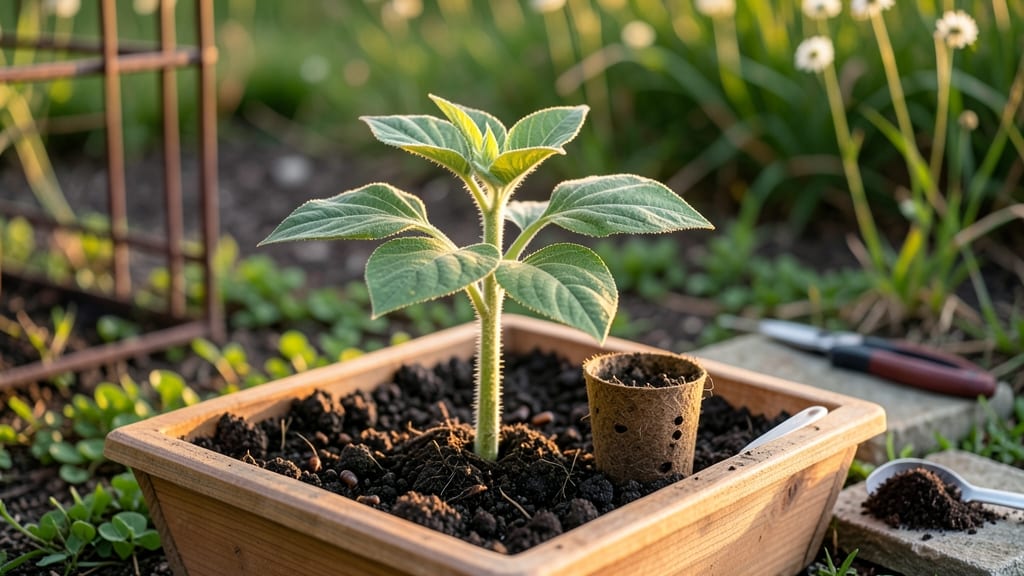
Growing mammoth sunflower seedlings starts with a counterintuitive trick: cold-stressed roots make stronger stalks. 🌻 I learned this the hard way after my first batch of towering beauties flopped in summer storms—until I adjusted my transplant timing and soil prep.
The secret lies in how you handle those first few weeks of growth, from soil temperature to gentle hardening.
Mammoth sunflowers need deep, fertile soil mixed with compost to support their 10-12 foot ambitions. Plant seeds just 1 inch deep in well-draining soil, spacing them 6 inches apart—crowding leads to weak stems.
Keep the soil consistently moist (not soggy) until true leaves appear, then reduce watering slightly to toughen seedlings. Most gardeners overwater at this stage, and that’s when leggy, floppy stems appear.
By the time you transplant outdoors, your seedlings should be 3-4 inches tall with sturdy stems. The cold-stress technique works by exposing young plants to cooler nights (around 50°F) for 5-7 days before transplanting—this shock triggers stronger root development.
You’ll see the difference in how quickly they establish and how straight their stalks grow.
Support is non-negotiable with these giants: install stakes or cages 2-3 weeks after transplanting to prevent wind damage. Mammoth sunflowers also need full sun (6+ hours daily) and regular feeding with a balanced fertilizer every 3-4 weeks10 feet tall.
📚 In This Guide
- What you need
- Instructions
- Tips and common mistakes
- Wrapping up and next steps
What you need
- ● Mammoth sunflower seeds: 5–10 seeds (choose cold-resistant varieties like ‘Russian Giant’ or ‘Mammoth Russian’).
- ● Seed-starting mix: 2–3 gallons of sterile, well-draining potting soil (avoid garden soil—it’s too dense!).
- ● Biodegradable seedling pots or peat pellets: 5–10 units (3–4 inches deep) to prevent root disturbance.
- ● Grow lights or sunny windowsill: Full-spectrum LED lights (12–16 hrs/day) or a south-facing window.
- ● Spray bottle: For gentle watering (avoid drowning tiny seeds!).
- ○ Heat mat (optional but helpful): 1 unit (70–75°F range) to speed germination in cooler climates.
- ● Small hand trowel: For transplanting seedlings later.
- ● Fertilizer (balanced 10-10-10 or fish emulsion): Diluted to half-strength for young seedlings.
- ● Clear plastic dome or ziplock bag: To create a mini greenhouse (remove once sprouts appear!).
- ○ Thermometer (optional): To monitor soil temps (ideal: 70–85°F for germination).
- ● Cold frame or frost cloth: If hardening off seedlings in chilly weather.
How to grow mammoth sunflower seedlings with cold-stressed roots
Here’s how to cultivate sunflowers that reach towering heights by intentionally stressing their roots early—it’s the secret to stronger stalks.
🌱 Step 1: Start Seeds Indoors with Controlled Warmth
Fill seed trays with sterile seed-starting mix and sow Mammoth sunflower seeds at a depth of ½ inch. Keep the soil consistently moist but never soggy—sunflower seeds rot quickly in cold, wet conditions. Place the tray in a warm spot (70-75°F), like on top of a refrigerator or under a heat mat, to encourage rapid germination.
Cover the tray with plastic wrap or a humidity dome to trap warmth and moisture. Check daily for condensation—if you see droplets forming, remove the cover for 30 minutes to prevent fungal growth. Germination typically takes 7-14 days, depending on temperature. Once sprouts emerge, remove the cover immediately to harden them off and prevent damping-off.
☀️ Step 2: Gradually Introduce Cool Temperatures for Root Stress
After the first true leaves appear, move seedlings to a cooler environment (55-60°F) for 5-7 days. This mimics natural late-spring conditions and forces roots to grow deeper and stronger in response to stress. Place them near a bright window (south-facing) or under grow lights for 12-14 hours daily—without enough light, seedlings will stretch weakly and flop.
Water sparingly during this phase—only when the top inch of soil feels dry. Overwatering now dilutes nutrients and weakens root development. You’ll notice slower growth at first, but this is normal. The goal is to create a sturdy root system that can support the plant’s eventual 10-12 foot height.
🪴 Step 3: Transplant into Larger Containers with Cold-Stressed Roots
After 10-14 days of cool treatment, transplant seedlings into 5-gallon containers filled with well-draining potting mix. Handle roots gently but firmly to encourage branching—this increases stability. Bury the stem up to the first set of true leaves (not the cotyledons) to promote additional root growth along the buried section.
Place the containers in a partially shaded area for the first 3-5 days to reduce transplant shock. Water deeply but avoid wetting the leaves to prevent mildew. Once established, gradually move them to full sun (6+ hours daily). The cold-stressed roots will now anchor the plant for rapid upward growth, preventing the leggy, weak stems common in overprotected seedlings.
⏰ Step 4: Monitor Growth and Adjust Care for Maximum Height
After transplanting, maintain consistent moisture—sunflowers need 1-2 inches of water per week, but avoid waterlogging. Fertilize lightly with a balanced 10-10-10 formula every 2-3 weeks to support vigorous growth. You’ll see rapid stem elongation within 2-3 weeks, but the cold-stressed roots will prevent the plant from toppling under its own weight.
Stake tall varieties (like Mammoth) with 3-foot bamboo stakes at planting to provide early support. As the stalk grows, tie it loosely to the stake every 2-3 feet to guide its upward trajectory. The key to towering sunflowers isn’t just height—it’s root strength, and this method ensures both.
Tips & tricks for perfect mammoth sunflower growth
These insider strategies will help you coax those towering sunflowers from delicate seedlings to sturdy giants.
Seedling Stress Technique: The 5-7 day cold treatment in Step 2 is where the magic happens. Place your seedlings on a seedling heat mat set to 55-60°F for precise temperature control—this mimics early spring conditions and triggers deeper root growth. I've found that using a small refrigerator shelf (with proper ventilation) works perfectly if you don't have a heat mat, just monitor temps closely with a thermometer.
Lighting Secrets: For the critical 12-14 hours of light in Step 2, position your seedlings within 6 inches of grow lights if natural light isn't sufficient. I use LED grow lights on a timer to maintain consistency—sunflowers won't tolerate inconsistent light periods. Watch for leggy seedlings as your first warning sign that they're not getting enough light.
Transplanting Hack: When burying stems up to the first true leaves in Step 3, use a clean pencil to gently mark the soil level before transplanting. This visual guide ensures you don't bury too deep (which can cause rot) or too shallow (which prevents root development). The buried section will develop new roots, creating a stronger anchor system for your towering plant.
Pro Tips for Mammoth Sunflower Seedlings
- These insider strategies will help you coax those towering sunflowers from delicate seedlings to sturdy giants.
- Seedling Stress Technique: The 5-7 day cold treatment in Step 2 is where the magic happens.
- Lighting Secrets: For the critical 12-14 hours of light in Step 2, position your seedlings within 6 inches of grow lights if natural light isn't sufficient.
Frequently asked questions
Got questions about nurturing your mammoth sunflower seedlings through cold stress? You’re not alone!
Here are answers to the most common concerns, from timing to troubleshooting—so you can grow those towering beauties with confidence.
When should I transplant mammoth sunflower seedlings outdoors after cold stress?
Transplant seedlings only after the last frost date in your zone and when soil temps reach at least 55°F (13°C). Mammoth sunflowers are cold-sensitive at the root level, so rushing risks stunted growth. Wait until nighttime temps stay above 40°F (4°C)—patience pays off with those record-breaking stalks!
How do I harden off cold-stressed mammoth sunflower seedlings?
Hardening takes 7–10 days! Start by moving seedlings outdoors for 1–2 hours daily, gradually increasing time while shielding from direct wind. Use shade cloth if temps dip below 50°F (10°C). Focus on roots: bury seedlings deeper than their original pot to encourage stability. Think of it as a sunflower spa—gentle prep for big rewards!
What are signs my mammoth sunflower seedlings are struggling after cold stress?
Watch for yellowing leaves (nutrient stress), wilting despite water (root damage), or stunted growth (transplant shock). If leaves feel mushy or stems are soft, your seedlings may be overwatered—mammoth sunflowers hate soggy roots! Adjust care: water deeply but infrequently (1–2x/week) and mulch to protect roots.
Can I use cold frames or row covers to help mammoth sunflower seedlings?
Cold frames or floating row covers (removed during the day) add 5–10°F protection and shield from wind. Just ensure good airflow to prevent fungal issues (like powdery mildew). For extra warmth, place black plastic mulch around seedlings—it absorbs heat and deters weeds. Think of it as a cozy blanket for your future giants!
What’s a good alternative if mammoth sunflowers don’t thrive in my cold climate?
Try ‘Russian Giant’ or ‘Mammoth’ hybrids—they’re bred for resilience! For shorter seasons, opt for ‘Autumn Beauty’ (earlier blooms) or ‘Teddy Bear’ (compact, cold-tolerant). If space is tight, dwarf varieties like ‘Little Becka’ still pack sunflower charm without the mammoth commitment.
Wrapping up and next steps
Growing mammoth sunflower seedlings with cold-stressed roots is all about patience, preparation, and a little extra care! By hardening them off and transplanting at the right time, you’ll set the stage for those towering stalks to thrive.
Now that you’re armed with the know-how, it’s time to get your hands dirty and watch your sunflowers reach new heights!
🌱 Next step: Mark your calendar for the ideal transplant window (after the last frost!) and start prepping your garden beds. Happy growing—your future sunflower giants are counting on you! 🌻