
Blooming
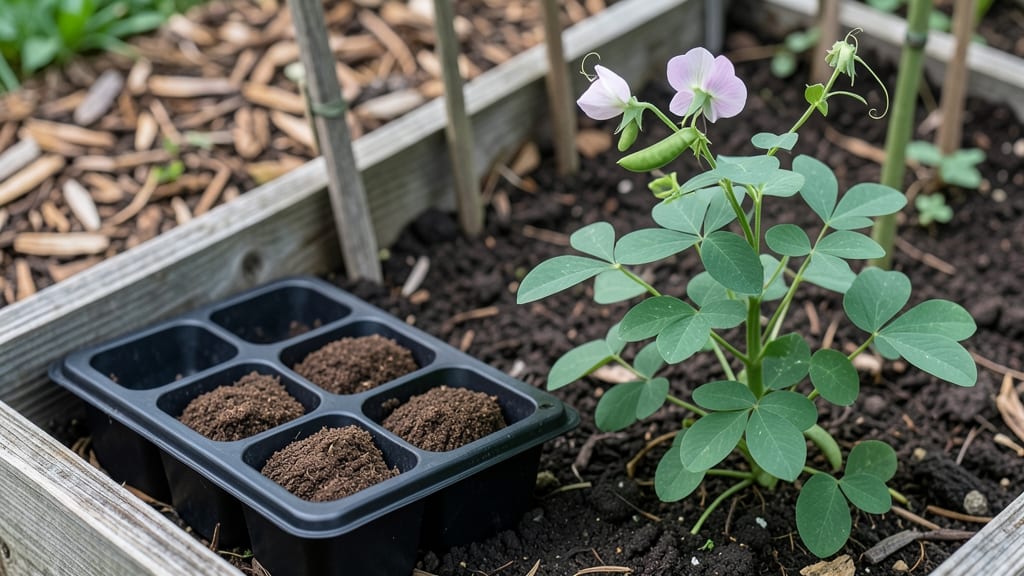
Seedlings can stay in peat pellets for 7 to 14 days after germination, but most should be transplanted within 2 to 4 weeks once their first true leaves emerge. Overstaying risks root binding and nutrient depletion, stunting growth. Monitor root development to determine readiness for transplanting into soil or larger containers.
Peat pellets provide a cozy, moisture-rich environment that speeds up germination, but their compact nature limits how long seedlings can thrive inside. 🌱 Once those first true leaves appear—usually 10 to 21 days after planting—roots start circling the pellet edges, a clear sign they're ready for a roomier home.
Fast growers like lettuce or basil often need transplanting sooner, while slower varieties like tomatoes can stretch the timeline. The key is watching for roots breaking through the mesh or leaves turning yellow, both signs the pellet's resources are maxed out.
Transplanting too late doesn't just slow growth—it stresses seedlings by forcing them to compete for nutrients in a confined space. I've seen seedlings with roots so tightly bound they struggle to straighten out after transplanting, leading to weak stems.
That's why I recommend checking root development every few days once true leaves appear. If you're unsure, a gentle squeeze on the pellet can reveal how snug the roots have become.
💡 In This Article
- Peat Pellet Germination Stages and Root Development Timeline
- When and How to Transplant Seedlings from Peat Pellets
Peat pellet germination stages and root development timeline
The biological process inside peat pellets begins with germination, where the seed absorbs moisture and swells, breaking through its outer shell in 3 to 7 days depending on temperature and humidity.
During this phase, the seedling relies entirely on the pellet's stored nutrients, which are concentrated in a compact 1.5-inch diameter space. Once the first set of leaves (cotyledons) emerge, they're not true leaves but rather energy storage organs that provide the seedling with sustenance until photosynthesis kicks in.
True leaves—distinct from cotyledons—appear next, marking a critical growth phase where the seedling starts producing its own food through photosynthesis. This transition typically occurs 7 to 14 days after germination, but the timeline varies by plant type.
Fast growers like basil or lettuce may show true leaves in as little as 5 days, while slower varieties like tomatoes can take up to 3 weeks.
Inside the pellet, roots expand rapidly, growing at a rate of about 0.5 inches per day under ideal conditions, which is why you'll often see roots circling the edges by 2 weeks post-germination. 🌱
Root binding becomes the primary concern as seedlings outgrow their peat pellet homes. When roots begin circling the pellet's perimeter, they create a dense, tangled mass that restricts nutrient and water uptake.
This overcrowding triggers stress responses like yellowing leaves or stunted growth, as the seedling can no longer access the center of the pellet where fresh nutrients remain.
The pellet's structure—while perfect for germination—lacks the depth and volume needed for sustained root development, which is why transplanting within 2 to 4 weeks of true leaf emergence is ideal for most plants.
Nutrient depletion is another critical factor. Peat pellets contain limited reserves, and as roots fill the space, they deplete these resources faster than they can be replenished. This is particularly evident in fast-growing seedlings, where the demand for nitrogen, phosphorus, and potassium outpaces what the pellet can provide.
For example, a pepper seedling might exhaust its pellet's nutrients in just 3 weeks, leading to weak stems and poor flowering later in its lifecycle.
Monitoring the pellet's moisture level also helps—if it stays damp for over 2 weeks without needing water, it's a sign the roots have fully colonized the space.
Transplant timing isn't just about root development—it's also about the seedling's ability to handle stress. Seedlings with tightly bound roots often go into shock when transplanted, as their delicate root systems struggle to adapt to a new environment. This is why gentle handling and proper soil preparation are essential.
For instance, soaking the pellet for 5 to 10 minutes before transplanting helps loosen the roots slightly, reducing trauma. The goal is to move seedlings when they're strong enough to support themselves but not so large that their roots have become permanently misshapen. 💫
Different plant families have distinct timelines for optimal transplanting. Leafy greens like spinach or arugula often need transplanting within 2 to 3 weeks of germination, as they grow quickly but have shallow root systems.
In contrast, herbs like rosemary or thyme can tolerate staying in pellets for up to 4 weeks because their growth is slower and their roots are more adaptable. Understanding these variations helps gardeners avoid overcrowding while ensuring seedlings get the space they need to thrive.