
Container Gardens
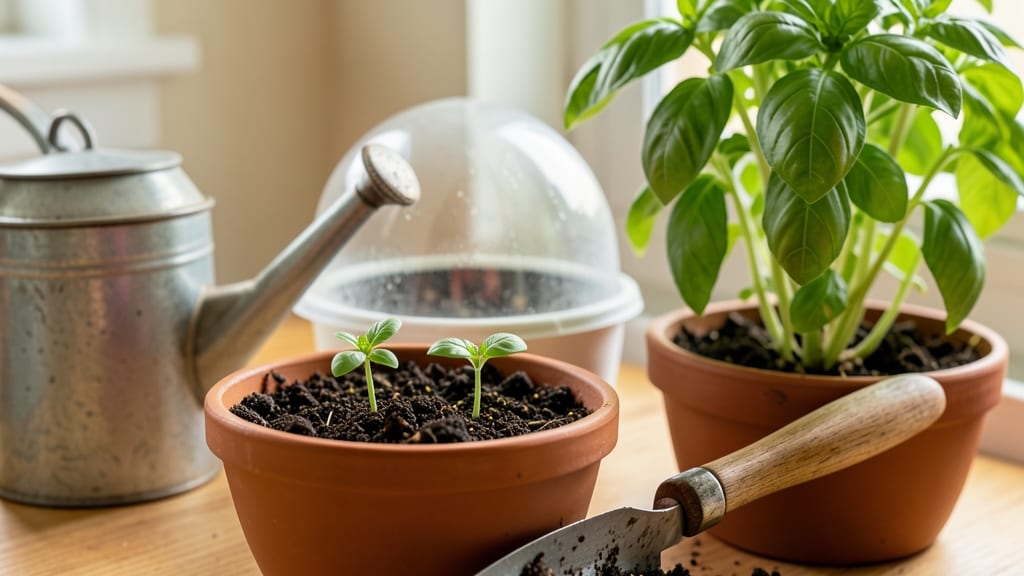
Growing basil from seed in a pot means fresh, fragrant leaves in just 4 weeks—no nursery trips or expensive transplants. 🌱 I’ve grown basil this way for years, and the secret lies in the right pot, soil, and sunlight.
Too many people rush the process and end up with leggy, weak plants. But with a few simple steps, you’ll have a thriving basil plant that produces more than you can use.
The key is starting small: a 4-inch pot works perfectly for seedlings, with drainage holes to prevent soggy roots. Use a lightweight potting mix (not garden soil) and plant seeds just ¼ inch deep. Keep the soil warm and moist—think of it like a cozy blanket for tiny sprouts.
Most seeds sprout within 5-10 days, but patience is everything. Once they’re up, give them 6+ hours of sunlight daily, or they’ll stretch toward the light like a sleepy cat.
By week 4, you’ll be pinching off leaves for pesto, and your plant will be ready to move to a larger 6-8 inch pot. The smell alone is enough to make your kitchen feel like a Mediterranean garden.
Basil thrives on neglect after this point—just water when the top inch of soil feels dry. No fancy tools or green thumbs required, just sunlight, a little care, and time.
This method works for any sunny windowsill, balcony, or even a grow light setup. Whether you’re growing for cooking or just the joy of watching it grow, basil is one of the easiest herbs to start from seed. Let’s get those tiny seeds sprouting!
📚 In This Guide
- What you need
- Instructions
- Tips and common mistakes
- Wrapping up and next steps
What you need
- ● Basil seeds: 1–2 teaspoons (about 50–100 seeds). Choose Genovese, Sweet Thai, or Purple Ruffles for variety.
- ● Container: A pot with drainage holes, 6–12 inches in diameter (basil needs room to spread!).
- ● Potting mix: 2–3 quarts of well-draining, seed-starting mix (avoid garden soil—it’s too dense!).
- ● Watering can or spray bottle: For gentle, even moisture (no soggy seeds!).
- ● Grow light or sunny windowsill: 6+ hours of sunlight daily (south-facing is ideal!).
- ○ Plant labels: Optional but helpful for tracking varieties.
- ● Seed-starting tray: For germinating seeds before transplanting (speeds up growth!).
- ● Heat mat: Keeps soil warm (70–75°F) to boost germination (great for cooler climates!).
- ● Fertilizer: Balanced liquid fertilizer (5-5-5 or 10-10-10) to feed seedlings after 3–4 weeks.
- ● Mulch or pebbles: Retains moisture and keeps soil warm.
- ● Pruning shears: For harvesting and shaping plants as they grow.
Step-by-step instructions for growing basil from seed in a pot
Here's how to transform tiny seeds into a thriving basil plant in your windowsill.
🌱 Step 1: Prepare Your Containers and Soil
Use 4-inch diameter pots with drainage holes for each basil plant. Fill them with a lightweight seed-starting mix—never garden soil, as it compacts and blocks roots. Moisten the mix until it feels like a damp sponge when squeezed, then let it drain for 10 minutes. This prevents waterlogged seeds from rotting before they sprout.
Tap each pot gently on the table to settle the soil without compacting it. The surface should be level but not packed down. I like to use small pots for basil because their shallow roots don't need deep soil. If you're using a larger container, plant multiple seeds at least 2 inches apart to give them room to grow.
💧 Step 2: Plant the Seeds and Maintain Moisture
Plant 2-3 seeds per pot at a depth of just ¼ inch. Basil seeds are tiny, so I use a toothpick to create small holes and place them carefully. Cover lightly with additional mix—don't press down, or you'll bury them too deep. Mist the surface with water until evenly moist, but avoid soaking the soil.
Place the pots in a warm spot, ideally 70-75°F. A seedling heat mat helps speed germination, but a sunny windowsill works too. Cover the pots with clear plastic wrap to retain moisture and warmth. Check daily for condensation—if you see droplets, remove the wrap for 10 minutes to prevent fungal growth. Germination takes 7-14 days; you'll know it's happening when you see tiny green sprouts pushing through the soil.
☀️ Step 3: Provide Light and Thin Seedlings
Once sprouts appear, remove the plastic wrap immediately to prevent damping-off. Move the pots to a spot with bright, indirect light for the first week—direct sun can scorch delicate seedlings. After a week, gradually introduce 4-6 hours of morning sun daily. You'll notice the seedlings leaning toward the light; rotate the pots a quarter turn daily to keep them growing straight.
When seedlings reach 2 inches tall and have 2-3 true leaves (not the initial seed leaves), thin to the strongest plant per pot. Snip the weaker seedlings at the base with clean scissors. This prevents overcrowding and gives your basil room to grow bushy. Water gently at the base, keeping the soil consistently moist but never soggy.
🌿 Step 4: Encourage Bushy Growth and Fertilize
When your basil reaches 4-6 inches tall, pinch off the top set of leaves just above a pair of lower leaves. This encourages the plant to branch out, giving you more harvestable stems. Repeat this pinching every 4-6 weeks to maintain a bushy shape. You'll see new side shoots forming within a week—this is your basil developing its classic shape.
Feed your basil with a balanced liquid fertilizer (like 10-10-10) diluted to half strength every 2-3 weeks. Start fertilizing when the plant has 4-5 sets of true leaves. Water before fertilizing to prevent root burn. Basil thrives in slightly acidic soil, so if your leaves yellow between veins, your soil may be too alkaline—add a bit of lemon juice to the water occasionally.
✂️ Step 5: Harvest and Maintain Your Plant
Start harvesting when your basil has 6-8 inches of growth. Use clean scissors to snip stems just above a leaf pair where new growth emerges. This encourages the plant to keep producing. Harvest regularly—every 2-3 weeks—to keep your basil lush and prevent it from flowering, which makes the leaves bitter. You'll know it's time to harvest again when new growth appears at the pinched points.
Keep your basil in full sun (6+ hours daily) and water when the top inch of soil feels dry. Avoid wetting the leaves when watering to prevent fungal diseases. If your plant starts to look leggy or pale, it needs more light. Basil grows best in temperatures between 60-80°F—if nights dip below 50°F, bring it indoors or protect it with a frost cloth.
Tips & tricks for growing basil from seed in a pot
Here's what nobody tells you about growing basil that'll make all the difference between a sad little plant and a thriving herb garden.
Soil Preparation: That 10-minute drain time after moistening your seed-starting mix is crucial—it prevents waterlogged soil that can drown seeds before they sprout. I like to use a spray bottle for this step to avoid compacting the soil while keeping it evenly moist. Pro tip: If you don't have seed-starting mix, blend equal parts peat moss and perlite for a similar lightweight texture. This prevents the dreaded "damping-off" disease that kills seedlings.
Light Management: Those 4-6 hours of morning sun are your secret weapon for strong seedlings. I've learned the hard way that afternoon sun can scorch tender leaves—think of it like sun protection for your plants! If you're using artificial grow lights, keep them 2-3 inches above seedlings and run them for 12-14 hours daily. The light should be bright enough that you can't see your hand through it when held beneath.
Temperature Troubleshooting: Basil loves that 70-75°F range, but most homes can't maintain that consistently. If your kitchen runs cooler (especially at night), move pots near a sunny window during the day and bring them indoors at night. I keep a small space heater near my windowsill when nights dip below 50°F—it's worth the investment for a thriving plant. Watch for wilting leaves as your first clue that temperatures might be too low.
Harvesting Strategy: When you reach the 6-8 inch harvest stage, here's my game-changer: Always harvest in the morning after the dew has dried. The leaves contain the most essential oils and flavor at this time. I also like to harvest just before the plant flowers—this prevents bitterness and keeps the plant producing tender leaves. Use clean scissors and cut at a 45-degree angle just above a leaf pair to encourage bushier growth.
Pro Tips for Grow Basil From Seed In A Pot
- Here's what nobody tells you about growing basil that'll make all the difference between a sad little plant and a thr...
- Soil Preparation: That 10-minute drain time after moistening your seed-starting mix is crucial—it prevents waterlogge...
- Light Management: Those 4-6 hours of morning sun are your secret weapon for strong seedlings. I've learned the hard w...
Frequently asked questions
Got questions about growing basil from seed in a pot? You’re not alone! Here are answers to the most common queries to help you cultivate a thriving basil plant with ease.
How long does it take for basil seeds to germinate?
Basil seeds typically germinate in 7 to 14 days after planting, depending on temperature and moisture. Keep the soil consistently damp (not soggy) and place the pot in a warm spot (around 70°F) to speed up the process. Patience is key—if you don’t see sprouts in 2 weeks, gently check the soil moisture and try again!
Can I grow basil indoors without sunlight?
Basil is a sun-loving plant, so it needs at least 6 to 8 hours of direct sunlight daily. If natural light is limited, supplement with a grow light (LED or fluorescent) placed 6–12 inches above the pot for 12–16 hours a day. South-facing windows are ideal, but east or west exposures work too—just rotate the pot occasionally for even growth!
Why are my basil seeds not sprouting?
If your seeds aren’t germinating, check these common culprits:
- Cold soil: Basil needs warmth to sprout—try placing the pot on a seedling heat mat or near a sunny window.
- Dry soil: Keep the soil consistently moist (not waterlogged) until germination.
- Old seeds: Basil seeds lose viability after 1–2 years. Test a few seeds in damp paper towels to confirm viability.
- Poor seed-to-soil contact: Press seeds lightly into the soil (they need light to germinate, so don’t bury them deeply).
Can I grow basil in a small pot, or does it need a lot of space?
Basil thrives in containers at least 6–8 inches deep and wide, but it can handle smaller pots (like 4–6 inches) if pruned regularly. For multiple plants, space them 6–12 inches apart. If roots outgrow the pot, transplant to a larger container or harvest leaves to encourage bushier growth. Drainage is critical—always use pots with holes!
How do I keep my basil from flowering too soon?
Basil flowers signal the end of its productive life, but you can delay blooming by:
- Pinching off flower buds as soon as they appear.
- Harvesting leaves regularly (every 2–3 weeks) to encourage new growth.
- Avoiding overcrowding—thin seedlings if needed to improve airflow.
- Ensuring bright light and warmth (60°F+ at night) to slow maturation.
Wrapping up and next steps
Growing basil from seed in a pot is a rewarding and beginner-friendly way to enjoy fresh herbs year-round! 🌱 With just a little patience, sunlight, and care, you’ll have a thriving basil plant ready to spice up your favorite dishes in as little as four weeks.
Whether you’re a green thumb or a curious newbie, this method proves that container gardening can be simple, productive, and delicious.
Now that you’re equipped with the know-how, why not take the next step? Try experimenting with different basil varieties, like purple basil or thai basil, or even pair it with other herbs like parsley or oregano in the same pot.
Happy growing—and soon, your kitchen will smell as amazing as your meals taste!