
Planting
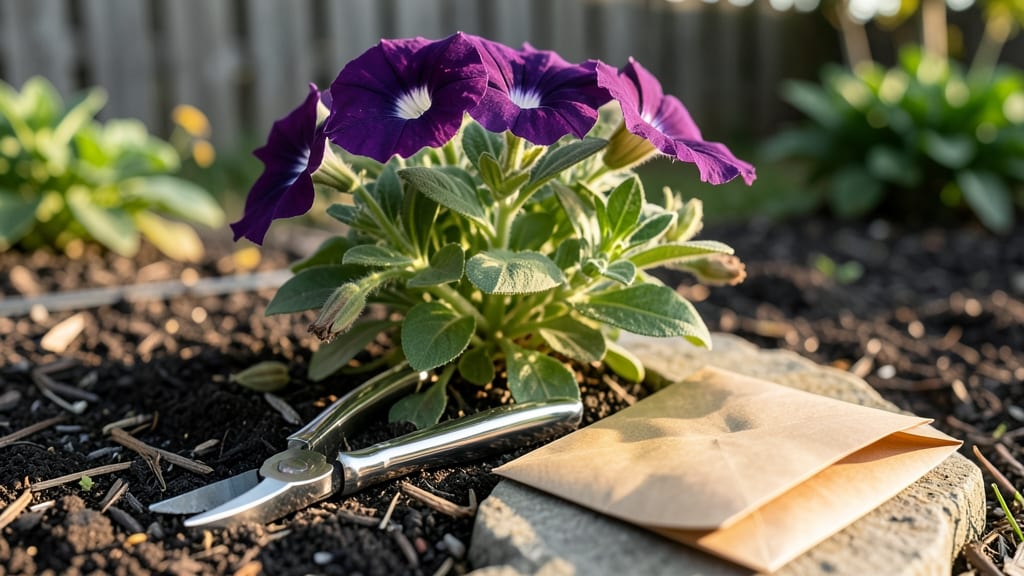
To get petunia seeds from a plant, let flowers fade completely, collect the dried brown seed pods, then carefully open them to remove the tiny seeds inside. Timing is everything—harvest when pods are fully mature but before they split open naturally.
Petunia flowers transform into seed pods after blooming, but you'll need patience—these pods develop over 4-6 weeks from pollination. 🌸 The key is watching for color changes: start with green pods that gradually turn brown and crispy to the touch.
Once fully dried, gently squeeze the pods between your fingers or use a small knife to split them open, revealing clusters of tiny, dark seeds. Store them in a cool, dry place (like an envelope or jar) until planting season, as they can remain viable for 2-3 years.
Here's why timing matters: harvesting too early means immature seeds that won't germinate, while waiting too long risks the pods splitting open on their own, scattering seeds prematurely. I always mark my plants with a small flag when I spot the first brown pods—it's my cue to start checking daily.
For best results, aim to collect seeds on a dry day when humidity is low to prevent mold.
💡 In This Article
- Identifying When Petunia Seed Pods Are Ready for Harvest
- Proper Seed Pod Handling and Storage Techniques
Identifying when petunia seed pods are ready for harvest
The transformation from vibrant petunia flower to seed pod begins when the bloom wilts and dries on the stem.
After fertilization, the ovary at the flower's base swells into a small green capsule—this is your first visual cue that seeds are forming inside. 🌱 The botanical magic happens here: the ovary's cells divide rapidly, forming the seed chamber while the pod's outer wall thickens.
This process takes about 4-6 weeks under normal growing conditions (average temperatures of 65-75°F), though cooler weather can extend this timeline by 1-2 weeks.
What you're really waiting for is the color shift from green to brown—a clear sign the pod has fully matured.
At this stage, the pod should feel dry and papery to the touch, almost like crumpled parchment. 🌿 The texture changes dramatically: when green, pods are firm and slightly rubbery, but as they mature, they become brittle and hollow-sounding when tapped gently.
Pro tip: Look for pods that have turned a uniform tan or light brown color—any remaining green patches mean they're not yet ready. This is crucial because immature seeds won't germinate properly, while overripe pods may split open unexpectedly, scattering seeds before you can collect them.
The ideal harvest window is when 70-80% of the pod's surface has turned brown, with only a small green seam remaining at the base.
This indicates the seeds inside have reached full maturity while the pod still maintains enough structural integrity to handle. 🌸 What most gardeners miss is that petunias often produce seed pods in clusters—some may mature faster than others.
I recommend harvesting pods individually as they reach maturity rather than waiting for the entire cluster to dry, which prevents premature seed loss from wind or rain.
Here's what's happening scientifically: as the pod dries, its moisture content drops below 10%, triggering the release of abscisic acid—a plant hormone that signals seed dormancy. This same hormone causes the pod to eventually split open along its seams, releasing seeds when conditions are optimal for germination.
By harvesting at 70-80% maturity, you're essentially "beating the system" and capturing seeds at their peak viability while still maintaining some moisture to prevent premature cracking.
Temperature plays a surprising role in pod development. In my experience growing petunias in Zone 8 climates, pods mature faster during summer heat waves (when daytime temps exceed 85°F) because higher temperatures accelerate the drying process.
However, this also increases the risk of pods splitting open before you can harvest. 🌡️ To mitigate this, I've found that providing light shade during the hottest afternoon hours (when temperatures peak) can buy you an extra 2-3 days of harvest time without sacrificing seed quality.
One visual trick I use is the "float test": if you're unsure whether a pod is ready, drop it in a bowl of water. Mature pods will float immediately because their air-filled structure makes them buoyant, while immature pods sink.
This works because the drying process creates air pockets within the pod's fibrous walls. Just be sure to test pods individually—mixing mature and immature pods can give false results. For gardeners with limited time, this test is a game-changer for determining readiness without damaging the plant.