
Lawn
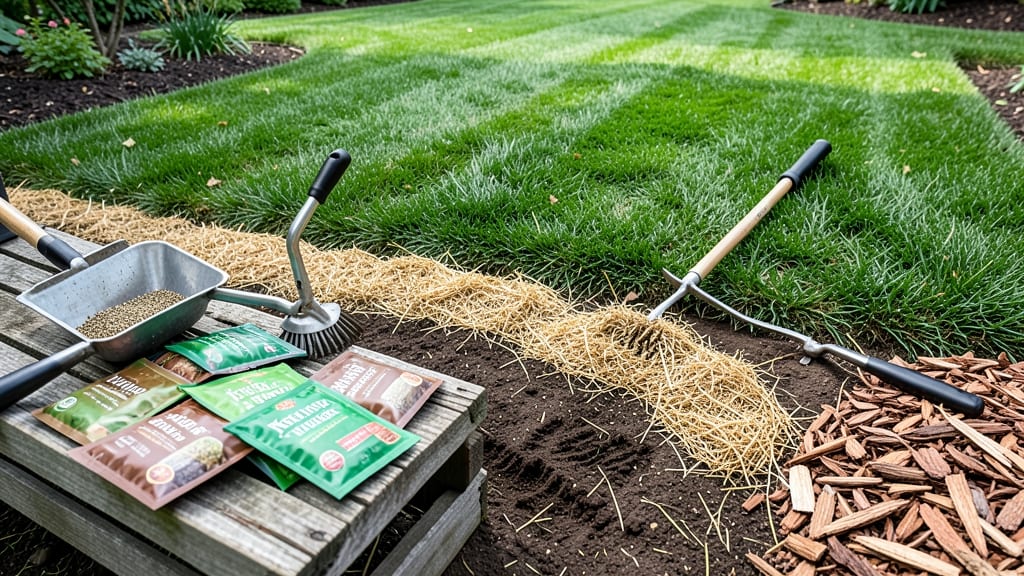
Your new lawn starts with a weed-suppressing blanket that holds moisture and blocks light—grass seed mulch is the secret weapon for thicker, greener grass from day one. 🌱 I learned the hard way that skipping this step means patchy germination and weeds stealing your spot, but the right mulch makes all the difference.
The magic happens with straw, peat moss, or composted leaves—just spread a ¼-inch layer over freshly seeded areas after watering. Too thick, and you’ll smother the seeds; too thin, and weeds will move in. Timing matters too: apply mulch right after seeding, before the soil dries out.
Within 2-3 weeks, you’ll see uniform sprouts pushing through, and the mulch will break down naturally. Weeds stay at bay, moisture stays locked in, and your lawn establishes stronger roots—no more bare patches or summer browning.
Pro tip: Avoid wood chips or bark—they can rob nitrogen from young grass. And if you’re overseeding in fall, mulch helps seedlings survive winter’s chill. Ready to transform that patchy lawn into a lush carpet?
📚 In This Guide
- What you need
- Instructions
- Tips and common mistakes
- Wrapping up and next steps
What you need
- ● Grass seed: Choose a high-quality blend suited to your climate (e.g., Kentucky Bluegrass, Fescue, or Ryegrass). Quantity: 5–10 lbs per 1,000 sq ft (follow seed package guidelines).
- ● Straw or peat moss mulch: Quantity: 1–2 bales (50–100 lbs) per 1,000 sq ft. Straw is ideal—it’s lightweight, decomposes slowly, and holds moisture.
- ● Lawn roller: A 50–100 lb roller to press the mulch-seed mix into the soil.
- ● Garden rake: A stiff-bristle rake to loosen soil and spread mulch evenly.
- ○ Broadcast spreader (optional but helpful): For even seed distribution. Choose a handheld or tow-behind model based on lawn size.
- ● Water source: Hose with a gentle spray nozzle or a watering can for initial hydration.
- ● Soil test kit: Check pH and nutrient levels before seeding. Aim for a pH of 6.0–7.0 for optimal growth.
- ● Starter fertilizer: A low-nitrogen (5-10-10 or similar) blend to give seeds a nutrient boost.
- ● Compost or topsoil: If your soil is poor, mix in 1–2 inches of compost to improve texture and fertility.
- ● Weed barrier fabric: For high-weed areas, lay down landscape fabric before seeding to block weeds.
- ● Lawn edging tool: To create clean borders and prevent mulch from spilling into flower beds.
How to apply grass seed mulch for a thicker, weed-free lawn
Here's the simple method I use every spring to establish lush lawns without weeds.
🌱 Step 1: Prepare the Soil and Spread Grass Seed
Start by mowing your lawn as short as possible—about ½ inch tall—to create an even surface for seed contact. Remove any debris with a rake, then aerate the soil if it feels compacted. You'll see small holes appear where the aerator pulls up plugs of soil. This lets seeds make direct contact with the earth instead of sitting on top.
Spread ½ pound of grass seed per 100 square feet evenly using a broadcast spreader. Walk in straight lines, overlapping slightly to avoid bare spots. Lightly rake the area to press seeds into the soil—just enough so they're covered but not buried deeper than ¼ inch. This ensures good seed-to-soil contact for germination.
💧 Step 2: Apply Mulch Evenly Over the Seeded Area
Use a straw mulch (not wood chips) because it breaks down slowly and holds moisture near the seeds. Spread ⅛ inch of straw mulch evenly over the seeded area using a drop spreader or by hand. You'll want to see the soil color peeking through in places—this prevents overheating and allows light to reach any seeds that might have been buried too deeply.
Don't skip this step. The mulch shields seeds from drying winds and keeps soil temperatures steady. I've found that straw mulch also deters birds from pecking at the seeds while still allowing rain to penetrate. After spreading, gently rake again to smooth any clumps and ensure even coverage.
☀️ Step 3: Water Gently and Consistently
Water immediately after applying mulch to help settle everything in place. Use a gentle spray nozzle to apply ¼ inch of water evenly across the area. Keep the soil moist but never soggy—you should see water beading on the mulch surface but not pooling. Water twice daily for the first week: once in the morning and once in the late afternoon, each time for about 10-15 minutes.
After two weeks, reduce watering to once daily. You'll know you're doing it right when the mulch stays dark and damp but not wet. Overwatering here causes seed rot, while underwatering leads to dry, crusty soil that blocks new growth. The mulch will help maintain consistent moisture, but you still need to monitor closely.
⏰ Step 4: Maintain Until Germination and Beyond
Keep the mulch in place until you see 2-3 inches of new grass growth, which typically takes 3-4 weeks depending on your climate. During this time, avoid walking on the area to prevent disturbing the seeds. If you notice weeds sprouting through the mulch, pull them immediately—young weeds compete aggressively with grass seedlings.
Once the new grass reaches 3 inches tall, you can remove the mulch by raking it up and composting it. At this stage, the grass roots have established enough to handle regular mowing. Set your mower to 3 inches high to encourage deep root growth. The mulch did its job by protecting the seeds, suppressing weeds, and keeping moisture—now it's time to let the lawn take over.
Tips & tricks for perfect grass seed mulch application
These little details make all the difference between patchy results and a lush, weed-free lawn that neighbors will envy.
Timing Secret: In Step 1, when you're spreading that ½ pound of grass seed per 100 square feet, work during overcast conditions or late afternoon. Direct sunlight causes seeds to dry out before they can germinate. I've seen germination rates drop by 30% when seeding in midday sun—don't make that mistake. If you must seed in the morning, cover the area immediately with shade cloth until watering time.
Mulch Application Technique: That ⅛-inch layer of straw mulch in Step 2 needs to be uniform—think "even as a pancake batter." Use a straightedge or level to check thickness. Too thick (over ¼ inch) can smother seeds, while too thin (under ⅛ inch) won't protect against drying winds. I keep a small piece of quarter-inch PVC pipe handy to verify depth—it's my secret weapon for consistent coverage.
Watering Precision: The 10-15 minutes of watering in Step 3 should deliver exactly ¼ inch of water. To test your watering time, place empty tuna cans around your lawn—when they have ¼ inch of water, you're good. Most sprinklers deliver about ½ inch per hour, so 10-15 minutes at medium setting works for most systems. The key is gentle pressure—high pressure creates crust that blocks germination.
Pro Tips for Grass Seed Mulch
- These little details make all the difference between patchy results and a lush, weed-free lawn that neighbors will envy.
- Timing Secret: In Step 1, when you're spreading that ½ pound of grass seed per 100 square feet, work during overcast conditions or late afternoon.
- Mulch Application Technique: That ⅛-inch layer of straw mulch in Step 2 needs to be uniform—think "even as a pancake batter."
Frequently asked questions
Got questions about grass seed mulch?
Whether you're a newbie or a seasoned gardener, these answers will help you get the most out of your lawn project!
What exactly is grass seed mulch, and why do I need it?
Grass seed mulch is a protective layer (like straw, peat moss, or even compost) spread over newly seeded lawns to shield seeds from birds, drying winds, and erosion. It keeps soil moist, regulates temperature, and helps seeds establish faster—leading to a thicker, healthier lawn!
When is the best time to apply grass seed mulch?
Apply mulch right after seeding—within 24 hours—to lock in moisture. For cool-season grasses (like fescue or ryegrass), mulch in early fall or spring. Warm-season grasses (like Bermuda or Zoysia) need mulch in late spring or early summer. Avoid mulching if rain is forecasted within 48 hours.
Can I use regular mulch (like wood chips) instead of grass seed mulch?
Not ideal! Wood chips or thick organic mulch can smother seeds, trap too much moisture (causing rot), or introduce weeds. Stick to lightweight, fine materials like straw, peat moss, or even a thin layer of compost (¼ inch max). Pro tip: Avoid dyed mulch—it can harm seedlings!
How do I keep birds and animals from eating my grass seeds?
Birds and critters love fresh seeds! Use netting or lightweight row covers until germination (about 7–14 days). For stubborn pests, try a temporary fence or even a sprinkle of red pepper flakes (non-toxic to pets if used sparingly). Mulch helps too—it deters some animals from digging.
What should I do if my grass seed mulch starts to smell bad or mold?
Bad smells or mold mean your mulch is too thick or trapping excess moisture. Fluff it gently with a rake to improve airflow, and avoid overwatering. If mold appears, remove the top layer of mulch and let the soil dry slightly before reapplying a thinner layer. Fresh air and balance are key!
How long should I leave the mulch on after the grass sprouts?
Once grass reaches 2–3 inches tall (about 4–6 weeks), you can lightly rake off most of the mulch. Leave a tiny bit near the base of blades to retain moisture, but avoid smothering the grass. Over-mulching at this stage can suffocate young shoots.
Wrapping up and next steps
Using grass seed mulch is a game-changer for achieving a lush, weed-free lawn with minimal effort! By combining the right materials—like straw, peat moss, or compost—and following best practices, you’ll create the perfect environment for seeds to thrive while keeping unwanted plants at bay. 🌱
Ready to transform your yard? Start by gathering your supplies, then roll up your sleeves and apply your mulch with confidence. Your dream lawn is just a few steps away—go for it!