
Lawn
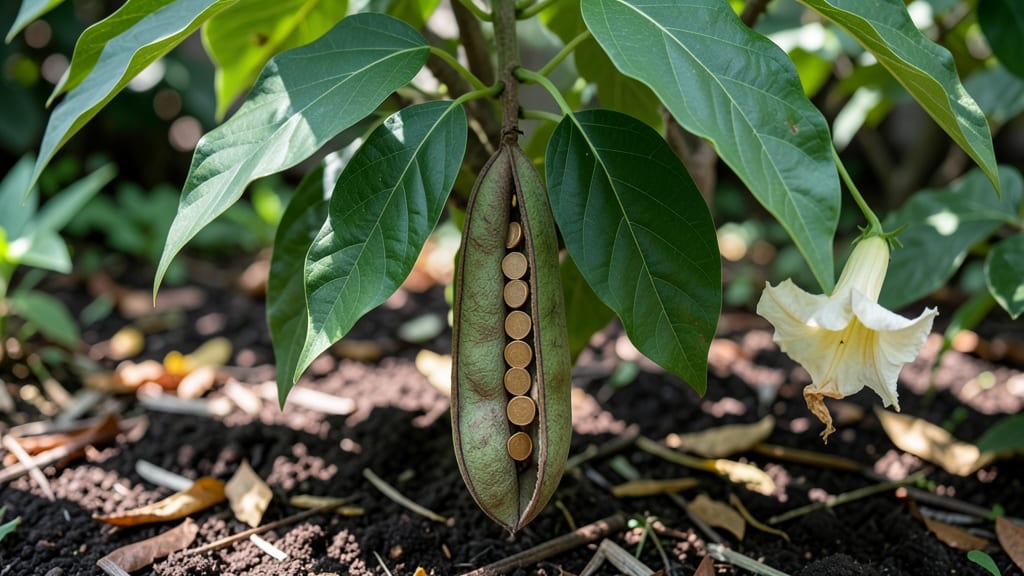
Harvesting devil's trumpet seed pods is easier than you think—just wait for them to turn golden-brown and split open naturally. 🌱 I’ve collected seeds from my Brugmansia for years, and the key is timing: too early, and the seeds won’t be ripe; too late, and they’ll scatter on the ground.
The pods themselves are striking, with their papery texture and eerie shape, but handling them requires caution—they contain toxic alkaloids, so always wear gloves.
Once ripe, gently twist the pods to release the seeds inside, which look like tiny, dark beans. Store them in a paper envelope (not plastic) in a cool, dry place until spring—this mimics natural dormancy and boosts germination rates.
Brugmansia seeds are finicky, so don’t rush; some take weeks or even months to sprout, but patience pays off with lush, fragrant blooms the following summer.
When it’s time to plant, soak the seeds overnight to soften their tough coats, then scatter them on moist, well-draining soil in a pot or seed tray. Keep them warm (around 70°F) and humid, and expect germination in 4-8 weeks.
Young seedlings grow slowly at first but reward you with shockingly fast growth once they establish roots—just be ready for their eventual 6-foot height!
Pro tip: Brugmansia thrives in partial shade, so place your seedlings near a north-facing window or under a sheer curtain if growing indoors. And if you’re feeling creative, dry some pods for ornamental displays—just keep them out of reach of pets and kids.
Ready to grow your own devil’s trumpet forest?
📚 In This Guide
- What you need
- Instructions
- Tips and common mistakes
- Wrapping up and next steps
What you need
- ● Mature devil’s trumpet plants (ensure seed pods are fully brown and dry—no green left!)
- ● Sharp pruning shears or scissors (sterilized to avoid disease transfer)
- ● Brown paper bags or breathable mesh sacks (1–2 per plant, labeled with plant name)
- ○ Glove (optional but recommended—some pods can be prickly!)
- ● Seed drying tray or screen (for post-harvest drying)
- ● Small fan or dehumidifier (to speed up drying in humid climates)
- ● Permanent marker (for labeling seed bags with harvest date)
- ● Fine-mesh sieve (to separate seeds from chaff later)
- ● Sunny, dry weather (harvest on a clear morning for best results)
- ● Patience (wait until pods are completely dry and crispy before harvesting)
- ● Clean workspace (a table or tarp to avoid debris contamination)
How to harvest devil's trumpet seed pods for next year's plants
Here's the method I've used for years to collect healthy, viable seeds from mature devil's trumpet plants.
🌿 Step 1: Identify and Select Mature Seed Pods
Wait until the seed pods turn a deep brown color and begin to split open naturally—this signals they're fully mature and ready for harvest. I look for pods that are dry to the touch and have a papery texture, as these contain the most viable seeds. Avoid any pods that appear shriveled or have signs of mold, as these won't produce good seeds.
Gently twist the mature pods from the stem to avoid damaging the plant. If they resist, use clean pruning shears to snip them cleanly. I always harvest on a dry day to prevent moisture from ruining the seeds inside. Place the pods in a paper bag immediately—they'll continue drying and may release seeds if left exposed.
⏰ Step 2: Dry and Prepare the Pods for Seed Extraction
Spread the harvested pods on a clean, dry surface in a warm, well-ventilated area for 5-7 days. This extra drying ensures the seeds inside are fully mature and ready for storage. I like to place them on a mesh screen or paper towel to allow airflow on all sides. Avoid direct sunlight, as it can overheat the pods and damage the seeds.
Once the pods are completely dry and brittle, I gently crush them between my fingers or use a small hammer to break them open. This releases the seeds inside. Be patient—some pods may require a bit more force, but avoid pulverizing them entirely. The goal is to separate the seeds from the pod material without creating dust or debris.
🪴 Step 3: Clean and Store the Seeds Properly
Use a fine-mesh sieve or sifter to separate the seeds from the chaff and pod fragments. I shake the sieve gently over a clean bowl to catch the seeds while the lighter debris blows away. This step ensures you have pure seeds ready for storage. If you're dealing with a large harvest, a small handheld fan can help speed up the process by blowing away the lighter material.
Store the cleaned seeds in a paper envelope or small glass jar with a tight-fitting lid. Label the container with the variety name and the harvest date—this helps track seed viability over time. Keep the seeds in a cool, dry place (around 60-65°F) until you're ready to plant them next season. Proper storage can keep devil's trumpet seeds viable for 2-3 years, though I've found they germinate best when used within the first year.
🌱 Step 4: Test Seed Viability Before Planting
Before committing to a full planting, I test a few seeds to ensure they're still viable. Place 10-15 seeds between two damp paper towels in a sealed plastic bag. Keep them in a warm spot (70-75°F) and check daily for signs of germination. You should see sprouts within 7-14 days—if fewer than half germinate, the remaining seeds may need longer stratification or may not be viable.
Once you confirm the seeds are good to go, you're ready to plant. Devil's trumpet seeds benefit from a cold stratification period of 4-6 weeks in the refrigerator before sowing. This mimics winter conditions and encourages stronger germination. Plant the seeds ¼ inch deep in well-draining soil and keep them moist until they sprout.
Tips & tricks for devil's trumpet seed pod harvesting
Here's what nobody tells you about harvesting devil's trumpet seeds without losing them to moisture or pests.
Timing is Everything: Harvest devil's trumpet seed pods only when they've turned deep brown and are beginning to split naturally—this usually happens in late summer to early fall. I've learned the hard way that harvesting too early means underdeveloped seeds, while waiting too long risks them releasing seeds prematurely. Check pods daily during peak season to catch them at the perfect moment.
Drying Strategy: The 5-7 day drying period in Step 2 is non-negotiable for seed viability. I recommend using a mesh screen over a baking sheet to maximize airflow while preventing seeds from falling through. Place the setup in a warm, shaded area—direct sunlight can generate enough heat to damage the seeds, while poor airflow might encourage mold growth. A small fan on low setting can help maintain consistent airflow without creating drafts.
Seed Extraction Technique: When crushing the pods in Step 2, work in batches to avoid creating a cloud of chaff that makes seed collection difficult. I use a small hammer on a hard surface, tapping gently but firmly to release seeds without breaking them. For stubborn pods, a mortar and pestle works beautifully—just be patient and avoid grinding the seeds themselves. This careful approach prevents seed damage while maximizing yield.
Storage Wisdom: The cool, dry storage conditions (60-65°F) mentioned in Step 3 are crucial for maintaining seed viability. I've found that placing seeds in a sealed jar with a small packet of silica gel helps absorb any residual moisture. For long-term storage beyond 2-3 years, consider using vacuum-sealed bags to further extend shelf life. Always test a sample after storage to confirm viability before planting your entire batch.
Pro Tips for Devil'S Trumpet Seed Pod
- Here's what nobody tells you about harvesting devil's trumpet seeds without losing them to moisture or pests.
- Timing is Everything: Harvest devil's trumpet seed pods only when they've turned deep brown and are beginning to split naturally—this usually happens in late summer to early fall.
- Drying Strategy: The 5-7 day drying period in Step 2 is non-negotiable for seed viability.
Frequently asked questions
Got questions about harvesting devil’s trumpet (Datura stramonium) seed pods?
You’re not alone—this prickly process can feel tricky! Below, we tackle the most common concerns to help you gather viable seeds with confidence. Whether you’re a first-timer or a seasoned gardener, these answers will smooth your path.
When is the best time to harvest devil’s trumpet seed pods?
Harvest pods when they turn tan or light brown and feel dry to the touch—usually late summer to early fall. Avoid harvesting too early (green pods = immature seeds) or too late (overripe pods may split open and scatter seeds prematurely). Aim for 70–80% dryness for optimal viability.
How do I safely handle the pods without getting pricked?
Wear thick gloves (leather or garden gloves) and use long-handled pruners or scissors to snip pods from the stem. Place pods in a paper bag (not plastic—it traps moisture) and let them dry indoors for 1–2 weeks. Never rub or squeeze them—the spines are sharp and can break off in your skin!
Can I save seeds from store-bought devil’s trumpet plants?
Yes, but with a catch: store-bought plants are often hybrids or treated with chemicals to prevent seed production. If you’re lucky and spot pods, harvest them as usual. For reliable seed-saving, grow from open-pollinated seeds or buy from a reputable seed supplier labeled “seed-saving friendly.”
How do I store devil’s trumpet seeds for next year?
Once pods are fully dry, crack them open (gently!) to release seeds. Store seeds in a cool, dry place (like a sealed envelope or jar) in a dark closet. They’ll stay viable for 2–3 years if kept below 40°F (4°C). Label your container—these seeds are not child-safe!
What if my pods rot or mold before drying?
If pods develop black spots, fuzz, or a musty smell, they’re likely moldy. Toss them immediately—moldy seeds won’t germinate. To prevent this, harvest pods on a dry day and avoid storing them in humid areas. If humidity is an issue, speed up drying with a fan on low setting (keep pods elevated to avoid dampness).
How many seeds do I need to grow a full devil’s trumpet plant?
A single devil’s trumpet plant produces hundreds of seeds—you only need 3–5 seeds per plant for next year’s garden! Plant seeds ¼ inch deep in well-draining soil after the last frost. Germination can take 10–20 days; thin seedlings to 12–18 inches apart for healthy growth.
Wrapping up and next steps
The devil’s trumpet seed pod holds the key to next year’s thriving garden—with just a little patience and care, you’ve got this! 🌱 By following these stress-free harvesting tips, you’ll ensure high-quality seeds for future growth, whether you’re a seasoned gardener or just starting out.
Now that you’re equipped with the know-how, take the next step: mark your calendar for late fall or early winter to harvest those pods before they dry out. Share your success—or ask questions—in gardening communities for even more inspiration! Happy planting! 🌿