
Size
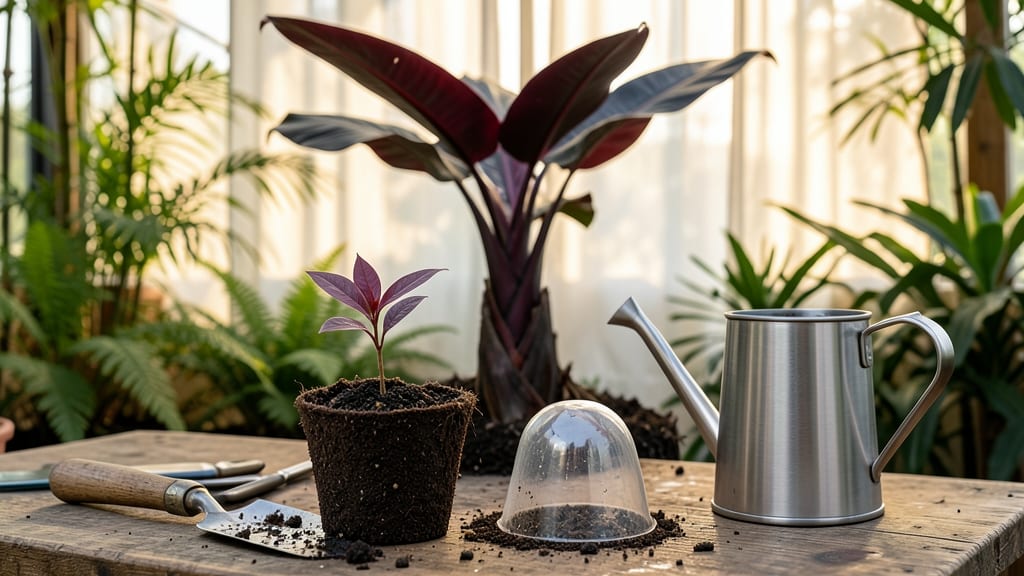
Growing a blood banana seed in your garden means tropical drama in your backyard—three-foot trees in just 90 days. 🌿 I’ve watched these striking red-stemmed beauties sprout from tiny seeds into lush, banana-producing giants, and the secret lies in mimicking their jungle roots without the humidity machine.
The key? Warm soil (75-85°F), a moist but not soggy mix of potting soil and perlite, and bright, indirect light—think dappled shade, not harsh sun. Most seeds germinate in 2-4 weeks, but patience pays off when you see those first deep green leaves unfurl like tiny banana fronds.
By month three, you’ll be staking young plants to support their heavy canes and dreaming of harvests—though fruit takes years. The real magic is the bold red stems that make these plants conversation starters long before any bananas appear. Perfect for warm climates (zones 10-11) or greenhouses elsewhere.
Here’s how to get those seeds sprouting without the tropical travel.
📚 In This Guide
- What you need
- Instructions
- Tips and common mistakes
- Wrapping up and next steps
What you need
- ● Blood banana seeds: 3–5 fresh, plump seeds (harvested from ripe fruit or purchased from a reputable supplier). Pro tip: Soak seeds in warm water for 24 hours to speed up germination! 💡
- ● Seed-starting mix: 1–2 small pots (3–4 inches deep) filled with well-draining, sterile potting soil (avoid garden soil—it can harbor pests!).
- ● Plastic wrap or humidity dome: To create a mini greenhouse effect and retain moisture.
- ● Spray bottle: For gentle watering (avoid over-saturating the soil).
- ● Grow lights or sunny windowsill: A spot with bright, indirect light (6+ hours/day) or a LED grow light (12–16 hours/day for seedlings).
- ○ Heat mat (optional but helpful): Germination thrives in 75–85°F (24–29°C)—a seedling heat mat can give your seeds a cozy boost! 🌡️
- ● Fertilizer: A balanced, water-soluble fertilizer (5-5-5 or 10-10-10) diluted to half-strength for young seedlings.
- ● Transplant pots (4–6 inches): Once seedlings sprout, they’ll need more space to grow!
- ● Moisture meter: To monitor soil dampness—blood banana seeds hate soggy roots.
- ● Support stake or trellis: For when your blood banana starts to grow tall (these guys can reach 6–10 feet in tropical climates!).
Step-by-step instructions for growing blood banana trees from seed
Turn those vibrant seeds into a thriving tropical tree with this foolproof method.
🌱 Step 1: Prepare Seeds for Faster Germination
Blood banana seeds have a tough outer shell that slows germination. First, soak the seeds in warm water for 24 hours—this softens the casing and speeds up sprouting. I like to use a small bowl of water and gently swirl the seeds occasionally to prevent them from sticking together. After soaking, place them between damp paper towels and fold the towels to create a cozy, humid environment.
Store the wrapped seeds in a plastic bag and keep them in a warm spot (75-85°F) for 3-5 days. You'll know they're ready when you see a tiny crack appear in the seed coat—this is the seedling breaking through. Real talk: if you rush this step, germination can take twice as long, so patience here pays off later.
🪴 Step 2: Choose the Right Container and Soil Mix
Blood banana trees need well-draining soil to prevent root rot, so fill a 6-inch diameter pot with a mix of 50% peat moss, 30% perlite, and 20% coconut coir. This blend stays moist but allows excess water to drain quickly. I avoid garden soil because it compacts easily and can suffocate young roots. Tap the pot gently to settle the mix, then create a small hole about ½ inch deep—this is where your seed will go.
Place the germinated seed (crack facing down) into the hole and cover it lightly with the soil mix. Press down very gently to secure it without compacting the soil. The reason we go shallow here is that blood banana seeds need light to trigger germination, and burying them too deep can delay sprouting for weeks.
☀️ Step 3: Provide Warmth, Humidity, and Indirect Light
Cover the pot with a clear plastic dome or wrap it in plastic wrap to maintain 80-90% humidity—this mimics the tropical conditions where blood bananas thrive. Place the container in a warm spot with bright, indirect light (think dappled sunlight under a sheer curtain). Direct sun at this stage can scorch the delicate seedling, so avoid placing it near a south-facing window.
Keep the soil consistently moist but never soggy—water when the top ½ inch feels dry to the touch. I use a spray bottle for gentle misting to avoid disturbing the seed. Within 2-4 weeks, you should see the first true leaves emerge, signaling that your seedling is establishing its roots.
💧 Step 4: Transition to Larger Containers and Outdoor Conditions
Once the seedling reaches 6 inches tall with 4-5 true leaves, it’s time to upgrade to a 12-inch pot. Use the same well-draining soil mix and carefully transfer the seedling, keeping as much of the root ball intact as possible. Blood banana trees grow fast, so you’ll want to move it to a larger container every 6 months for the first few years.
After the last frost, acclimate the seedling to outdoor conditions by placing it in a shaded spot for 1-2 hours the first day, gradually increasing exposure over 10-14 days. Choose a location with partial shade (morning sun, afternoon shade) to protect the young plant from intense heat. Here’s the thing—blood bananas love humidity, so if you live in a dry climate, mist the leaves daily or place the pot on a tray of pebbles filled with water to boost moisture around the plant.
✂️ Step 5: Prune and Support as the Tree Matures
As your blood banana tree grows, you’ll notice long, arching leaves that can become top-heavy. To encourage a bushier shape, pinch back the top 2-3 inches of new growth when the plant reaches 3 feet tall. This trick tells the tree to focus on lateral branching instead of just shooting upward. I also recommend staking the tree once it hits 4 feet—use a 3-foot bamboo stake and soft ties to keep it upright without damaging the trunk.
Fertilize every 2 months with a balanced, organic fertilizer (10-10-10 ratio) during the growing season (spring and summer). Avoid over-fertilizing, as blood bananas are sensitive to salt buildup in the soil. By month 3, your seedling should be a sturdy 3-4 foot tall tree with lush, vibrant foliage—proof that tropical gardening is totally doable, even in cooler climates.
Tips & tricks for growing blood banana trees from seed
These game-changing insights will help you avoid common pitfalls and maximize your tropical tree's potential.
Germination Timing: The 24-hour soak is non-negotiable—it's what breaks down the tough seed coat that would otherwise delay sprouting by weeks. Here's the thing: if you're impatient and skip this step, you might see germination in 7-10 days instead of the usual 3-5 days. I've learned this the hard way after watching seeds sit for over two weeks without progress. Also, keep the water temperature between 75-85°F—warmer water speeds up the process even more.
Soil Mix Secrets: That 50-30-20 peat moss-perlite-coco coir ratio might seem precise, but don't stress about exact percentages. The key is the texture—it should crumble easily when dry and drain water instantly when wet. I've had success using a 60-20-20 mix when peat moss was hard to find, but I did add a handful of orchid bark for extra aeration. The critical part is avoiding anything that compacts, like regular garden soil.
Light Conditions: When instructions mention "bright, indirect light," I mean it literally. Place your seedling near an east-facing window where it gets morning sun but afternoon shade. If you only have south-facing windows, use a sheer curtain to diffuse the light. I've seen seedlings develop sunburnt patches when placed too close to direct sunlight—it looks like white, crispy spots on the leaves that never recover.
Humidity Hacks: Maintaining 80-90% humidity might sound tricky, but there are easy workarounds. Beyond the plastic dome, I've used a clear plastic storage container with holes poked in the lid, or even a large glass jar with the top off. For extra insurance, place the pot on a tray filled with pebbles and water—just make sure the pot isn't sitting directly in the water. This creates a natural humid microclimate without the risk of overwatering.
Pro Tips for Blood Banana Seed Grow A Garden
- These game-changing insights will help you avoid common pitfalls and maximize your tropical tree's potential.
- Germination Timing: The 24-hour soak is non-negotiable—it's what breaks down the tough seed coat that would otherwise...
- Soil Mix Secrets: That 50-30-20 peat moss-perlite-coco coir ratio might seem precise, but don't stress about exact pe...
Frequently asked questions
Got questions about growing blood banana trees from seed? You’re not alone!
Here are answers to the most common concerns—from timing to troubleshooting—so you can confidently start your tropical garden adventure.
How long does it take for a blood banana seed to germinate?
A blood banana seed typically germinates in 4–12 weeks, depending on warmth and moisture. Keep the soil consistently damp (not soggy) and maintain temperatures above 70°F (21°C). Patience is key—some seeds take longer, especially if stored improperly. Pro tip: Use a seedling heat mat to speed up germination!
Can I grow a blood banana tree indoors?
Yes, but with caveats! Blood bananas thrive in warm, humid climates, so indoors, you’ll need a large pot (10+ gallons), bright indirect light (or grow lights), and high humidity (60%+). A greenhouse or sunroom works best. If outdoors isn’t an option, mimic tropical conditions with a humidifier and regular misting.
What’s the fastest way to grow a blood banana tree?
For rapid growth, start with pre-sprouted seeds (soak in water for 3–5 days first) and plant in well-draining, nutrient-rich soil. Use a greenhouse or shade cloth for the first 3 months to protect young shoots. Fertilize lightly with balanced organic fertilizer (10-10-10) every 4–6 weeks once established. Bonus: Prune lower leaves to encourage upward growth!
Why isn’t my blood banana seed sprouting?
Common culprits include cold soil, dry conditions, or old seeds (viability drops after 6–12 months). Troubleshoot by:
- Checking soil temperature (75–85°F / 24–29°C is ideal).
- Ensuring moisture (not waterlogged).
- Testing seed viability by scratching the shell—if it’s hard and intact, it may still be good.
- Trying a hormone rooting gel to boost germination.
Are there easier alternatives to blood bananas for beginners?
If blood bananas seem too finicky, try these low-maintenance tropicals:
- Dwarf banana (Musa acuminata) – Faster-growing, cold-hardier.
- Pineapple sage – Edible, fragrant, and drought-tolerant.
- Bird of Paradise – Striking foliage, thrives in partial shade.
- Papaya – Self-pollinating and quicker to fruit.
Wrapping up and next steps
Growing a blood banana tree from seed is a rewarding adventure that brings a touch of the tropics to your garden in just three months! 🌱 With the right care—warmth, patience, and a dash of attention—you’ll soon enjoy lush, exotic foliage and the promise of vibrant fruit.
Whether you’re a seasoned gardener or a curious beginner, this project is your chance to cultivate something truly special.
Ready to take the next step? Start small—plant your first seed today and watch your green thumb grow! 🌿 For even more tropical flair, explore companion plants like monstera or philodendron to create a thriving mini-jungle.