
Propagation
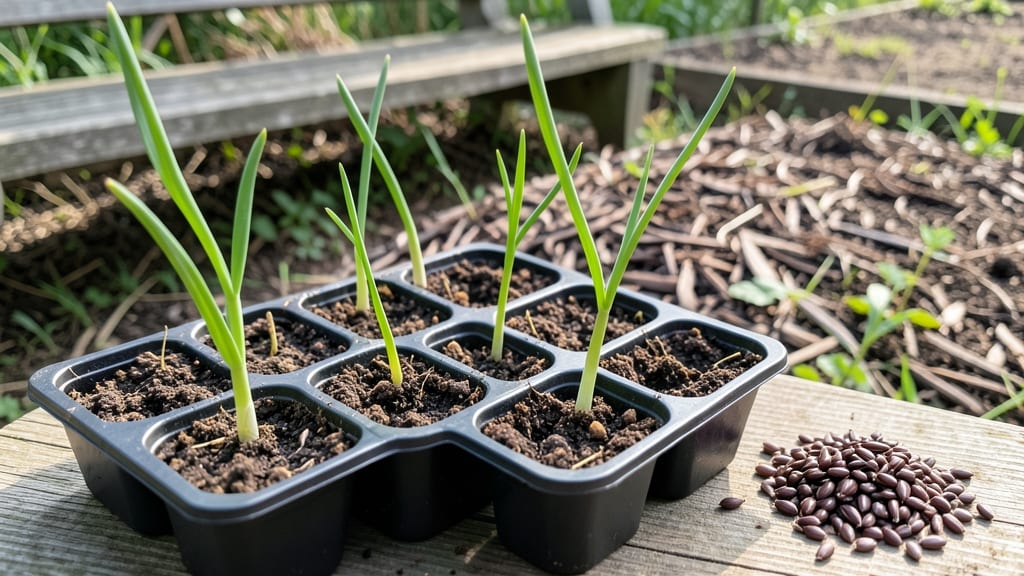
Growing yellow onion seedlings from seed gives you cold-hardened transplants that outperform store-bought sets every time. 🌱 I learned the hard way that rushing seedlings indoors leads to weak, leggy plants—until I mastered the timing and light balance for sturdy starts.
The secret isn't expensive equipment but matching their needs to each growth stage.
Start seeds indoors 8-10 weeks before your last frost, using a soil mix that drains well but holds moisture. Keep them under grow lights (not a sunny window) for 14-16 hours daily to prevent stretching.
When seedlings reach 3-4 inches tall, harden them off outdoors for 1-2 weeks before transplanting—this toughens them up for whatever Mother Nature throws their way.
📚 In This Guide
- What you need
- Instructions
- Tips and common mistakes
- Wrapping up and next steps
What you need
- ● Yellow onion seeds: Choose a cold-hardy variety like 'Texas Early White' or 'Yellow Sweet Spanish' (1 packet = ~500 seeds).
- ● Seed-starting mix: 10–12 cups of sterile, seedling-specific potting soil (avoid garden soil—it’s too dense!).
- ● Seed trays or biodegradable pots: 50+ cells or 2–3 inch pots (one per seedling).
- ● Grow lights or sunny windowsill: 12–16 hours of light daily (LED grow lights work best).
- ● Watering can with a fine rose: For gentle hydration (overhead watering can spread disease).
- ● Plant labels: To track varieties and planting dates.
- ● Spray bottle: For misting seeds post-planting (keeps them moist without disturbing them).
- ○ Heat mat (optional): 70–75°F range to speed up germination (great for cooler climates).
- ● Fertilizer: Balanced liquid fertilizer (5-5-5 or 10-10-10) diluted to half-strength for first feeding.
- ○ Hardening-off tray (optional): A shallow container for acclimating seedlings to outdoor conditions.
- ● Gloves & pruners: For handling seedlings and trimming (if needed).
How to grow strong yellow onion seedlings ready for cold transplanting
Here's the foolproof method I use every spring to raise hardy onion seedlings that thrive when moved straight into chilly soil.
🌱 Step 1: Start Seeds Indoors with Proper Spacing and Depth
Fill seed trays with sterile seed-starting mix and plant yellow onion seeds ¼ inch deep, spacing them ½ inch apart in rows 1 inch apart. Onions are tiny but pack a punch—crowding them now leads to weak, spindly plants later. I use a toothpick to poke individual holes and drop seeds one at a time, then cover lightly with mix.
Keep the soil consistently moist but never soggy—onion seeds need steady moisture to germinate, but waterlogged soil invites rot. Place trays on a seedling heat mat set to 70-75°F for faster germination. You'll see sprouts in 10-14 days, but they'll be slow starters compared to faster-growing veggies.
💧 Step 2: Provide Bright Light and Prevent Legginess
Once seedlings emerge, move them under grow lights positioned 2-3 inches above the trays. Onions need 14-16 hours of light daily to stay compact. Without enough light, they'll stretch toward the source, creating weak stems that flop when transplanted. I raise the lights weekly as seedlings grow to maintain that distance.
Watch for the first true leaves (the second set after the initial seed leaves)—these will be long and narrow. This is your cue to start fertilizing lightly with a half-strength liquid fertilizer every 2 weeks. Overfeeding now causes soft, weak growth that struggles outdoors.
⏰ Step 3: Harden Off Gradually for Cold Resistance
Begin hardening off 3 weeks before transplanting by placing trays outside in a sheltered spot for 1-2 hours on day one. Increase exposure by 1 hour daily, moving to partial sun by day five. Onions are cold-hardy, but sudden temperature swings shock them—this gradual process builds resilience.
By day 10-14, seedlings should tolerate full sun and 40°F nights without wilting. You'll know they're ready when they bounce back from a few hours of wind exposure. Never harden off in direct midday sun—start with morning hours to avoid leaf scorch.
🪴 Step 4: Transplant into Cold Soil with Care
Choose a cloudy day or transplant in the late afternoon to reduce stress. Dig holes 1 inch deeper than the seedling's root ball and space them 4-6 inches apart in rows 12-18 inches apart. Bury the stems ½ inch deeper than they were in trays—this encourages bulb formation.
Water deeply at planting to settle soil around roots, then maintain 1 inch of moisture in the topsoil. Mulch with 2 inches of straw to protect from temperature swings. Onions handle cold better than heat, so don't rush—wait until soil is 45°F or warmer before planting.
Tips & tricks for perfect yellow onion seedlings
Here's what nobody tells you about raising onions that actually thrive in cold soil.
Germination Secret: The 70-75°F heat mat is non-negotiable for speedy germination, but don't let the soil temperature exceed 80°F—onion seeds can rot if overheated. I've seen germination rates drop by 40% when soil gets too warm. Use a digital thermometer to monitor, and if your home runs hot, move trays to a cooler spot during the day.
Lighting Technique: Those 14-16 hours of light aren't just about duration—the quality matters too. Use full-spectrum LED grow lights positioned 2-3 inches above the trays, and adjust the height weekly as seedlings grow. I notice seedlings grown under blue-rich lights develop stronger stems and more vibrant green leaves compared to standard white bulbs.
Harden Off Smart: The gradual 3-week hardening process is crucial, but timing matters. Start when nighttime temperatures consistently stay above 40°F—any colder and your seedlings will struggle. I've found that morning hardening sessions (6-9 AM) work best because dew can sometimes make evening sessions too damp, increasing disease risk.
Transplanting Pro Tip: Burying stems ½ inch deeper than in trays sounds simple, but here's the catch: only do this if your soil is loose and well-draining. In heavy clay, deeper planting can cause rot. Test your soil first—if it compacts easily when squeezed, stick to the original depth and improve drainage with compost.
Pro Tips for Yellow Onion Seedlings
- Here's what nobody tells you about raising onions that actually thrive in cold soil.
- Germination Secret: The 70-75°F heat mat is non-negotiable for speedy germination, but don't let the soil temperature exceed 80°F—onion seeds can rot if overheated.
- Lighting Technique: Those 14-16 hours of light aren't just about duration—the quality matters too.
Frequently asked questions
Got questions about growing yellow onion seedlings?
You’re not alone! Here are some of the most common concerns—plus quick, actionable answers to keep your seedlings thriving.
How long does it take for yellow onion seedlings to be ready for transplanting?
Most yellow onion seedlings are ready for transplanting 8–12 weeks after sowing, once they’ve developed 4–6 true leaves and are about 6–8 inches tall. Cold-hardened seedlings (chilled for 4–6 weeks at 35–45°F) will bolt less and produce stronger bulbs. Check your seed packet for variety-specific timing!
Why is cold hardening important for yellow onion seedlings?
Cold hardening (or vernalization) mimics winter conditions, helping seedlings resist bolting (premature flowering) and develop larger, sweeter bulbs. Skip this step, and your onions might flower instead of bulbing—especially in warm climates. Place seedlings in a cool, dark space (like a fridge) for 4–6 weeks before transplanting.
Can I grow yellow onions from store-bought onions instead of seedlings?
Save seeds from yellow onion varieties (like Texas Early White or Yellow Granex) by letting a few bulbs mature fully. Store-bought onions often won’t produce seeds (they’re usually hybridized), but you can regrow green onions from the root end—just place it in water or soil! For true seedlings, stick to seed packets.
What should I do if my yellow onion seedlings look leggy or weak?
Leggy seedlings usually mean too much light or heat during germination. Fix it by:
- Moving them to a sunnier spot (6+ hours of light daily).
- Thinning crowded seedlings to 1 inch apart to reduce competition.
- Using a grow light if natural light is insufficient.
- Avoid overwatering—soil should stay moist but not soggy.
When is the best time to plant yellow onion seedlings outdoors?
Plant seedlings 2–4 weeks before your last frost date (typically early spring for cool climates or fall for mild winters). In warm regions, opt for fall planting to avoid bolting. Space them 4–6 inches apart in rows 12–18 inches apart. Mulch lightly to retain moisture and regulate soil temp!
Wrapping up and next steps
Growing yellow onion seedlings into cold-hardened transplants is a rewarding journey that sets the stage for a bountiful harvest! With the right timing, care, and a little patience, you’ll be well on your way to towering, flavorful onions.
Whether you’re a seasoned gardener or just starting out, these seedlings are your ticket to a thriving garden—so don’t hesitate to roll up your sleeves and get planting!
Now that you’re armed with knowledge, take the next step: mark your calendar for transplanting and watch your seedlings grow into robust, cold-resistant plants. Happy gardening! 🌱