
Plants
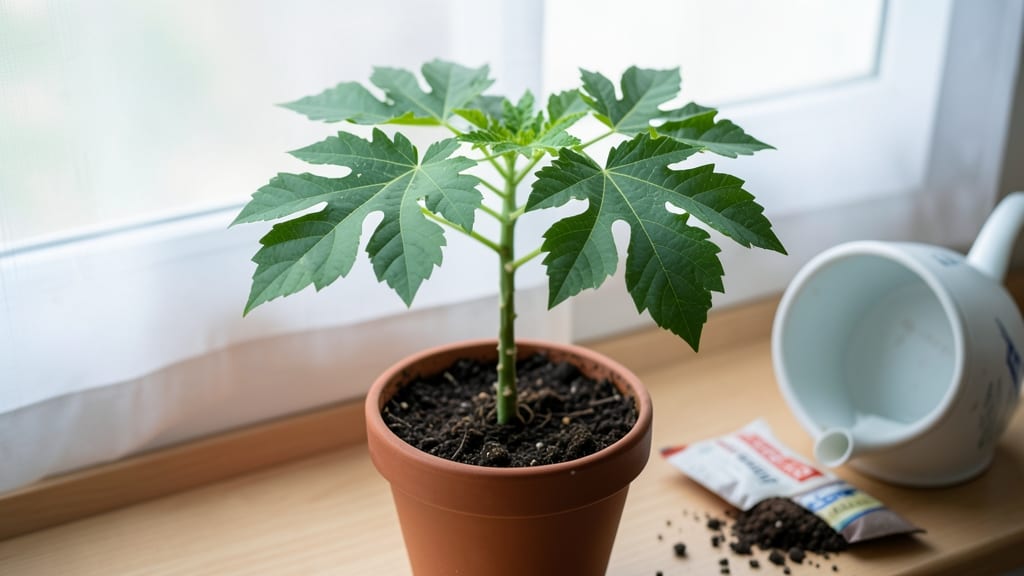
When you first spot those tiny sprouts, you'll notice the cotyledons—the initial leaves—are smooth, round, and almost translucent, giving them a delicate appearance. 🌱 These quickly transform into the true leaves, which are the real giveaways: deep green with jagged edges and a slightly wavy, lobed shape that sets them apart from citrus seedlings.
The stems start off soft but firm up over time, developing that signature waxy coating that helps them thrive in humid conditions.
One of the most telling signs of healthy papaya seedlings is their rapid early growth—they can double in size within weeks if given proper care. The leaves will also develop prominent veins that create a web-like pattern, making them distinct from other tropical seedlings.
If you're comparing them to mango or citrus, pay attention to the leaf shape and the way the stem grows upright before eventually bending as the plant matures.
💡 In This Article
- Identifying Papaya Seedling Stages by Leaf Shape
- Key Growth Marks to Distinguish Healthy Papaya Seedlings
Identifying papaya seedling stages by leaf shape
The journey of a papaya seedling begins with its cotyledons, which are the first leaves to emerge from the seed. These initial leaves are typically round, smooth, and a pale green or yellowish hue, measuring about 0.5 to 1 inch in diameter.
They lack the distinct serration or lobes of later leaves and resemble tiny, delicate shields. This stage is often overlooked because the cotyledons resemble those of many other tropical seedlings, but their smooth edges and lack of prominent veins are key identifiers.
Once the cotyledons fall off—usually within 2 to 3 weeks—the true leaves begin to appear, marking the most distinctive phase of papaya seedling development.
These leaves are elongated, deep green, and feature serrated edges with a slightly lobed shape, almost like a cross between a maple and a willow leaf.
The veins are prominent and create a web-like pattern, which is a dead giveaway when compared to citrus seedlings (which have smoother, more oval leaves) or mango seedlings (which tend to be broader and less serrated). 🌿 The leaf margins also have a slight waviness, adding to their unique appearance.
As the seedling matures, the leaves grow larger, reaching 3 to 6 inches in length, and the stem develops a waxy, almost glossy texture. This waxy coating isn’t just for show—it’s a natural adaptation to reduce water loss in humid tropical environments.
The stem also starts to grow more upright initially but will eventually bend as the plant prepares for its vine-like growth pattern.
One common misidentification is confusing papaya seedlings with those of citrus or avocado, but papaya leaves are far more elongated and lobed, while citrus leaves are simpler and avocado leaves are larger and leathery.
The vein structure of papaya leaves is another critical detail. The primary veins branch out from the central stem in a palmately compound pattern, creating a network that supports the leaf’s structure.
This is different from the pinnate vein pattern seen in mango seedlings, where veins run parallel along the length of the leaf. If you trace the veins with your finger, you’ll notice how they create a spiderweb-like effect, which is a hallmark of healthy papaya growth.
This intricate vein system also helps the leaf absorb sunlight efficiently, fueling rapid growth.
For those growing papaya from seed, timing is everything. The transition from cotyledons to true leaves usually occurs within 3 to 4 weeks under optimal conditions—warmth (75-85°F), high humidity, and bright, indirect light.
If you’re growing in cooler climates, this process may take longer, and the leaves might appear paler or smaller. Pay close attention to the leaf color: healthy papaya leaves should be a vibrant, deep green, while yellowing or browning can indicate nutrient deficiencies or pests. 🌱
To further distinguish papaya seedlings from others, consider the growth speed. Papaya seedlings are known for their rapid early growth, often outpacing other tropical seedlings in the same environment.
Within 6 to 8 weeks, a healthy papaya seedling can reach 1 to 2 feet in height, with leaves that are noticeably larger and more complex than those of citrus or avocado.
This quick growth is a result of the papaya plant’s tropical origins, where it thrives in warm, humid conditions and needs to establish itself quickly.
If you’re still unsure whether your seedlings are papaya, look for these final clues: the shape of the leaf base (which is often slightly heart-shaped) and the presence of small, hair-like structures along the veins, especially on the underside of the leaves.
These tiny hairs are a common trait in papaya and help protect the plant from pests. With these details in mind, you’ll be able to confidently identify your papaya seedlings and give them the care they need to thrive. ✨