
Size
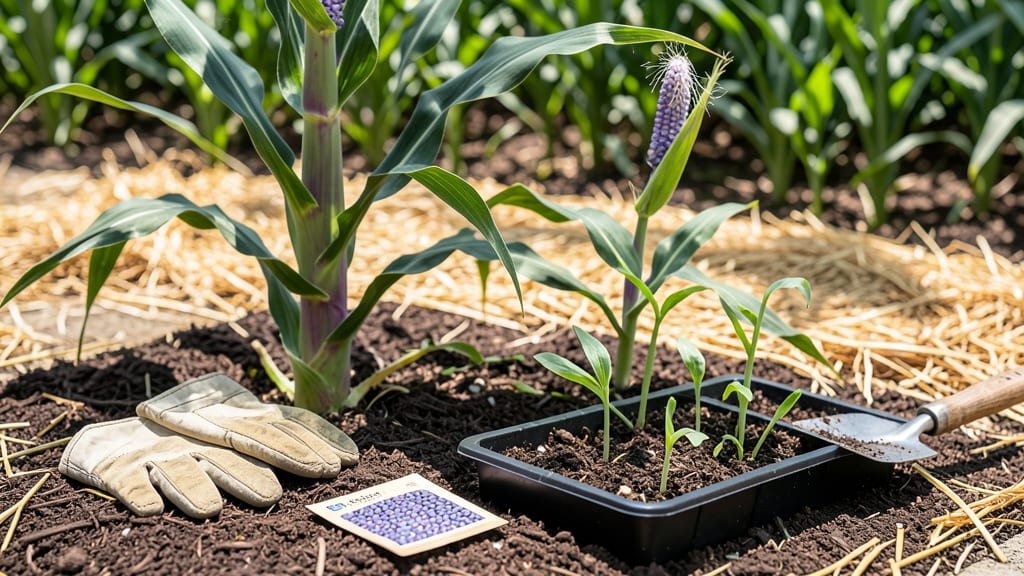
Growing violet corn from seed unlocks a garden centerpiece that turns heads—and stomachs—with its stunning purple kernels. 🌱 I planted my first batch of 'Black Aztec' last spring, and the moment those deep violet ears emerged from the husks, I knew this was no ordinary corn.
The secret to success starts with the soil: rich, well-draining, and amended with compost to give those seeds the energy they need to push through the ground.
Most gardeners overlook the importance of planting depth—violet corn seeds need to go 1-1.5 inches deep and 12 inches apart in rows spaced 3 feet apart. The real magic happens in full sun (at least 6-8 hours daily) and consistent moisture, but not soggy soil.
Once sprouted, these plants grow 7-8 feet tall, so give them space to stretch without crowding. The payoff? Ears that stay vibrant from harvest through storage, perfect for popping or grinding into flour.
Advanced gardeners swear by side-dressing with nitrogen mid-season to boost those towering stalks, but even beginners will see success with regular watering and mulching. The kernels stay purple until cooked—so save some fresh for the table, and let the rest dry for heirloom cornmeal.
My neighbors now ask every year when I’ll plant more; the answer is always "next spring."
Whether you're growing for show or for the kitchen, violet corn thrives in USDA Zones 4-10 with proper care. Start seeds indoors 2-3 weeks before last frost for a head start, or direct-sow after soil warms to 60°F.
The key is patience—these beauties take 90-120 days to mature, but the wait is worth every purple kernel.
📚 In This Guide
- What you need
- Instructions
- Tips and common mistakes
- Wrapping up and next steps
What you need
- ● Violet corn seeds – 1–2 lbs (enough for a 10’x10’ patch or 50–100 plants)
- ● Well-draining soil – 1–2 cubic yards (mix garden soil with compost for fertility)
- ● Organic fertilizer – 10-10-10 or balanced compost (5 lbs per 100 sq ft)
- ● Watering can or hose – With a gentle spray nozzle for seedlings
- ○ Row covers or shade cloth (optional but helpful for early growth)
- ● Garden trowel or transplanting spade (for planting seeds)
- ● Garden stakes or trellis (if growing tall varieties)
- ● Measuring tape or ruler (for spacing seeds 12–18" apart)
- ● Pruners or scissors (for trimming excess growth)
- ● Gloves (to protect hands from soil and sharp stalks)
- ● A sunny location with 6+ hours of direct sunlight daily
- ● Warm soil temps (70–85°F for germination)
- ● Consistent moisture (keep soil damp but not soggy)
- ● Patience! Violet corn takes 90–120 days to mature
Step-by-Step instructions for growing violet corn from seed
Here's how I coax vibrant purple kernels from tiny seeds—using the same techniques that produce bold, flavorful harvests.
🌱 Step 1: Prepare the Soil for Maximum Germination
Corn thrives in loose, fertile soil with excellent drainage. Mix 2 parts high-quality garden soil with 1 part compost and 1 part coarse sand to create an ideal seedbed. I like to add a handful of bone meal (about 1 tablespoon per square foot) to boost phosphorus for strong root development.
Work the mixture to a depth of 6 inches, breaking up any clumps. Violet corn needs consistent moisture, so till in 2 inches of compost to retain water while preventing compaction. Test the soil's moisture by squeezing a handful—it should hold together but not be soggy. If it crumbles, add water and let it settle for 24 hours before planting.
🌱 Step 2: Plant Seeds at the Right Depth and Spacing
Corn seeds are large, so plant them 1 inch deep and 12 inches apart in rows spaced 3 feet apart. This spacing ensures each plant has room to develop a sturdy stalk and prevents competition for sunlight. I use a seedling marker to label rows—corn varieties can vary in height and maturity, and violet corn often takes a few extra days to germinate.
Drop 2-3 seeds per hole and cover lightly with soil, pressing gently to ensure good seed-to-soil contact. Water immediately after planting to settle the soil around the seeds. Avoid overwatering now—damp but not waterlogged soil is critical for preventing seed rot. Germination typically occurs in 7-14 days, but violet corn can take up to 21 days in cooler soils.
☀️ Step 3: Provide Warmth and Consistent Moisture
Corn loves warmth, so aim to plant when soil temperatures reach 60°F or higher. Use a soil thermometer to monitor—cold soil delays germination and weakens seedlings. If your climate is still chilly, consider using black plastic mulch to warm the soil faster. Water deeply 2-3 times per week, ensuring the top 6 inches of soil stay moist but not saturated.
Once seedlings emerge, thin to the strongest plant per hill when they reach 4 inches tall. Watch for first true leaves (the second set after the initial seed leaves)—this is your signal to reduce watering slightly to encourage deeper root growth. Violet corn may show slower early growth compared to standard varieties, so resist the urge to overwater or fertilize too early.
✂️ Step 4: Fertilize and Support for Strong Stalks
When plants are 6 inches tall, apply a balanced fertilizer (10-10-10) at half-strength to avoid burning tender roots. I like to side-dress with compost tea every 2 weeks to provide organic nutrients without salt buildup. Violet corn benefits from sturdy stalks, so if plants lean, gently tie them to bamboo stakes inserted 6 inches deep at planting time.
Monitor for corn earworms—cover ears with silicone earworm bags when tassels appear (the feathery tops). Harvest when kernels are plump and milk-stage (when squeezed, they release a milky liquid). Violet corn often matures 5-7 days later than standard varieties, so don’t rush—wait for full color development for the deepest purple hues.
🌿 Step 5: Harvest and Preserve the Vibrant Purple Kernels
Cut stalks at the base with clean pruners when kernels reach peak color. I like to hang them in a dry, well-ventilated area for 2-3 weeks to dry fully before husking. Once dry, remove kernels and store in an airtight container away from light. Violet corn’s color fades with exposure, so keep it in a cool, dark place for long-term storage.
Here’s the thing—violet corn’s flavor intensifies when dried properly. If you’re saving seeds for next year, select the plumpest, most vibrant kernels and store them in a sealed jar in the freezer. This preserves viability for up to 2 years, letting you repeat the process with the same bold results.
Tips & tricks for growing vibrant violet corn from seed
These garden-tested strategies will help you coax the most dramatic purple hues and healthiest stalks from your violet corn seeds.
Soil Prep Secret: Violet corn thrives when soil temperatures hit at least 60°F—use a soil thermometer to verify before planting. I've found that adding 1 tablespoon of bone meal per square foot during Step 1 creates a phosphorus boost that accelerates early root development. For cooler climates, mix in black plastic mulch before planting to raise soil temps by 10-15°F—this cuts germination time from the potential 21 days to a more reliable 7-14 days.
Planting Precision: The 1-inch deep planting depth in Step 2 is critical—any deeper and seeds may rot from poor air circulation. I use a wooden dowel marked at 1-inch intervals to ensure consistent depth. When planting 2-3 seeds per hole, space them 12 inches apart in rows 3 feet apart to prevent overcrowding. This spacing gives each plant room to develop the sturdy stalks needed to support those heavy purple ears.
Germination Watch: Violet corn's delayed germination (up to 21 days in cool soils) means patience is key. Mark each planting spot with biodegradable flags so you don't accidentally disturb the area while waiting. Once sprouts appear, thin to the strongest seedling per hill—this reduces competition and gives remaining plants the resources they need for vibrant purple development.
Harvest Timing: The 5-7 days later maturity window for violet corn means you'll need to monitor closely. Test kernel readiness by squeezing—when they release milky liquid, they're perfect for fresh eating. For deeper purple hues, wait until kernels show full color development before harvesting. I've found that hanging stalks in a dry, well-ventilated area for 2-3 weeks before husking preserves that stunning color and intensifies the flavor.
Pro Tips for Violet Corn Seed Grow A Garden
- These garden-tested strategies will help you coax the most dramatic purple hues and healthiest stalks from your violet corn seeds.
- Soil Prep Secret: Violet corn thrives when soil temperatures hit at least 60°F—use a soil thermometer to verify before planting.
- Planting Precision: The 1-inch deep planting depth in Step 2 is critical—any deeper and seeds may rot from poor air circulation.
Frequently asked questions
Got questions about growing violet corn from seed? You’re not alone! Here are some of the most common queries—plus straightforward answers to help you cultivate a stunning purple harvest with confidence.
How long does violet corn take to germinate?
Violet corn seeds typically sprout in 7–14 days after planting, depending on soil warmth and moisture. Keep the soil consistently damp (not soggy) and maintain temperatures between 60–85°F (15–29°C). Patience is key—some seeds may take up to 3 weeks to crack open!
When is the best time to plant violet corn seeds?
For warm climates, start seeds indoors 2–3 weeks before your last frost (early spring) or direct-sow outdoors 2–3 weeks after frost when soil reaches 60°F (15°C). In cooler regions, wait until late spring—violet corn thrives in full sun (6+ hours/day) and hates frost.
Why aren’t my violet corn seeds sprouting?
Check these fixes:
- Cold soil: Seeds need warmth to germinate. Use a heat mat or wait for warmer temps.
- Too dry/wet: Keep soil moist but not waterlogged—a spray bottle helps.
- Old seeds: Violet corn seeds lose viability after 1–2 years. Test a few in a damp paper towel first.
- Depth issue: Plant seeds 1–2 inches deep—too shallow = drying out.
Can I grow violet corn in containers?
Violet corn grows well in large pots (10+ gallons) or raised beds, as long as roots have 18+ inches of depth. Use a well-draining potting mix with compost, and place containers in full sun. Just be prepared for taller stalks (6–10 ft)—secure pots to stakes or a trellis!
Will my violet corn stay purple, or will it turn yellow?
The kernels retain their vibrant purple hue when cooked or dried, but the cobs themselves may turn yellowish as they mature. For deepest color, harvest when kernels are firm and ¾ of the way dry (usually 70–90 days after planting). Store dried cobs in a cool, dark place to preserve color.
Pro Tip:
Struggling with low germination rates? Try soaking seeds in warm water for 12 hours before planting—it can boost sprouting success by up to 30%!
Wrapping up and next steps
Growing violet corn from seed is a rewarding adventure that adds vibrant color and unique flavor to your garden!
With the right soil, patience, and care, you’ll soon enjoy a stunning harvest of purple kernels perfect for cooking or decorating. Start small—even a single plant can make a bold statement in your garden.
Ready to dive in? Pick your seeds, prep your soil, and plant with confidence! 🌱✨ Whether you’re a beginner or a seasoned gardener, your violet corn garden awaits—happy growing!