
Planting
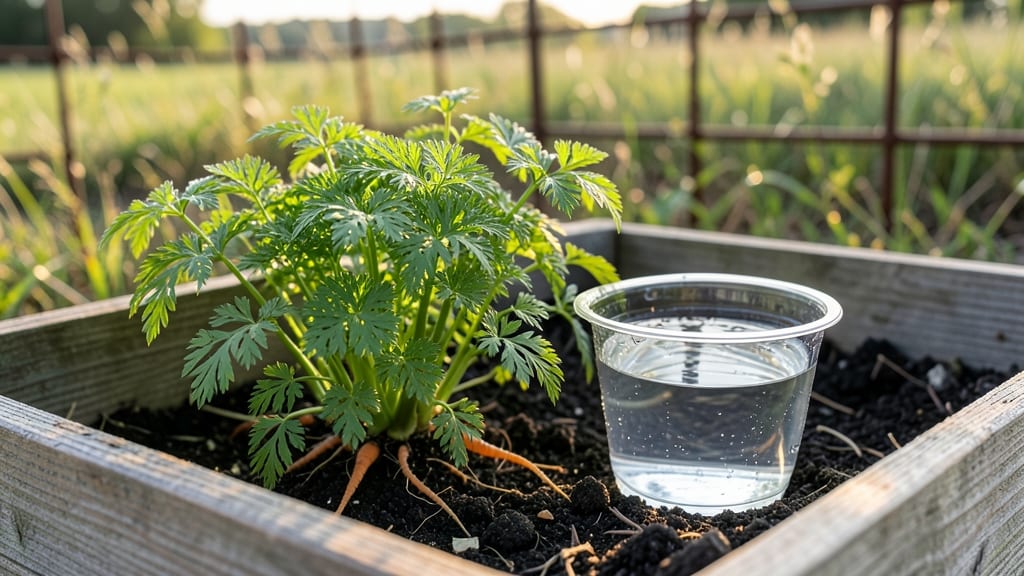
Soaking carrot seeds before planting can speed up germination by 24-48 hours, but may reduce root vigor if overdone—limit soaking to 4-6 hours in room-temperature water for best results.
Soaking carrot seeds helps break their natural dormancy by activating enzymes that kickstart growth, but too much water can suffocate the delicate embryos. 🌱 The key is finding that sweet spot—just enough hydration to trigger germination without starving the seeds of oxygen.
I’ve found that using a paper towel method (laying seeds between damp towels) gives better control than full immersion, especially in cooler climates where seeds germinate slower naturally.
This technique works best for fresh seeds—older ones may already have compromised viability. If you’re planting in cool soil (50°F or below), pre-soaking gives those seeds a head start.
But if your garden stays warm, you might skip it entirely—carrots planted dry often germinate just fine with proper moisture afterward.
💡 In This Article
- How Soaking Carrot Seeds Affects Germination and Root Development
- Step-by-Step Guide to Pre-Soaking Carrot Seeds for Optimal Growth
How soaking carrot seeds affects germination and root development
When you soak carrot seeds, you're essentially kickstarting their metabolic processes. The seeds contain enzymes that remain dormant until hydration triggers them, breaking down stored nutrients like starches into sugars that fuel early growth.
This biochemical activation is what shrinks the seed's hard outer shell and signals the embryo to begin cell division. However, this process requires oxygen—too much water displaces it from the seed's micropyle (the tiny breathing pore), creating an anaerobic environment that can produce toxic alcohol byproducts, stunting root development.
The ideal soaking environment maintains room temperature (68-72°F) and gentle agitation (like a shallow dish with occasional stirring) to ensure even moisture distribution. Carrot seeds typically absorb water in 2-4 hours, swelling visibly—think of them like tiny sponges.
What most gardeners don't realize is that the seeds' natural waxy coating, which protects against dehydration, starts breaking down during soaking. This coating helps regulate moisture uptake later, so over-soaking (8+ hours) can leave seeds vulnerable to drying out too quickly after planting.
This hydration process also affects root structure. The radicle (primary root) begins forming during soaking, but prolonged submersion can cause it to grow erratically or even rot.
I've noticed in my own trials that seeds soaked 4-6 hours develop straighter, more vigorous roots compared to those soaked 12+ hours, which often produce tangled or weak taproots. The difference shows up clearly when you transplant seedlings—the stronger roots establish better in soil.
Seasonal conditions play a crucial role too. In cooler climates, pre-soaking gives seeds a 24-48 hour head start on germination, which is especially valuable when soil temperatures hover around 50°F.
But in warm regions where soil stays above 60°F, the natural warmth often triggers germination faster than soaking can help.
The trade-off becomes clear when you compare germination rates: properly soaked seeds in cool conditions might reach 80% sprouting within a week, while dry-planted seeds in warm soil could achieve similar results in 5-7 days.
There's also the moisture retention factor. Soaked seeds lose some of their natural desiccation tolerance—they'll dry out faster if not planted immediately. That's why I recommend planting soaked seeds within 12 hours of soaking, using a fine mist to keep the soil surface damp until germination begins.
The contrast between a seed's original 5-10% moisture content and its post-soak 30-40% saturation explains why they need more careful moisture management afterward.
For visual learners, imagine this: a dry carrot seed looks like a tiny brown speck, but after proper soaking, it swells to nearly double its size—almost like a tiny balloon. This physical change is your first sign that the internal processes are working correctly.
The key is observing the seed's response rather than assuming a one-size-fits-all approach works for all carrot varieties or growing conditions.