
Propagation
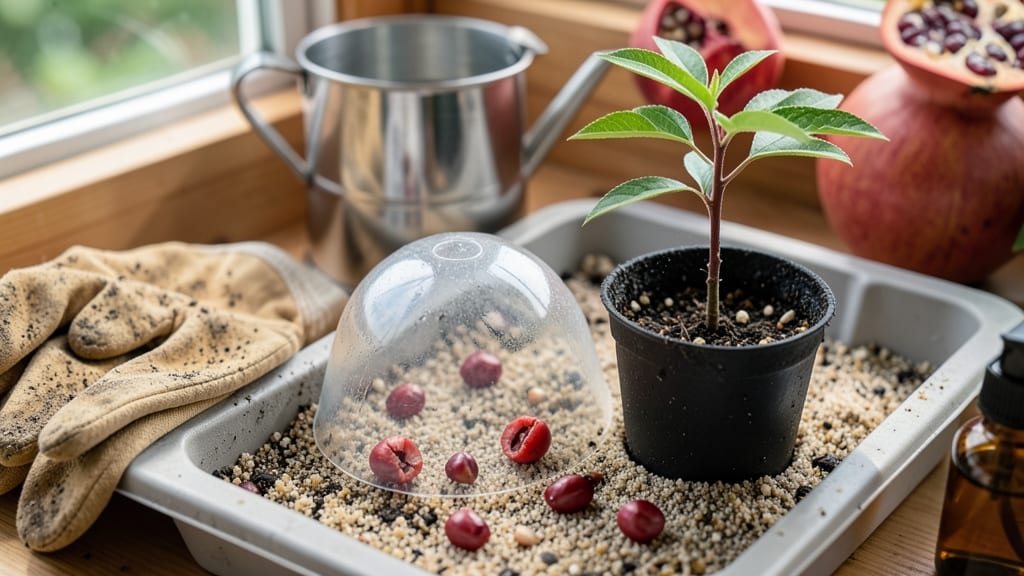
Cracking open a pomegranate for seeds might seem like a messy chore, but those tiny brown jewels hold the secret to growing your own tree—pomegranate seed propagation is easier than you think. 🌱 I’ve turned store-bought seeds into thriving seedlings with just a few simple steps, and you can too.
The key? Proper prep and patience—no fancy techniques required.
Start by scooping seeds from a ripe pomegranate, rinsing them to remove excess juice, and letting them dry for a day. No need for fancy stratification—just plant them ½-inch deep in moist, well-draining soil (a mix of potting soil and perlite works best).
Keep them warm (around 70°F) and humid, and you’ll see sprouts in 2-4 weeks. The trick is consistency: too dry, and they’ll stall; too wet, and mold takes over.
Once seedlings pop up, thin them to the strongest one per pot and give them bright, indirect light. They’ll grow slowly at first, but within 3-6 months, you’ll have a sturdy young tree ready to transplant.
The real payoff? A homegrown pomegranate tree that could fruit in 3-5 years—and the satisfaction of growing something from a single seed.
Troubleshooting is simple: if seeds rot, reduce water; if they mold, improve airflow. And here’s the best part—this method works whether you’re growing in pots or planting directly in the ground. Ready to turn that grocery-store fruit into a garden centerpiece?
📚 In This Guide
- What you need
- Instructions
- Tips and common mistakes
- Wrapping up and next steps
What you need
- ● Fresh pomegranate seeds – 5–10 healthy, plump seeds (avoid shriveled or damaged ones). Pro tip: 💡 Harvest seeds from a fully ripe, organic pomegranate for the best germination rates!
- ● Small pots or seed trays – 3–4 inch diameter (1–2 per seedling). Use biodegradable pots if transplanting later.
- ● Well-draining potting mix – A blend of 50% peat moss or coco coir, 30% perlite or vermiculite, and 20% sand (or a pre-mixed seed-starting mix).
- ● Spray bottle – For gentle watering (avoid oversaturating seeds!).
- ● Clear plastic wrap or humidity dome – To create a mini greenhouse effect.
- ● Grow lights or sunny windowsill – Provide 6–8 hours of light daily (south-facing window or LED grow lights work best).
- ● Labeling tags & marker – To track seedling progress (trust us, you’ll forget which is which!).
- ● Seed stratification setup – A cool, dark place (like a fridge) for 4–6 weeks if seeds are dormant (common in some pomegranate varieties).
- ○ Rooting hormone – Speeds up germination (optional but handy for stubborn seeds).
- ● Fertilizer (diluted) – A balanced liquid fertilizer (5-5-5 or 10-10-10) once seedlings sprout true leaves.
- ● Heating mat – Keeps soil 70–75°F for faster germination (especially useful in cooler climates).
- ● Pruning shears – For trimming leggy seedlings later.
Step-by-step guide to growing pomegranate trees from seeds
Here's how to crack open those ruby-red pods and grow your own pomegranate tree—no stress, just science.
🌱 Step 1: Extract and Prepare the Seeds
Start with fresh pomegranate seeds—older seeds lose viability. Cut open the fruit and scoop out the seeds, then rinse them thoroughly to remove any pulp. Spread them on a paper towel to dry for 24 hours at room temperature. This prevents mold and helps the seed coats soften slightly.
After drying, place the seeds in a bowl of lukewarm water for 12-24 hours. This soaking mimics natural rainfall and softens the hard outer coating, which can delay germination. You’ll know they’re ready when the water turns slightly cloudy—this means the seeds have absorbed moisture and are primed for planting.
🪴 Step 2: Plant the Seeds in Moistened Growing Medium
Fill small pots or seed trays with a sterile, well-draining potting mix—avoid garden soil, as it compacts too easily. Moisten the mix until it’s damp but not soggy; squeeze a handful to test—it should hold together without dripping. Plant the seeds ½ inch deep, spacing them 1 inch apart in the container.
Cover the pots with plastic wrap or a humidity dome to create a mini greenhouse. Place them in a warm spot (70-75°F) with indirect light—direct sun can overheat the soil and dry out the seeds too quickly. Check daily for condensation on the plastic; if it’s foggy, your humidity is perfect.
☀️ Step 3: Wait for Germination and Provide Gentle Care
Germination can take 2-4 weeks, so patience is key. Keep the soil consistently moist—stick your finger ½ inch deep to check; if it feels dry, water lightly. Avoid letting the soil dry out completely, as this can kill the seeds before they sprout. Once you see tiny green shoots, remove the plastic wrap immediately to prevent fungal issues.
When the seedlings reach 2-3 inches tall, transplant them into slightly larger pots (3-4 inches deep) with fresh potting mix. Place them in a bright, indirect light spot—avoid harsh afternoon sun, which can scorch young leaves. You’ll know they’re thriving when new leaves emerge with a deep green color and sturdy stems.
⏰ Step 4: Harden Off and Transition to Outdoor Conditions
After 4-6 weeks of indoor growth, when seedlings have 4-5 true leaves, it’s time to harden them off. Start by placing them outside in a sheltered spot for 1-2 hours the first day, gradually increasing exposure over 10-14 days. This slow transition helps them adjust to wind, sun, and temperature fluctuations.
Once hardened off, plant them in the ground or larger containers (1 gallon or bigger) in a location with full sun (6+ hours daily). Pomegranates love heat and drought once established, but young trees need consistent moisture. Water deeply once a week, ensuring the soil stays moist but not waterlogged. Mulch around the base to retain moisture and regulate soil temperature.
🌿 Step 5: Prune and Encourage Strong Growth
In their first year, focus on shaping the tree by pruning leggy or weak branches. Use clean, sharp pruners to trim just above a leaf node, encouraging bushier growth. Avoid heavy pruning—pomegranates respond best to light, strategic cuts. You’ll see new shoots emerge within 2-3 weeks, signaling the tree is adapting well.
Fertilize lightly in spring with a balanced, organic fertilizer (10-10-10) to support root and foliage growth. Avoid over-fertilizing, as this can lead to weak, disease-prone plants. With time, your seed-grown pomegranate will develop into a sturdy tree—though it may take 5-7 years to bear fruit, the journey is worth it.
Tips & tricks for stress-free pomegranate seed propagation
These science-backed strategies will help you maximize your chances of growing healthy pomegranate seedlings from those ruby-red pods.
Seed Selection: Not all pomegranate seeds are created equal. Choose seeds from fully ripe fruit—look for deep ruby-red color and firm, heavy pods. Avoid seeds from green or overripe fruit, as they may not germinate. I've found that seeds from organic pomegranates tend to have higher viability, likely due to fewer chemical residues interfering with germination.
Soaking Science: The 12-24 hour soaking period in lukewarm water is your secret weapon for breaking seed dormancy. Use water that's warm to the touch but not hot—think bathwater temperature. You'll know the seeds are ready when the water develops a faint cloudiness from released seed oils. Pro tip: Place a small piece of mesh or cheesecloth over the bowl to prevent seeds from floating away during this critical soaking phase.
Lighting Strategy: During the 2-4 week germination period, indirect light is key. Position your seed trays near an east-facing window where they'll receive gentle morning sunlight without the harsh intensity of afternoon rays. If natural light is limited, supplement with a grow light placed 6-8 inches above the pots for 12-14 hours daily. Too much direct light at this stage can cause the soil surface to dry out too quickly, creating a hostile environment for emerging sprouts.
Transplant Timing: When your seedlings reach that magical 2-3 inch height—about 4-6 weeks after planting—don't rush the transplant. Wait until you see at least 3-4 true leaves (not the initial seed leaves) before moving them to larger pots. This indicates the root system has developed enough to handle the transition. Gently remove the seedlings by grasping the leaves, not the stem, to avoid damaging the delicate root structure that's just beginning to establish itself.
Pro Tips for Pomegranate Seed Propagation
- These science-backed strategies will help you maximize your chances of growing healthy pomegranate seedlings from those ruby-red pods.
- Seed Selection: Not all pomegranate seeds are created equal.
- Soaking Science: The 12-24 hour soaking period in lukewarm water is your secret weapon for breaking seed dormancy.
Frequently asked questions
Got questions about growing pomegranates from seeds? You’re not alone—this method takes patience and a little know-how! Here are answers to the most common queries to help you crack the code on propagation.
How long does it take for pomegranate seeds to sprout?
Pomegranate seeds can take 4 to 8 weeks to sprout, depending on temperature and moisture. Keep them in a warm (70–80°F), humid environment with consistent moisture. Patience is key—some seeds may take even longer!
Can I propagate pomegranates from store-bought seeds?
Yes, but success rates vary! Store-bought seeds are often untested for viability and may not sprout. For better odds, use seeds from a ripe, organic pomegranate grown in your climate zone. If store-bought is your only option, soak seeds in water for 24 hours first to boost germination.
What’s the best temperature for pomegranate seed germination?
Ideal germination temps range between 70–80°F (21–27°C). Use a seedling heat mat if your home runs cooler. Avoid extreme heat (above 90°F) or cold (below 60°F), as these can stunt growth or kill seeds.
Why aren’t my pomegranate seeds sprouting?
Common culprits include:
- Dormancy: Some seeds need a cold stratification period (place in the fridge for 2–4 weeks before planting).
- Over/under-watering: Keep soil moist but not soggy—dampness encourages rot.
- Old or low-quality seeds: Freshness matters! Use seeds from a fully ripe pomegranate (not shriveled or discolored).
- Poor drainage: Ensure pots have drainage holes to prevent root rot.
How do I care for pomegranate seedlings once they sprout?
Once sprouts emerge, provide:
- Bright, indirect light (6+ hours daily). Gradually introduce direct sun to harden off seedlings.
- Well-draining potting mix (cactus/succulent mix works well).
- Gentle watering—let the top inch of soil dry between waterings.
- Patience! Seedlings grow slowly. Transplant outdoors after the last frost and in a warm, sunny spot.
Pro Tip:
Label your seedlings! Pomegranate varieties can look similar, but growth rates and fruit quality vary. Track parent plants to identify future winners.
Wrapping up and next steps
Growing pomegranates from seed is a rewarding journey that lets you nurture a fruit tree from scratch—no fancy skills required! 🌱 With the right patience and care, you’ll soon enjoy vibrant sprouts and, eventually, juicy pomegranates straight from your garden.
Ready to take the next step? Start with just a few seeds and watch your green thumb grow!
Pro tip: Keep a propagation journal to track your progress—it’s a fun way to celebrate every tiny victory! 📝✨