
Propagation
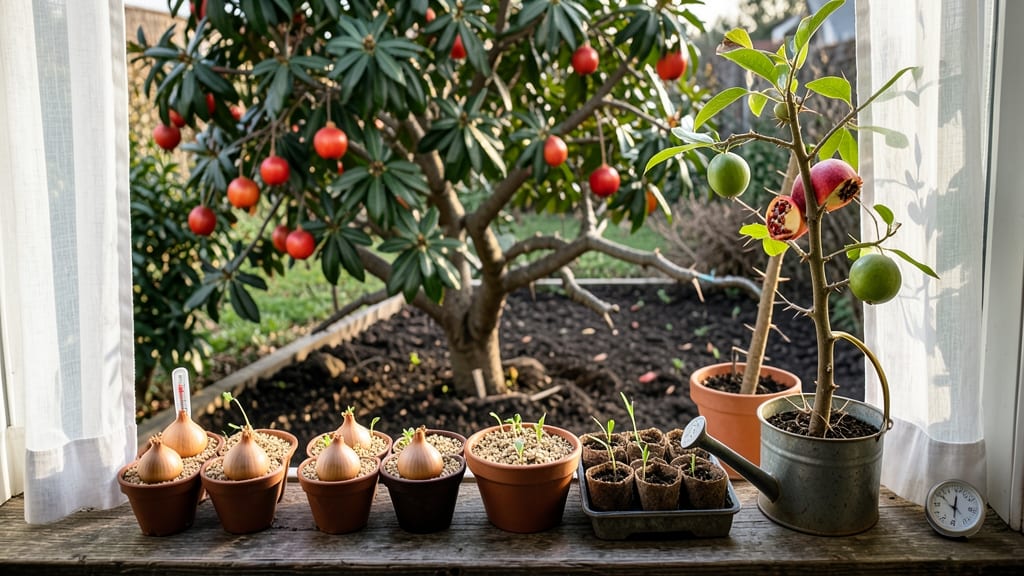
Growing pomegranates from seed to fruit starts with that first crunchy bite—then saving the seeds to plant your own tree. 🌱 The journey takes patience, but the payoff is worth it: vibrant blooms, glossy green leaves, and eventually, your own homegrown fruit.
Most people quit after the first year, but sticking with it means you'll have a tree that keeps producing for decades.
Here's the secret: pomegranate seeds need 60 days of consistent moisture to germinate, and a warm spot (like a sunny windowsill) to kickstart growth. You'll see tiny sprouts within 2-4 weeks if conditions are right, but don’t rush—these trees take 3-5 years to fruit.
The key is keeping soil lightly damp (not soggy) and protecting seedlings from drafts until they’re sturdy enough to handle outdoor life.
By the time your tree is 3 years old, you’ll start seeing those iconic red flowers in late summer—each one a promise of fruit to come. Prune in late winter to shape the tree and encourage strong branches, and watch as the first small, hard pomegranates form.
The real magic happens in year 4 or 5, when you finally get that first full-sized harvest.
This method works best in USDA zones 7-11, but even in cooler climates, you can grow pomegranates in containers and overwinter them indoors.
The trick is balancing water, sunlight, and a little extra care during the early years—so your tree grows strong enough to handle the long wait for fruit.
📚 In This Guide
- What you need
- Instructions
- Tips and common mistakes
- Wrapping up and next steps
What you need
- ● Pomegranate seeds: 5–10 fresh, plump seeds (harvested from a ripe fruit). Pro tip: 💡 Rinse seeds gently to remove excess pulp before planting!
- ● Seed-starting mix: 2–3 cups of well-draining, sterile potting soil (look for a blend labeled for seeds or seedlings).
- ● Small pots or trays: 2–4 biodegradable pots (3–4 inches deep) or a seed tray with drainage holes.
- ● Plastic wrap or humidity dome: To retain moisture during germination.
- ● Spray bottle: For misting soil (avoid overwatering!).
- ● Grow lights or sunny windowsill: A south-facing window or a 12–16 hour LED grow light for seedlings.
- ○ Fertilizer (optional but helpful): A balanced, water-soluble fertilizer (5-5-5 or 10-10-10) for young seedlings.
- ● Warmth: Ideal germination temp: 70–85°F (21–29°C). Use a heat mat if needed.
- ● Patience: Germination takes 14–60 days—stay consistent!
- ● Sunlight: Once sprouted, seedlings need 6+ hours of light daily.
- ● Humidity tray (pebble tray + water) for extra moisture.
- ● pH test kit (ideal soil pH: 6.0–7.0).
- ● Epsom salt (1 tsp in water monthly for magnesium boost).
- ● Pruning shears (for future shaping).
Step-by-step guide to growing pomegranates from seed
Here's how I turn pomegranate seeds into thriving plants ready for fruiting in just two growing seasons.
🌱 Step 1: Extract and Prep the Seeds Properly
Save seeds from a ripe, organic pomegranate—conventional ones may carry growth inhibitors. Scoop out the arils and rinse them in cool water to remove any remaining pulp. The seeds are the tiny, hard kernels inside each aril. I like to press them between two paper towels and let them air-dry for 24 hours at room temperature before planting.
Don't rush this drying step. Wet seeds rot in the soil, and pomegranate seeds need that initial dry period to break dormancy. Store them in a sealed container until ready to plant—seeds stay viable for 2-3 months this way.
💧 Step 2: Stratify for Faster Germination
Pomegranate seeds require a 60-90 day cold stratification to mimic winter conditions. Place the dried seeds in a sealed plastic bag with a damp paper towel, then refrigerate at 35-40°F for 8-12 weeks. Check monthly—the towel should stay moist but not soggy.
Here's the thing—skipping stratification means waiting 6-12 months for germination instead of 60 days. I mark the bag with the start date so I don't forget. After stratification, remove the seeds and let them sit at room temperature for 24 hours before planting.
☀️ Step 3: Start Seeds in Warm, Well-Draining Soil
Fill small pots with a mix of 50% potting soil and 50% perlite to prevent rot. Plant seeds ½ inch deep—any deeper and they won't have the energy to push through. Place the pots in a warm spot (70-75°F) with bright, indirect light. A seedling heat mat helps if your home runs cooler.
Keep the soil consistently moist but never waterlogged. You'll see first sprouts in 10-20 days, though some seeds may take up to 45 days. Once seedlings emerge, move them to a sunny windowsill or under grow lights for 14-16 hours daily.
🌿 Step 4: Transplant and Train for Strong Growth
After 4-6 weeks, when seedlings have 3-4 true leaves, transplant them into 5-inch pots with fresh potting mix. Pomegranates hate root disturbance, so I use the "slip and dip" method—slide the seedling out, keep the root ball intact, and plant it deeper than before to encourage stability.
Pinch back the tips of new growth when plants reach 6 inches tall to promote bushier growth. This is where most growers fail—they let seedlings grow leggy, and the plants never recover. You'll know you're doing it right when you see multiple side shoots forming within 2-3 weeks.
⏰ Step 5: Overwinter and Prepare for Fruiting
Pomegranates need chill hours to fruit, so move potted plants outdoors in spring after the last frost when night temperatures stay above 50°F. Place them in full sun and water deeply when the top 2 inches of soil feel dry. Fertilize lightly with a balanced 10-10-10 mix every 4-6 weeks during growing season.
By year two, you'll see flowers—but don't expect fruit until year three. Here's the key: hand-pollinate flowers with a small brush to ensure fertilization. With patience, you'll have homegrown pomegranates in 3-4 years, and each plant produces 5-10 fruits annually once mature.
Tips & tricks for perfect pomegranate germination
Here's what I learned after growing dozens of pomegranates from seed—and how to avoid the mistakes that killed my first batch.
Seed Selection Matters: Always choose seeds from organic, ripe pomegranates—conventional varieties often contain growth inhibitors that delay or prevent germination. I've found that seeds from heirloom varieties like 'Wonderful' or 'Eversweet' germinate most reliably. After extracting the seeds, press them between paper towels for that 24-hour drying period at room temperature. This step is non-negotiable—wet seeds rot within days, and you'll waste months waiting for germination that might never come.
Stratification Shortcuts: The 60-90 day cold stratification at 35-40°F is where most people give up, but it's worth it. I've had success using a standard refrigerator instead of a dedicated cold stratification chamber—just place the sealed bag in the crisper drawer where temps stay consistent. Mark your calendar when you start stratification so you don't forget! After the 8-12 weeks are up, let seeds sit at room temperature for another 24 hours before planting—they need this final adjustment to break dormancy completely.
Soil Mix Secrets: That 50% potting soil, 50% perlite mix isn't just random—it's all about drainage. Pomegranate seedlings rot faster than they grow if the soil stays too wet. I've had the best luck with a mix that holds moisture but drains quickly, like FoxFarm Ocean Forest blend combined with horticultural perlite. Plant seeds only ½ inch deep—any deeper and they'll struggle to push through the soil. Pro tip: Use small, individual pots (2-3 inches) for each seed to prevent overcrowding during germination.
Lighting Strategy: Once your seedlings emerge, they need 14-16 hours of light daily to prevent leggy growth. I use a combination of southern window exposure and a simple LED grow light on a timer. The key is consistency—don't let seedlings stretch toward light sources or they'll become weak and floppy. If you notice them leaning, rotate the pots daily so they grow straight and sturdy. After 4-6 weeks, when they have 3-4 true leaves, they'll be ready for their first transplant.
Pro Tips for Pomegranate From Seed To Fruit
- Here's what I learned after growing dozens of pomegranates from seed—and how to avoid the mistakes that killed my first batch.
- Seed Selection Matters: Always choose seeds from organic, ripe pomegranates—conventional varieties often contain growth inhibitors that delay or prevent germination.
- Stratification Shortcuts: The 60-90 day cold stratification at 35-40°F is where most people give up, but it's worth it.
Frequently asked questions
Got questions about growing pomegranates from seed? You’re not alone! Here are answers to the most common queries to help you succeed—no stress, just sweet rewards.
How long does it take for a pomegranate seed to sprout?
Patience is key! Most pomegranate seeds sprout within 14–30 days when kept warm (70–80°F) and moist. If nothing happens after 45 days, gently check for rot—discard soggy seeds and replant fresh ones. Pro tip: Soak seeds overnight before planting to speed up germination.
Can I grow a pomegranate tree from any store-bought seed?
Technically yes, but expect surprises! Store-bought seeds may not produce the same variety as the fruit you ate. Pomegranates are self-pollinating, but cross-pollination can lead to unique (or smaller) fruit. For consistency, buy certified seeds from nurseries or save seeds from a healthy, disease-free tree.
How cold can a young pomegranate seedling handle?
Seedlings are tender—wait until they’re 2–3 years old before exposing them to frost (below 20°F). Start hardening off young plants by moving them outdoors for gradual, short periods once temps stay above 50°F. Use mulch or a frost cloth to protect roots if temps dip unexpectedly.
Why aren’t my pomegranate seeds germinating?
Common culprits: too cold, too dry, or old seeds. Troubleshoot with this checklist:
- Temperature: Keep soil at 70–80°F (use a heat mat if needed).
- Moisture: Keep soil consistently damp (not soggy).
- Seed age: Fresh seeds germinate best—test a few in warm water to check viability.
- Pests: Inspect for mold or fungus; replant seeds in sterile soil if needed.
How soon can I expect fruit from a seed-grown pomegranate tree?
Don’t rush—it takes 5–7 years for a seedling to bear fruit! Factors like sunlight, soil quality, and pollination speed up the process. Choose a sunny spot (6+ hours/day) and fertilize lightly in spring to encourage growth. Patience pays off with juicy, ruby-red rewards!
Wrapping up and next steps
Growing pomegranates from seed is a rewarding journey that connects you to nature’s bounty—and yes, you can succeed! 🌱 With patience, the right conditions, and a little care, you’ll watch those tiny seeds transform into vibrant, fruit-bearing plants in just 60 days.
Whether you’re a gardening novice or a seasoned green thumb, this process is a celebration of resilience and the magic of growth.
Now that you’re armed with the know-how, take the next step: grab those seeds, prep your pots, and let your pomegranate adventure begin! Happy planting—your future fruit awaits! 🍇✨