
Propagation
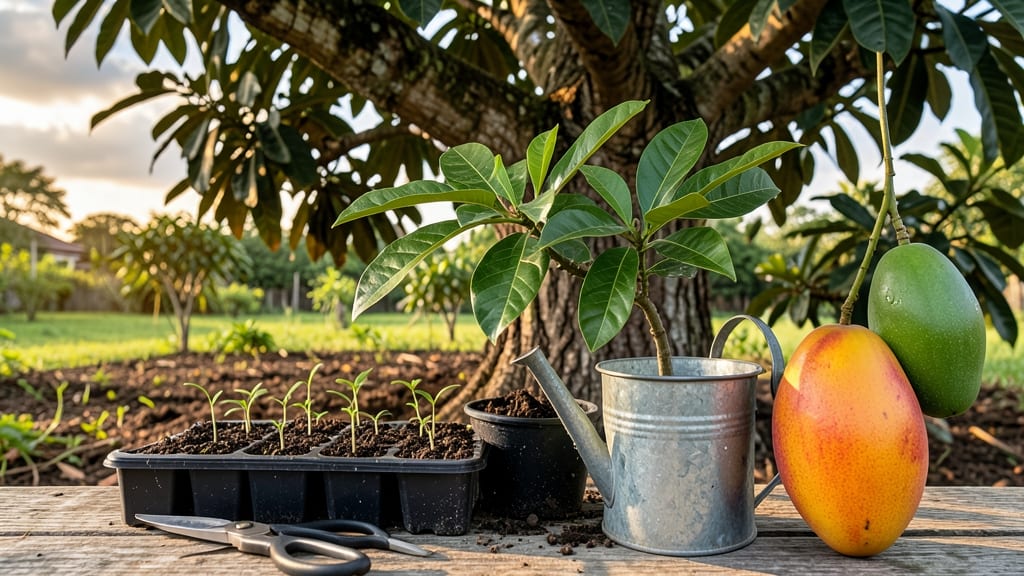
Growing a mango tree from seed to fruit is a decade-long journey that rewards patience with tropical sunshine in your yard. 🌱 I’ve watched my first seedling grow from a toothpick-sized sprout into a tree that now produces small, sweet fruit—proof that with the right conditions, you can grow a mango tree even in non-tropical climates.
The key lies in understanding each stage: germination, transplanting, and nurturing through years of slow but steady growth.
The first challenge is germination, which takes 4-6 weeks in warm, moist conditions. You’ll need a heat mat or sunny windowsill to keep soil temperatures above 70°F, mimicking tropical climates. Once sprouted, the seedling grows slowly—expect only 6-12 inches in its first year—but consistency is everything.
Prune carefully to encourage a strong trunk, and protect it from cold drafts or sudden temperature drops.
By year 5, you might see your first flowers, but fruiting takes 7-10 years in ideal conditions. The real secret? Mimicking tropical humidity and sunlight. Even in cooler zones, a greenhouse or microclimate can extend the growing season.
When fruit appears, it’ll be small at first, but with proper care, each year brings bigger, sweeter rewards.
This isn’t a quick harvest—it’s a long-term commitment. But imagine the pride of eating fruit you grew from a seed, or the conversations you’ll spark when neighbors see your tropical tree thriving.
The journey is half the joy, and every milestone—from that first sprout to the first ripe mango—makes it worth the wait.
📚 In This Guide
- What you need
- Instructions
- Tips and common mistakes
- Wrapping up and next steps
What you need
- ● Mango seed: A fresh, plump seed from a ripe, organic mango (preferably from a variety you love!). Pro tip: 💡 Choose seeds from heirloom or disease-resistant varieties for better results!
- ● Well-draining potting mix: 3–5 gallons of a blend of 50% coconut coir or peat moss, 30% perlite or vermiculite, and 20% compost.
- ● Growing containers: 1–2 small pots (4–6 inches deep) for seed germination.
- ● 1 large container (10+ inches deep) for transplanting seedlings.
- ○ Optional: A 5-gallon bucket or fabric grow bag for faster root development.
- ● Watering can or spray bottle: With a fine mist nozzle for gentle hydration.
- ● Fertilizer: Balanced liquid fertilizer (e.g., 10-10-10) for seedlings.
- ● Slow-release organic fertilizer (e.g., worm castings or compost tea) for mature trees.
- ● Pruning shears: Sharp, sterilized shears for trimming dead or overgrown branches.
- ● Support stakes or trellis: For young trees to prevent toppling in windy conditions.
- ● Warm climate: Mango trees thrive in USDA Zones 10–11 (or indoors with proper lighting). Pro tip: 🌡️ If you live in a cooler zone, grow in containers and bring indoors during winter!
- ● Sunlight: At least 6–8 hours of direct sunlight daily (south-facing window or grow lights for indoor setups).
- ● Humidity control: A humidity tray or misting system (especially for seedlings).
- ● Patience: Seed-grown mango trees take 3–5 years to bear fruit!
- ● Soil moisture meter to monitor watering needs.
- ● Mycorrhizal fungi inoculant to boost root health.
- ● Pollination tool (e.g., a small paintbrush) for indoor trees.
- ● Tree collar spray to protect young trunks from pests.
Step-by-step guide to growing a mango tree from seed to fruit
Here's how to nurture a mango seed into a thriving tree that can eventually produce fruit.
🌱 Step 1: Extract and Prepare the Seed
Start with a fresh, organic mango—never one treated with preservatives. Cut the fruit open and remove the large, flat seed inside. Rinse it thoroughly under running water to remove any remaining fruit pulp, which can rot. Let the seed air-dry for 24 hours at room temperature, turning it occasionally to ensure even drying.
Once dry, place the seed in a small plastic bag with a damp paper towel. Seal the bag loosely and store it in a warm, dark place like a pantry. Check daily—keep the towel moist but not soggy. Within 7-14 days, you’ll see a small root emerge, followed by a sprout. This is your signal to move to the next phase.
🪴 Step 2: Plant the Germinated Seed
Fill a 4-inch diameter pot with well-draining potting mix—avoid garden soil, which can compact and suffocate roots. Make a 1-inch deep hole in the center and gently place the germinated seed inside, root-side down. Cover lightly with soil, leaving the sprout exposed. Water gently until moisture seeps from the drainage hole.
Place the pot in a bright, indirect light spot, like a south-facing window with sheer curtains. Keep the soil consistently moist but never waterlogged. Within 2-3 weeks, you’ll notice the first true leaves—thick, glossy, and oval-shaped—emerging. This confirms the seedling is thriving.
☀️ Step 3: Transition to Sunlight and Larger Containers
Once the seedling has 3-4 true leaves, it’s ready for stronger light. Move it to a south-facing window or under a grow light for 12-14 hours daily. If outdoors, acclimate it gradually to direct sunlight over 1-2 weeks to avoid shock. Harden off by placing it outside for 1-2 hours the first day, increasing time daily.
When the seedling reaches 6-8 inches tall, transplant it into a 1-gallon pot with fresh potting mix. Choose a container with drainage holes to prevent root rot. Water deeply after transplanting, and place it in a warm, sunny spot where temperatures stay above 60°F. Prune any yellow or damaged leaves to encourage healthy growth.
✂️ Step 4: Prune and Fertilize for Fruit Production
After 1-2 years, your mango tree will need pruning to shape its structure. Use sterilized shears to trim back any leggy or weak branches, cutting just above a leaf node. Remove any dead, diseased, or crossing branches to improve airflow. This encourages a stronger, more compact tree capable of supporting fruit.
Once the tree is 3-5 feet tall, begin fertilizing with a balanced, citrus-friendly fertilizer (like 6-6-6) every 2 months during the growing season. Mango trees thrive in well-draining, slightly acidic soil (pH 5.0-7.0). If growing outdoors in a warm climate, transplant to the ground after the last frost, choosing a spot with full sun and protection from strong winds.
🍈 Step 5: Encourage Flowering and Fruit Development
Mango trees typically take 3-5 years to bear fruit, but proper care speeds up the process. Ensure the tree gets full sun (6+ hours daily) and consistent moisture—deep watering once weekly in dry climates. If indoors, supplement with a humidifier or mist leaves occasionally, as mango trees prefer 60-80% humidity.
When the tree is 4-5 feet tall, it may produce its first flowers. Hand-pollinate by gently shaking the branches to release pollen, or use a small brush to transfer pollen between flowers. If fruit forms but doesn’t ripen, the tree may need more sunlight or warmth. Mangoes ripen best at room temperature—never refrigerate, as this ruins texture and flavor.
Tips & tricks for perfect mango tree cultivation
Growing a mango tree from seed is a rewarding journey that requires patience and precision. Here's what I've learned to help you avoid common pitfalls and maximize success.
Seed Preparation: Confession: I skipped the 24-hour drying step for years and wondered why so many seeds rotted. That drying period is critical—it prevents mold and gives the seed the best chance to germinate. Use a fan on low setting to speed up drying if you're impatient, but still aim for that full 24 hours. The seed should feel dry to the touch but not brittle when you're ready to plant it.
Germination Environment: The warm, dark pantry is your friend during germination. I learned this the hard way after trying to germinate seeds in my cool basement—it took nearly 3 weeks instead of the 7-14 days promised. Use a thermometer to ensure your germination space stays between 70-80°F. If your kitchen runs cooler, consider placing the bag near a sunny window during the day and moving it to a warmer spot at night.
Light Transition Strategy: When moving your seedling to stronger light in Step 3, don't rush it! I've seen seedlings go into shock when moved too quickly to direct sunlight. Start with just 2-3 hours of direct sun the first day, then gradually increase. Watch for leaf color—healthy leaves should be deep green, not yellow or brown. Remember, those 12-14 hours of light are cumulative, so you can split them between morning and afternoon if needed.
Pruning Technique: After your tree reaches 1-2 years old, pruning becomes essential for fruit production. I always use sterilized shears to prevent disease transmission between cuts. When pruning, make your cuts just above a leaf node at a 45-degree angle. This encourages new growth and maintains the tree's natural shape. The goal is to create an open center that allows sunlight to reach all branches—this is crucial for fruit development.
Pro Tips for Mango Tree From Seed To Fruit
- Growing a mango tree from seed is a rewarding journey that requires patience and precision.
- Seed Preparation: Confession: I skipped the 24-hour drying step for years and wondered why so many seeds rotted.
- Germination Environment: The warm, dark pantry is your friend during germination.
Frequently asked questions
Got questions about growing a mango tree from seed to fruit? You’re not alone! Here are answers to the most common queries—because even the sweetest journey has a few bumps along the way.
How long does it take for a mango seed to sprout?
A mango seed typically sprouts within 2–4 weeks if kept in warm, moist conditions (around 70–85°F). Patience is key—some seeds take up to 6 weeks, especially if the soil is too cold or dry. Pro tip: Soak the seed overnight before planting to speed up germination!
Will a mango tree grown from seed produce fruit?
Yes, but it may take 5–10 years (or longer) for your seedling to bear fruit—and the quality might not match its parent tree. Mango trees grown from seed are often less predictable in flavor, size, and disease resistance. For faster, more reliable results, consider grafting or buying a young grafted tree.
What’s the best climate for growing a mango tree from seed?
Mango trees thrive in tropical or subtropical climates with year-round warmth (ideally 65–90°F) and high humidity. If you live in a cooler zone, grow it in a large container and bring it indoors during winter. Young seedlings are sensitive to frost—protect them with mulch or row covers if temperatures dip below 50°F.
How do I know if my mango seedling is healthy?
A healthy mango seedling has:
- Vibrant green leaves (no yellowing or spots).
- Steady growth (2–4 inches per month in ideal conditions).
- No wilting or mushy stems (a sign of overwatering or rot).
Can I grow a mango tree indoors?
Yes, but it’s challenging! Mango trees need plenty of sunlight (6+ hours daily) and humidity. Use a south-facing window or grow lights, and keep the soil consistently moist. Expect slower growth and smaller fruit compared to outdoor trees. If you’re determined, start with a dwarf variety like ‘Cogshall’ or ‘Julie.’
Why isn’t my mango tree flowering or fruiting?
Common reasons include:
- Age: Seedlings often need 3–5 years to mature.
- Lack of sunlight: Mango trees need full sun (6+ hours/day).
- Nutrient deficiency: Feed with citrus/mango fertilizer in spring.
- Temperature stress: Cold drafts or sudden heat drops can delay blooming.
Wrapping up and next steps
Growing a mango tree from seed to fruit is a rewarding journey filled with patience, care, and a touch of tropical magic! 🌱✨ You’ve learned how to nurture a seedling, master pruning and pollination, and even troubleshoot common challenges—now it’s time to let nature do its work.
With consistency and love, your efforts will soon be rewarded with juicy, sun-ripened mangoes that taste like summer in a bite.
Ready to take the next step? Start by planting that first seed today—or share your newfound knowledge with fellow plant enthusiasts! Whether you’re aiming for a backyard harvest or just the joy of watching life grow, your mango tree adventure is just beginning. Happy growing! 🌿🍈