
Lawn
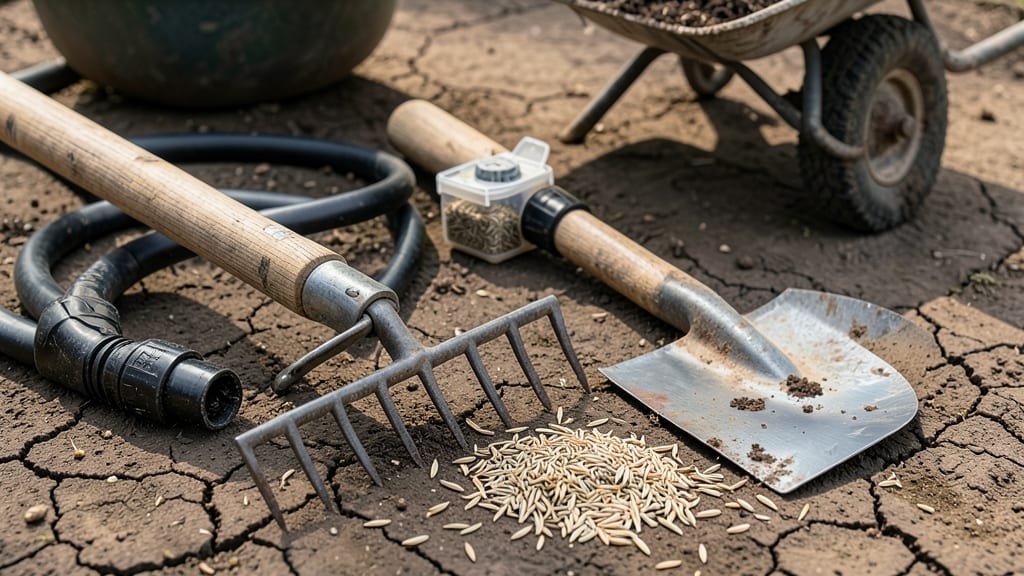
Planting grass seed on hard dirt feels like fighting a losing battle—until you loosen that stubborn soil. ✨ I’ve spent years watching seeds fail on compacted ground, but breaking up the dirt just right makes all the difference.
The key is preparing the soil properly so seeds can germinate fast and roots can take hold without struggling.
You’ll need a few simple tools: a garden fork or aerator to break up the hardpan, a rake to smooth the surface, and a quality grass seed mix suited for your climate.
Most people skip the soil prep, and that’s why their lawns stay patchy. Taking 30 minutes to loosen the top 4-6 inches of soil pays off in thick, even growth within weeks.
Once the ground is ready, scatter the seed evenly and cover it lightly with a thin layer of compost or topsoil. Water gently but deeply—think of it like giving the soil a drink, not a flood.
Within 7-14 days, you’ll see those first green shoots pushing through, and with consistent care, your lawn will outpace the weeds.
Hard soil doesn’t have to mean poor results. With the right prep, even the toughest dirt becomes a perfect home for grass. The secret is patience—don’t rush the process, and you’ll end up with a lawn that’s the envy of the neighborhood.
📚 In This Guide
- What you need
- Instructions
- Tips and common mistakes
- Wrapping up and next steps
What you need
- ● Grass seed: Choose a high-quality seed blend suited to your climate (e.g., Kentucky Bluegrass, Fescue, or Bermuda). Calculate ~5–10 lbs per 1,000 sq ft (check the seed bag for exact rates).
- ● Heavy-duty rake: A bow rake (for leveling) or a garden cultivator (for breaking up hardpan). Look for 18–24" wide tines for efficiency.
- ● Shovel or mattock: A flat-head shovel or pick mattock to chop through compacted soil. Opt for sturdy, galvanized steel for durability.
- ● Garden hoe: A stirrup hoe or draw hoe to slice through tough soil layers. 5–7" blade width works best.
- ● Soil amendment: Compost: 2–3 inches of well-aged compost or peat moss to improve soil structure.
- ○ Sand (optional but helpful): Coarse builder’s sand (1–2 inches) if your soil is clay-heavy.
- ● Lawn roller: A 50–100 lb manual roller (or a rental plate compactor for large areas) to press seed into soil.
- ● Water source: A hose with a sprinkler head or garden sprayer for gentle, even watering.
- ○ Mulch (optional but recommended): Straw or peat moss (¼–½ inch thick) to retain moisture and protect seed.
- ● Soil tester kit: Check pH (ideal: 6.0–7.5) and adjust with lime (for acidic soil) or sulfur (for alkaline soil).
- ● Broadcast spreader: For even seed distribution (manual or electric models available).
- ● Knee pads or work gloves: Protect your joints and hands—gardening gloves with grip are a game-changer!
- ● Tarp or plastic sheeting: Cover seeded areas if heavy rain or wind is forecasted in the first 2 weeks.
- ● Pre-emergent herbicide: Apply 2–4 weeks before seeding to kill weeds (choose a selective option safe for grass).
Step-by-Step instructions for planting grass seed on hard dirt
Here's how to break through compacted soil and get your lawn growing strong in no time.
🪴 Step 1: Break Up the Hard Dirt with the Right Tools
Start by renting or borrowing a garden tiller or broadfork—these tools slice through compacted soil without turning it into a powder. Work in 4-inch deep sections, overlapping each pass by 2 inches to avoid missed spots. You'll feel resistance at first, but push through until the soil crumbles easily between your fingers.
For smaller areas, a hand cultivator works too—just dig 3-4 inches deep in a grid pattern. The goal is to loosen the topsoil so water and roots can penetrate. If you hit rocks or clay layers, focus on the top 2 inches where seeds will germinate.
🌱 Step 2: Level and Prepare the Soil Surface
Rake the loosened soil with a bow rake to create a smooth, even surface. Fill low spots with extra soil and level high spots by scraping off excess. A rough finish lets water pool in depressions, which can drown seeds. Run the rake diagonally first, then vertically to break up any remaining clods.
For extra-fast germination, sprinkle compost or peat moss over the area to improve moisture retention and seed contact. Lightly mix it into the top ½ inch of soil with your fingers or a hand rake. This step is especially helpful in dry climates where soil dries out quickly.
💧 Step 3: Spread Grass Seed Evenly and Lightly Cover
Use a broadcast spreader for large areas or a hand spreader for small patches. Walk in a crisscross pattern to ensure even coverage—aim for ½ pound of seed per 100 square feet for most grass types. Over-seeding leads to wasted seed, while too little leaves bare spots.
After spreading, lightly cover the seeds with a thin layer of soil (about ¼ inch deep). Use a leaf rake to gently drag soil over the seeds—just enough to protect them from birds and wind. Avoid burying them too deep, or they won’t have the energy to reach the surface.
☀️ Step 4: Water Immediately and Keep Soil Moist
Water the area lightly but thoroughly right after planting to settle the seeds into the soil. Use a gentle sprinkler or hose with a soft spray nozzle to avoid dislodging seeds. The top 1 inch of soil should stay moist—like a damp sponge—not soggy. Water twice daily (morning and evening) for the first 7-10 days to encourage germination.
Once the grass reaches 2 inches tall, reduce watering to 1 inch per week, including rainfall. You’ll know you’ve got it right when the soil feels damp 1 inch down but doesn’t puddle on the surface. Overwatering at this stage can smother new seedlings.
⏰ Step 5: Monitor and Maintain for Strong Growth
Watch for the first signs of germination in 7-21 days, depending on your grass type and weather. Kentucky bluegrass and fescue usually sprout faster in cooler weather, while Bermuda grass germinates quicker in heat. If you don’t see sprouts after 3 weeks, lightly rake the area to expose any buried seeds and water again.
Once the grass reaches 3-4 inches tall, mow it to 3 inches high to encourage root growth. Avoid walking on new grass for at least 4-6 weeks—compacted soil will stunt young roots. For best results, fertilize lightly after the first mowing to support establishment.
Tips & tricks for planting grass seed on hard dirt
Here's what nobody tells you about making hard dirt work for your lawn—these tricks will turn stubborn soil into the perfect seedbed.
Tool Technique: When using a broadfork or garden tiller in Step 1, don't rush the overlapping passes. The 2-inch overlap is crucial—it ensures you're not missing compacted spots between rows. I've seen people skip this and end up with patchy germination because they missed areas where the soil stayed hard. Push through the resistance until the soil feels like crumbly cake between your fingers.
Soil Surface Secret: In Step 2, that ½-inch compost mix isn't just for moisture—it's also a natural weed suppressor. The compost contains beneficial microbes that outcompete weed seeds while improving soil structure. For clay-heavy soils, mix in 1 part sand to 3 parts compost to prevent compaction when you water. This helps sandy soils hold moisture better too.
Seed Placement Precision: The ¼-inch soil cover in Step 3 is your sweet spot—any deeper and seeds won't get enough light to germinate. Here's my trick: After raking, run your fingers over the surface. If you can see daylight through the soil layer, you're good. For windy areas, consider a straw mulch (not hay—it contains weed seeds) over the seeds instead of soil.
Watering Wisdom: Those 7-10 days of twice-daily watering in Step 4 can be tricky with hard dirt. Use a rain gauge to measure exactly 1 inch of water—hard dirt absorbs water differently than loose soil. I set a timer for 10-15 minutes per session with a gentle sprinkler, then check the moisture 1 inch down with your finger. If it's dry, water a little longer.
Pro Tips for Plant Grass Seed On Hard Dirt
- Here's what nobody tells you about making hard dirt work for your lawn—these tricks will turn stubborn soil into the perfect seedbed.
- Tool Technique: When using a broadfork or garden tiller in Step 1, don't rush the overlapping passes.
- Soil Surface Secret: In Step 2, that ½-inch compost mix isn't just for moisture—it's also a natural weed suppressor.
Frequently asked questions
Got questions about planting grass seed on hard dirt?
You’re not alone! Here are answers to the most common concerns to help you get started with confidence.
Can I plant grass seed directly on hard, compacted dirt?
While it’s possible, germination will be slow and uneven. Hard soil blocks water, air, and root penetration, leading to patchy growth. Always loosen the top 2–4 inches first—even renting a rototiller for stubborn areas is worth it for long-term success.
How long does it take for grass seed to grow on hard ground?
With proper prep (loosening soil, adding compost, and watering), expect some sprouts in 7–14 days. Full coverage takes 3–6 weeks, but hard-packed soil may delay this by 1–2 weeks. Patience pays off—skip the rush and prioritize soil health!
Do I need to water differently for hard soil?
Yes! Hard soil repels water, so use a gentle sprinkler or soaker hose to avoid runoff. Water lightly 2–3 times daily (10–15 minutes each) for the first 2 weeks to keep seeds moist. Once sprouted, switch to deep, infrequent watering (1 inch per week).
What’s a faster alternative if my dirt is really hard?
Try these shortcuts:
- Sod instead of seed: Instant grass with pre-grown roots—just lay and water.
- Topsoil + seed: Spread 2–3 inches of topsoil over hard dirt, then plant seed.
- Cover crops: Plant clover or ryegrass first to break up soil naturally.
Why is my grass seed not germinating on hard ground?
Check these culprits:
- No soil prep: Seeds need loose soil to access nutrients.
- Too much sun/drought: Keep seeds shaded or misted until sprouted.
- Weeds or debris: Clear rocks, weeds, and old grass first.
- Wrong seed type: Cool-season grasses (like fescue) thrive in tough conditions better than Bermuda.
Wrapping up and next steps
Planting grass seed on hard dirt is totally doable—you just need patience and the right approach! By loosening the soil, removing debris, and giving your seeds the ideal conditions, you’ll soon enjoy a lush, green lawn. Don’t let tough soil stop you—your dream lawn is within reach!
Ready to take the next step? Start small—pick a section of your yard, gather your tools, and begin prepping the soil. Once your grass is sprouting, you’ll be hooked on the satisfaction of a thriving lawn! 🌱