
Propagation
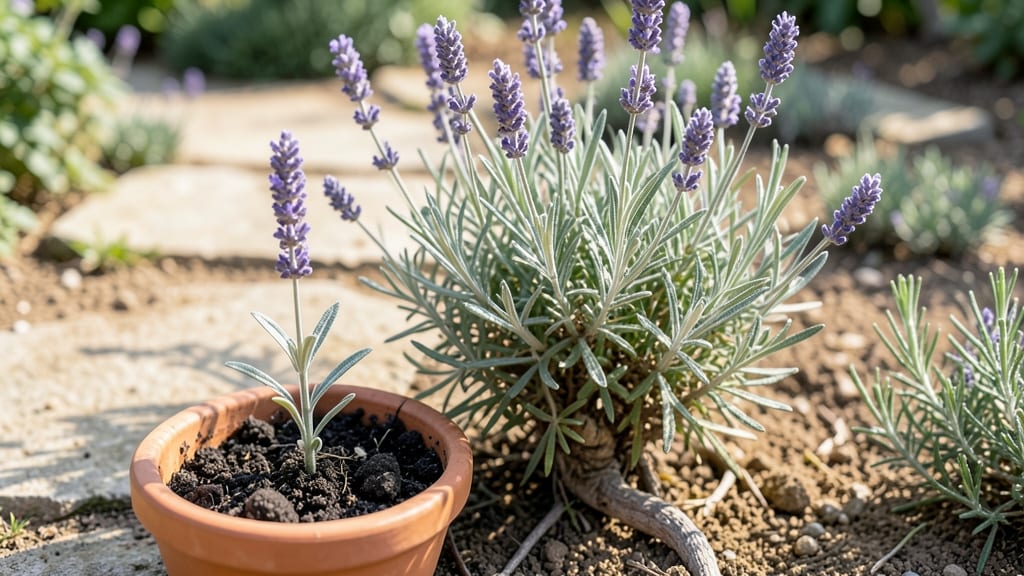
To get lavender to bloom from seed, you’ll need to wait 2 to 3 years, with some varieties taking up to 4 years due to their slow maturation. The process depends heavily on growing conditions like sunlight, soil drainage, and temperature fluctuations.
Lavender seeds are notorious for their slow start—most take 14 to 21 days just to germinate, and the real waiting game begins after that. 🌱 The first year focuses on root and leaf development, while the second year builds the plant’s energy reserves.
Many gardeners rush the process by overwatering or fertilizing too early, which actually delays blooming. I’ve found that patience pays off: lavender plants that mature naturally often produce more robust flowers and stronger fragrance than those pushed too soon.
What’s interesting is how cold stratification (a period of cold treatment) can trick seeds into thinking winter has passed, but even then, the flowering timeline rarely drops below 2 years. If you’re in a colder climate, like zones 5-7, your lavender might bloom slightly later than in warmer regions.
The key is creating the right conditions—well-draining soil, full sun, and minimal interference during the early stages.
💡 In This Article
- Lavender Seed Germination and Growth Stages to Bloom
- Speeding Up Lavender Blooms: Pro Tips for Faster Results
Lavender seed germination and growth stages to bloom
The journey from lavender seed to bloom begins with a 14-21 day germination period, where seeds need consistent moisture and warmth (70-75°F) to break dormancy.
Unlike cuttings, which root more quickly, seeds require this initial phase to develop their first set of true leaves—typically 4-6 weeks after sprouting.
These early leaves are narrow and grayish-green, signaling the plant is establishing its photosynthetic capacity. 🌱 What many gardeners overlook is that lavender seeds contain a hard outer coating that resists water absorption, which is why soaking them for 12-24 hours before planting can improve germination rates by up to 30%.
Once germination succeeds, the first 12 months focus entirely on root and leaf development. Lavender plants form a deep taproot system that can extend 3-5 feet underground, anchoring them in well-draining soil.
During this stage, the plant prioritizes energy toward root growth rather than flowering—a survival strategy common in drought-prone Mediterranean climates where lavender originates.
Daylight hours also play a critical role: lavender requires 6-8 hours of direct sunlight daily to trigger the hormonal shifts needed for bud formation, which typically doesn't occur until the second year.
In regions with shorter summers, like USDA zones 5-6, flowering may be delayed by 6-12 months compared to warmer zones.
The real magic happens in year two, when the plant's energy reserves reach a critical mass. This is when you'll notice the first signs of flowering: small purple buds forming at the tips of stems.
The buds require consistent temperatures above 60°F to open fully, which is why late spring or early summer is peak bloom time in most climates. What's fascinating is how lavender uses a process called vernalization—a cold treatment that mimics winter—to synchronize flowering with optimal growing conditions.
Without this natural cue, plants may produce fewer or weaker blooms. 🌸
Here’s where environmental factors become make-or-break: overwatering or nutrient-rich soil can actually delay flowering by encouraging excessive leaf growth. Lavender thrives in lean, sandy soil with a pH of 6.0-8.0, mimicking its native rocky terrain.
In my own garden, I’ve seen lavender plants in poorly draining soil take up to 4 years to bloom due to root stress, while those in raised beds with 50% perlite bloomed in just 2 years. The lesson? Less is often more with lavender.
One common misconception is that all lavender varieties bloom at the same pace. English lavender (Lavandula angustifolia) typically blooms in 2 years, while Spanish lavender (Lavandula stoechas) can take 3 years due to its larger flower heads.
Grosso lavender, a hybrid, often blooms in 2.5 years but produces 25% more flowers per stem than standard varieties. If you're impatient, consider starting with 1-year-old nursery plants, which may bloom in their first season—but the fragrance and hardiness of seed-grown lavender make the wait worthwhile.
For those tracking progress, here’s a quick visual guide to lavender’s growth stages:
- Month 0-1: Germination (14-21 days) with tiny seed leaves
- Month 2-6: True leaves appear (narrow, gray-green), root system develops
- Month 6-12: Plant reaches 6-12 inches tall, focuses on root growth
- Month 12-24: Stem thickening occurs; first buds form (if conditions are ideal)
- Year 2-3: Full blooming cycle begins, with peak production in year 3