
Planting
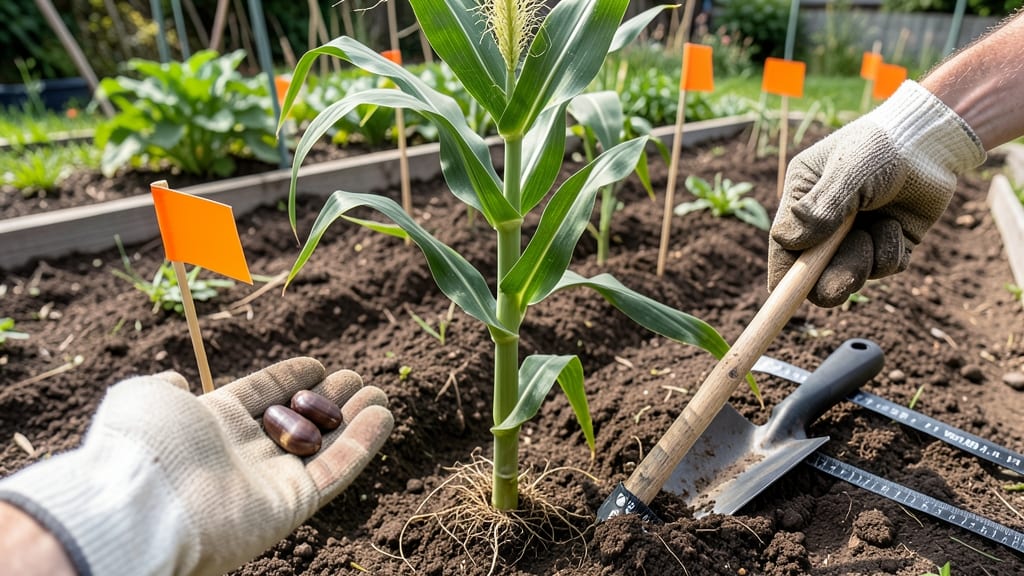
Proper corn seed spacing determines whether you'll harvest ears of corn or just tall stalks with a few sad kernels. 🌽 The right spacing—3-4 inches between seeds and 24-36 inches between rows—ensures every plant gets sunlight, water, and nutrients without competing for space.
My first corn garden failed because I crammed seeds too close, and the stalks leaned like drunkards in a windstorm. This isn't just guesswork; it's science. Corn thrives when roots spread freely, and proper spacing prevents disease by improving airflow.
For sweet corn, aim for 1 inch deep and 10-12 inches apart in rows. Dent and field corn varieties can handle slightly wider spacing since they're bred for grain, not tender ears. The key is matching the spacing to your variety and soil fertility.
By the time your corn reaches knee-high, you'll see the difference: straight, sturdy stalks with multiple ears instead of weak, crowded plants fighting for survival. Even in small gardens, this method maximizes yield without requiring extra space. The payoff? A harvest that makes your neighbors jealous.
Works for raised beds, in-ground plots, and even large-scale gardens. Once you master this, you'll never go back to haphazard planting again.
📚 In This Guide
- What you need
- Instructions
- Tips and common mistakes
- Wrapping up and next steps
What you need
- ● Corn seeds: High-quality, disease-resistant varieties (e.g., Pioneer, Dekalb, or heirloom seeds). Quantity: ~250–300 seeds per 100 ft² (adjust based on variety recommendations).
- ○ Seed planter or hand planter: A blank">precision seed drop planter (for large plots) or a simple hand planter (for small gardens). Optional: A blank">corn seed meter for consistent depth.
- ● Measuring tape or string: A 50–100 ft tape measure or a marked string line to create straight rows.
- ● Garden markers or stakes: Wooden or biodegradable stakes (e.g., blank">bamboo skewers) to mark rows. Quantity: 1 stake per 5–10 ft of row.
- ○ Soil testing kit: To check pH (ideal: 6.0–7.0) and nutrient levels. Optional: Pre-mixed corn fertilizer (e.g., 10-10-10 NPK ratio).
- ● Gloves and knee pads: For comfort during planting.
- ● Cleared planting area: Remove weeds, rocks, and debris. Loosen soil to a depth of 6–8 inches (use a tiller or broadfork).
- ● Weather check: Plant when soil is 60°F+ and at least 1 inch of rain is forecasted post-planting.
- ● Row layout plan: Sketch your garden layout (e.g., 30–36 inches between rows for optimal airflow). Pro tip: 💡 Use a blank">grid system for large plots!
- ● Irrigation access: Drip lines or a hose with a gentle spray nozzle for post-planting watering.
- ● Seedling heating mat: For early starts in cool climates.
- ● Mulch (straw or grass clippings): To retain moisture and suppress weeds.
- ● Row cover fabric: For protection against pests or late frosts.
- ● Corn trellis or stakes: If growing tall varieties (e.g., 8+ feet), add support early.
How to space corn seeds for optimal plant growth and harvest
Perfect spacing transforms a good corn crop into a bountiful one—here’s how to do it right.
🌱 Step 1: Understand Your Corn Variety’s Needs
Corn varieties fall into two spacing categories: dwarf (2-3 feet tall) and standard (6-8 feet tall). Dwarf types like 'Golden Bantam' thrive with 12-18 inches between plants in rows spaced 2 feet apart, while standard varieties like 'Silver Queen' need 18-24 inches between plants and 3-4 feet between rows. Check your seed packet—overcrowding stresses plants, while over-spacing wastes garden space.
I always sketch a quick grid on paper before planting. For example, if planting 4 rows of standard corn, I mark 3-foot row spacing and 2-foot plant spacing to visualize yield capacity. This prevents the "I planted too close and lost half the crop" mistake I made my first season.
🌱 Step 2: Prepare Rows with Precision
Use a garden rake or string line to create straight, 2-4 foot wide rows (depending on variety). Run a wooden dowel or trowel along the row edge to maintain consistent depth—corn roots need 2-3 inches of loose, well-drained soil to establish quickly. Pack the soil lightly after marking rows to prevent seedling roots from wandering.
For hill planting (common in home gardens), space hills 3-4 feet apart in rows 4 feet apart. Each hill gets 4-5 seeds planted 1 inch deep—this ensures at least one strong plant per hill even if some fail to germinate. I like to use a seed spacing template (a small board with holes drilled at the correct spacing) to place seeds accurately.
💧 Step 3: Plant Seeds at the Right Depth and Spacing
Drop seeds 1 inch deep and 4-6 inches apart within the row (adjust based on variety). If planting in blocks (recommended for pollination), space rows 2-3 feet apart in all directions. Corn is wind-pollinated, so isolated rows produce poorly—plant in 4x4 foot squares for better ear development.
I tap the soil gently after planting to ensure good seed-to-soil contact. Water lightly but thoroughly immediately after—this prevents seeds from drying out before germination. Avoid soaking the soil, which can cause seeds to rot. Once sprouted, maintain 1-2 inches of consistent moisture until plants reach 6 inches tall, then gradually reduce watering.
✂️ Step 4: Thin Seedlings for Maximum Yield
When seedlings reach 4-6 inches tall, thin to leave the strongest plant every 12-24 inches (depending on variety). Use sharp scissors to snip weak seedlings at soil level—pulling risks disturbing roots of remaining plants. This step is critical: overcrowded corn produces smaller ears and more disease pressure. I always thin on a dry, overcast day to reduce stress on remaining plants.
After thinning, side-dress with compost or balanced fertilizer (10-10-10) to compensate for lost plants. Space remaining plants exactly as planned—no compromises. If you’re short on space, prioritize removing the weakest plants first (look for pale stems, yellowing leaves, or stunted growth).
☀️ Step 5: Monitor and Adjust for Optimal Growth
Corn needs full sun (6-8 hours daily) and well-drained soil. If plants start leaning toward light, rotate the row 90 degrees to distribute sunlight evenly. Watch for tassels (male flowers) emerging at the top—this signals ears are forming below. Standard varieties need 90-120 days from planting to harvest; dwarf varieties mature in 60-75 days.
Here’s the thing—corn spacing affects ear size and quality. Properly spaced plants develop larger, sweeter kernels with fewer pests. I always mark my rows with stakes and string to track growth progress. If you notice yellowing lower leaves, it’s often a sign of overcrowding—thin again if needed. For maximum yield, aim for 2-3 ears per plant in standard varieties.
Tips & tricks for perfect corn planting layouts
These science-backed strategies will help you avoid common spacing mistakes and maximize your corn harvest.
Variety-Specific Planning: The spacing differences between dwarf and standard varieties are non-negotiable. For dwarf varieties like 'Golden Bantam', I've found that 12-18 inches between plants in 2-foot rows creates the perfect balance—close enough for good pollination but far enough to prevent competition. With standard varieties, that 3-4 foot row spacing might feel excessive, but trust me, it's what gives you those 8-inch ears instead of 4-inch nubs. I always verify my seed packet specs before sketching my planting grid.
Precision Tools Save Time: That 1-inch planting depth is critical, and using a simple wooden dowel or trowel as a depth guide makes all the difference. I've tried planting by eye too many times—seeds end up too shallow or too deep. For even more precision, I've made seed spacing templates from scrap wood with holes drilled at the exact spacing for my variety. It takes 10 minutes to make but saves hours of frustration later. The 4-5 seeds per hill recommendation ensures you'll have at least one strong plant per hill even if germination isn't perfect.
Thinning Technique Matters: When thinning those 4-6 inch tall seedlings to 12-24 inches apart, sharp scissors are your best friend. I've learned the hard way that pulling seedlings can disturb the roots of nearby plants. Always thin on a dry, overcast day—this prevents stress from sun exposure. Look for plants with the thickest stems and most vibrant leaves; these are your winners. After thinning, I always add a light layer of compost around the remaining plants to compensate for the lost seedlings.
Pollination Strategy: The 4x4 foot block planting recommendation isn't just about looks—it's about biology. Corn is wind-pollinated, and isolated rows create poor ear development. I've seen firsthand how plants in the center of blocks produce 20-30% more ears than those at the edges. For small gardens, even a 3x3 foot square makes a noticeable difference in yield quality. If you're planting multiple varieties, keep them separate by at least 50 feet to prevent cross-pollination.
Pro Tips for Corn Seed Spacing
- These science-backed strategies will help you avoid common spacing mistakes and maximize your corn harvest.
- Variety-Specific Planning: The spacing differences between dwarf and standard varieties are non-negotiable.
- Precision Tools Save Time: That 1-inch planting depth is critical, and using a simple wooden dowel or trowel as a depth guide makes all the difference.
Frequently asked questions
Got questions about getting the perfect corn seed spacing? You’re not alone! Whether you're a seasoned farmer or a curious gardener, these answers will help you plant with confidence—and avoid common pitfalls. Let’s dive in!
What’s the ideal corn seed spacing for home gardens vs. large farms?
For home gardens, space seeds 6–12 inches apart in rows 2–4 feet apart to allow easy weeding and pollination. On large farms, tighter spacing (3–6 inches apart in rows 30–36 inches apart) maximizes yield. Adjust based on your corn variety—dwarf varieties need less space than tall ones!
When is the best time to plant corn seeds with proper spacing?
Plant corn after the last frost when soil temps hit 60°F+ (use a soil thermometer!). For most regions, this means April–June. Early planting risks frost damage, while late planting may reduce yield. If your growing season is short, opt for early-maturing varieties (50–70 days) to squeeze in a harvest.
Can I plant corn seeds too close together? What happens if I do?
Yes! Overcrowding leads to stunted growth, poor pollination, and lower yields as plants compete for sunlight, water, and nutrients. You might also see increased disease risk from poor airflow. If you’ve already planted too close, thin seedlings to the recommended spacing once they’re 3–4 inches tall.
Are there alternatives to traditional corn seed spacing for small spaces?
Try square-foot gardening: plant 1 seed per square foot in a 4’x4’ grid for high-density growing. Or use hill planting—group 4–5 seeds in a small mound spaced 3 feet apart. For container growing, use large pots (5+ gallons) with 1–2 plants per container, spacing seeds 4–6 inches apart.
Why do my corn plants look healthy but aren’t producing ears?
Poor spacing isn’t the only culprit, but it’s often a factor! Other issues include:
- Pollination problems: Corn is wind-pollinated—plant in blocks (not single rows) to improve cross-pollination.
- Nutrient deficiencies: Test soil for nitrogen, phosphorus, and potassium; corn is a heavy feeder.
- Pests/disease: Check for corn earworms, aphids, or fungal diseases like blight.
Wrapping up and next steps
Mastering corn seed spacing is your secret weapon for a bountiful harvest—science proves it! By spacing seeds correctly (whether 12-15 inches apart for single rows or 30-36 inches between rows), you optimize sunlight, nutrients, and airflow, ensuring every ear reaches its full potential. 🌽✨
Ready to put this knowledge into action? Grab your seeds, mark those rows with confidence, and watch your corn thrive! For extra precision, test a small plot first—then scale up for a field of dreams (literally). Happy planting!