
Plants
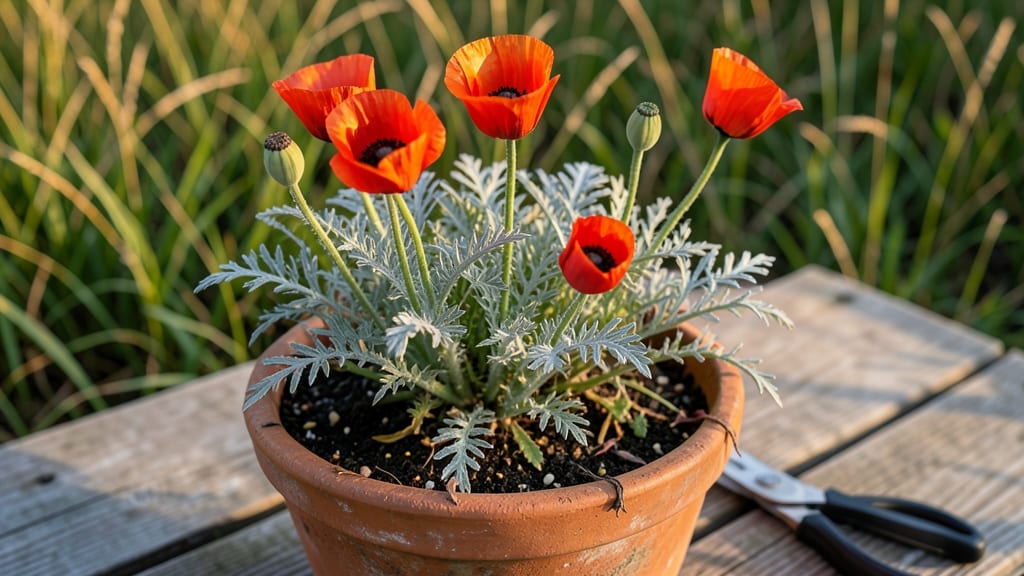
You can plant poppy seeds from the grocery store, but success depends on choosing untreated seeds labeled 'for planting' and sowing them in well-drained soil at a depth of 1/4 inch. Cold stratification can help improve germination rates with store-bought varieties.
Most grocery store poppy seeds are heat-treated or roasted for flavor, which drastically reduces their ability to sprout. 🌱 The seeds you find in spice aisles are often hybridized or processed to enhance taste, making them poor candidates for gardening.
For best results, look for untreated seeds specifically marketed for planting, or try pre-soaking them in water overnight to break dormancy before sowing. Even then, expect lower germination rates compared to specialty garden seeds.
If you're determined to grow poppies from store-bought seeds, focus on creating ideal conditions: loose, well-draining soil and consistent moisture without waterlogging. Planting in early spring or late summer gives seeds the best chance to establish before extreme temperatures.
For a more reliable harvest, consider purchasing untreated poppy seeds from garden centers—they're designed to germinate and often yield more vibrant blooms.
💡 In This Article
- Why Grocery Store Poppy Seeds Often Fail to Germinate
- How to Maximize Grocery Poppy Seed Success in Your Garden
Why grocery store poppy seeds often fail to germinate
The primary reason grocery store poppy seeds struggle to sprout lies in their processing. Most commercial poppy seeds undergo heat treatment at 180-200°F for 1-2 hours to enhance flavor and shelf life.
This process kills the embryo inside the seed, leaving it incapable of germination. Even if labeled "organic," these seeds are often roasted or hybridized for culinary use, not planting.
The seed coat also plays a critical role. Poppy seeds have a naturally hard outer shell that requires scarification (breaking the coat) or stratification (mimicking winter conditions) to soften. Grocery seeds lack this preparation, so even if moisture reaches the embryo, it can't break through.
For comparison, untreated garden poppy seeds have a 70-80% germination rate, while store-bought varieties rarely exceed 10-20% without special treatment.
Moisture management is another hurdle. Poppy seeds need consistent dampness but can't tolerate soggy soil. The fine texture of grocery seeds means they dry out quickly in dry conditions or rot if overwatered.
Their tiny size (0.04 inches diameter) makes them vulnerable to uneven moisture distribution, which is why professional growers often use seed mats or humidity domes to maintain ideal conditions.
Temperature sensitivity adds to the challenge. Poppy seeds germinate best at 60-70°F, but store-bought seeds may have altered temperature requirements due to hybridization. If planted too early (below 50°F) or late (above 80°F), they'll fail to sprout regardless of other conditions.
This explains why gardeners in cooler climates often see better results with untreated seeds.
Light exposure matters too. While many seeds need darkness to germinate, poppy seeds are photoblastic, meaning they require light to trigger sprouting. If buried too deeply (beyond 1/8 inch), they'll remain dormant.
This is why direct sowing in well-drained soil is critical—any compaction or deep planting will block the light they need to activate.
Finally, consider the seed source. Most grocery poppy seeds come from Papaver somniferum varieties bred for opium production (even non-opium strains share traits). These seeds prioritize yield and flavor over germination potential. For successful planting, look for seeds labeled "ornamental poppy" or "garden poppy" from specialty nurseries.