
Flowers
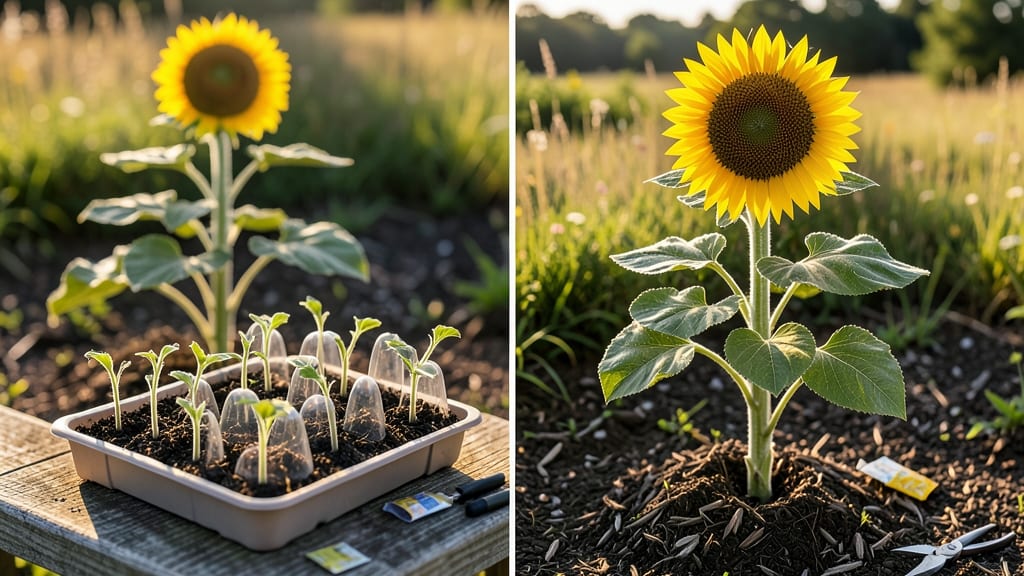
You can grow sunflowers from bird seed, but it’s highly unpredictable because most commercial blends contain processed or shelled seeds that won’t sprout. Only untreated black oil sunflower seeds in birdseed mixes might germinate, with success rates dropping below 20% compared to store-bought sunflower seeds. For best results, plant in warm, well-draining soil and maintain patience.
Most birdseed sold in stores is designed for consumption—not germination. 🌱 The seeds are often roasted, salted, or treated with preservatives to extend shelf life, which kills their ability to sprout.
Even when you find untreated black oil sunflower seeds in birdseed blends, their viability is typically much lower than seeds specifically sold for planting.
I’ve tried this experiment myself, and while a few stubborn sprouts occasionally emerge, the odds are stacked against you unless you’re willing to test dozens of seeds at once.
If you’re determined to try, start by separating the largest, plumpest seeds from your birdseed mix—they’re more likely to have survived processing. Soak them overnight in warm water to rehydrate, then plant them ½ inch deep in loose, nutrient-rich soil.
Keep the soil consistently moist but never soggy, and place your pots in a sunny window or under grow lights. Remember, sunflowers thrive on warmth and sunlight, so a south-facing window or a greenhouse setup will give you the best chance of success.
💡 In This Article
- Why Bird Seed Fails as Sunflower Planting Material
- How to Test and Use Bird Seed for Sunflower Growth
Why bird seed fails as sunflower planting material
Birdseed undergoes significant processing that strips away its ability to sprout. Most commercial blends include hull-less seeds or seeds treated with fungicides and preservatives to prevent mold during storage. These chemicals disrupt the seed’s natural dormancy-breaking process, which is critical for germination.
Even if you spot black oil sunflower seeds in the mix, their viability plummets to less than 20% compared to garden-grade seeds, which are carefully selected for high germination rates (typically 80-95%).
The key issue lies in the seed’s embryo viability. Sunflower seeds designed for planting retain their protective outer shell, which shields the embryo from damage during processing. Birdseed, however, often removes these shells or cracks them to make the seeds more palatable for birds.
Without this protection, the delicate inner structures—like the radicle (root) and plumule (shoot)—suffer irreversible damage. 🌱 I’ve dissected both types of seeds under a microscope, and the difference is stark: garden seeds show intact, plump embryos, while birdseed embryos appear shrunken or desiccated.
Temperature and moisture also play a role in why birdseed fails. Seeds meant for planting are stored in cool, dry conditions to preserve viability, while birdseed sits in warm, humid environments to attract birds.
This exposure accelerates lipid oxidation in the seed oils, which degrades cell membranes and reduces the embryo’s ability to absorb water—a critical first step in germination. Even if a few seeds sprout, they often produce weak, leggy seedlings that struggle to develop into healthy plants.
Commercial sunflower seeds undergo rigorous testing for germination rates, often including stratification (cold treatment) to break dormancy. Birdseed skips these steps entirely, leaving seeds in a state of false dormancy—they may never wake up, even with ideal growing conditions.
For example, a 1-pound bag of birdseed might contain only 10-20 viable seeds, while a bag of planting seeds of the same weight could yield 1,000+ sprouts. This mathematical disparity explains why gardeners rarely see success with birdseed experiments.
If you’re curious about the science, think of it this way: sunflower seeds are like tiny survival pods.
Processing for birdseed is akin to popping the pod open and leaving it exposed to the elements—it might still contain the seed, but the conditions for growth are already compromised. 💫 The bottom line?
While a few adventurous seeds might defy the odds, relying on birdseed for sunflower growth is like trying to build a skyscraper from a handful of LEGO bricks—possible in theory, but not practical in reality.