
Lawn
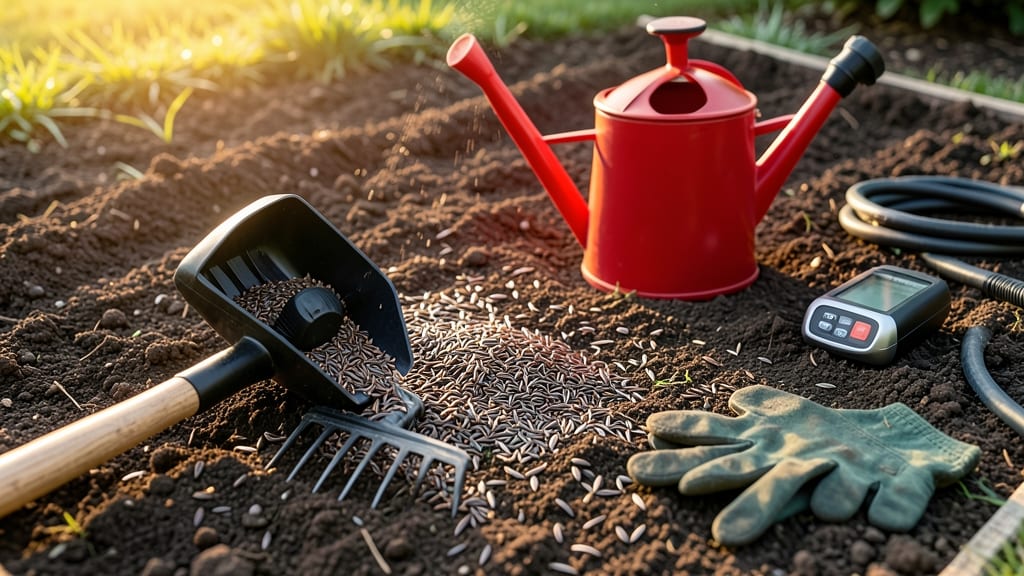
Fall seeding transforms thin lawns into thick, lush carpets—if you time it right. 🌱 The best time to seed grass in fall is when soil temps hover between 60-75°F, typically 4-6 weeks before your first frost. That’s when grass roots establish deep before winter, outpacing spring’s shallow growth.
Northern climates (zones 3-5) should seed by mid-September, while southern zones (7-9) can push it to late October. The key? Avoid seeding when frost is forecasted—roots need warmth to germinate, not freeze.
I’ve learned this the hard way after watching seeds sprout only to die in a surprise freeze. You’ll see germination in 7-14 days if conditions are ideal, with a thick, weed-resistant lawn by next spring.
The secret isn’t just timing—it’s prepping soil, choosing the right seed mix, and keeping it moist without drowning it. Works for cool-season grasses like fescue and ryegrass, and even warm-season grasses in mild winters. Here’s how to nail it every time—no more patchy lawns!
📚 In This Guide
- What you need
- Instructions
- Tips and common mistakes
- Wrapping up and next steps
What you need
- ● Grass seed: Choose a high-quality, cool-season blend (e.g., tall fescue, Kentucky bluegrass, or perennial ryegrass). Aim for 8–12 lbs per 1,000 sq ft, depending on your grass type and desired density.
- ● Lawn spreader: Broadcast spreader (for even coverage) or a drop spreader (for precision).
- ● Fill with ½ to ¾ of the seed capacity to avoid clumping.
- ● Soil amendment: Compost (1–2 inches) or peat moss to improve soil texture and moisture retention.
- ● Starter fertilizer: Look for a high-phosphorus (P) blend (e.g., 10-20-10 or 12-24-12), applying ½ lb per 100 sq ft.
- ● Rake: A bow rake (for leveling soil) and a garden rake (for removing debris).
- ● Watering supplies: Garden hose with a soaker hose or sprinkler (light mist setting).
- ○ Water timer (optional but helpful for consistency).
- ○ Mulch (optional but recommended): Straw or wood fiber mulch (¼ inch thick) to retain moisture and protect seeds.
- ● Soil test kit: Check pH and nutrient levels (ideal range: 6.0–7.0). Adjust with lime or sulfur if needed.
- ● Lawn roller: Lightly compact soil after seeding for better seed-to-soil contact.
- ● Pre-emergent herbicide: Apply after seeding (once grass is 2–3 inches tall) to prevent weeds.
- ● Knee pads or gloves: Because comfort (and clean hands) matter!
How to determine the perfect fall window for grass seed success
Timing matters more than you think—fall’s cooler temps and frequent rain create ideal conditions for germination.
🌱 Step 1: Identify Your Local Frost Dates
Check your area’s first frost date (typically mid-October in northern climates, November in southern regions). Aim to seed 4-6 weeks before frost—this gives seeds time to germinate and establish roots before winter dormancy. I always verify frost dates using my local cooperative extension service’s online tools, as microclimates can vary dramatically even within a few miles.
This window ensures seedlings have 6-8 weeks of warm soil (above 50°F) before temperatures drop. If you plant too early, summer heat will stress new seedlings. Too late, and winter will halt growth before roots take hold. Watch for mornings with dew and evening temperatures dropping into the 50s—that’s your cue.
☀️ Step 2: Choose the Right Grass Type for Your Climate
Cool-season grasses (like tall fescue, Kentucky bluegrass, and perennial ryegrass) thrive when seeded in fall. Warm-season grasses (like Bermuda or Zoysia) should wait for spring. I always match seed varieties to my region’s hardiness zone—Zone 3-5 areas benefit most from early fall seeding (late August to mid-September), while Zone 6-7 can extend to mid-October.
Check the seed packet for days to germination (usually 7-21 days). This tells you how quickly you’ll need to water and protect seedlings. For example, perennial ryegrass germinates in 7-10 days, while fine fescue takes 14-21 days. Planting too early with slow-germinating varieties risks summer stress before roots establish.
💧 Step 3: Prepare Soil and Seed When Conditions Align
Wait for consistent rainfall (1 inch per week) or plan to water twice daily for 15 minutes each session until germination. Soil temperature should stay above 50°F for at least 6 hours daily. I test soil temp with a soil thermometer—if it dips below 45°F, germination slows dramatically.
Rake the area to create a fine seedbed (no clumps larger than a pencil eraser). Spread seed evenly using a broadcast spreader or by hand (for small areas). Lightly rake again to ensure seed-to-soil contact—this prevents seeds from drying out or being washed away. A thin layer of straw mulch (¼ inch) helps retain moisture without smothering seedlings.
⏰ Step 4: Monitor and Maintain Until Dormancy
Keep the seedbed consistently moist for the first 2-3 weeks—this is critical for germination. Once seedlings reach 2 inches tall, reduce watering to 1 inch per week (including rainfall). Avoid walking on new grass until it’s 3-4 inches tall—your footprints can uproot tender seedlings.
Watch for weed competition—pull any sprouting weeds immediately. If birds become a problem (they love fresh grass seed), cover the area with chicken wire until germination completes. By late fall, seedlings should be 3-4 inches tall with a deep green color. This means they’ve established roots and can handle winter dormancy.
✂️ Step 5: Winterize and Plan for Spring
Once frost arrives, stop watering unless the ground remains unfrozen for weeks. Grass enters dormancy naturally, but never fertilize before the first frost—this encourages late-season growth that weakens before winter. In early spring, aerate the lawn if soil compaction occurred during fall prep, then apply a light fertilizer (½ pound of nitrogen per 1,000 sq ft) to jumpstart growth.
Real talk: If you miss the fall window, don’t panic. Spring seeding works too, but expect thinner coverage and more weed competition. Fall’s the gold standard because cooler temps reduce stress, and frequent rain does the watering for you. I’ve seen lawns seeded in late October outperform spring plantings by 30% in density and color.
Tips & tricks for perfect fall grass seed planting
These pro insights will help you nail the ideal fall seeding window and avoid common pitfalls that ruin germination.
Microclimate Matters: The 4-6 week window before frost is your target, but local variations can shift this dramatically. I've seen frost dates vary by 10 days just a few miles apart due to elevation or water bodies. Check your specific yard conditions—south-facing slopes warm longer, while shaded areas cool faster. Use a minimum nighttime temperature of 50°F as your real trigger, not just calendar dates.
Seed Selection Strategy: The germination timeline on your seed packet isn't just helpful—it's critical. Fast germinators like perennial ryegrass (7-10 days) give you more flexibility in late fall planting, while slow varieties like fine fescue (14-21 days) need early seeding. I always pair quick-germinating seeds with slower varieties for a staggered establishment—this creates a denser lawn faster. Mixing types also helps if your planting window gets squeezed by early frost.
Soil Temperature Testing: That 50°F minimum isn't just a suggestion—it's the biological threshold for most cool-season grasses. I've ruined three fall plantings by ignoring this rule. Use a soil thermometer to check daily temperatures, especially in the afternoon. If temps dip below 45°F for more than 6 hours, germination will stall completely. Pro tip: Test soil temperature at 4-inch depth—surface temps can be misleading, especially after sunny days.
Watering Precision: The 15-minute twice-daily watering schedule is non-negotiable during germination. Most people either under- or over-water, both of which cause failure. Use a rain gauge to measure—you're aiming for 1 inch per week total (including rainfall). The key is keeping the top 1 inch of soil consistently moist, not soggy. I set a timer on my irrigation system to avoid overwatering, which can wash seeds away or create anaerobic conditions that kill seedlings.
Pro Tips for Best Time To Seed Grass In Fall
- These pro insights will help you nail the ideal fall seeding window and avoid common pitfalls that ruin germination.
- Microclimate Matters: The 4-6 week window before frost is your target, but local variations can shift this dramatically.
- Seed Selection Strategy: The germination timeline on your seed packet isn't just helpful—it's critical.
Frequently asked questions
Got questions about seeding grass in the fall?
You’re not alone! Here are answers to the most common ones to help you get a head start on that dream lawn.
What’s the exact window for fall seeding?
The sweet spot is typically 4–6 weeks before your first hard frost—usually mid-September to early October in most U.S. regions. Check your local frost dates to nail the timing! Cooler temps (60–75°F) and frequent rain make this the perfect setup for seed germination.
Can I seed too late in fall?
Yes—if you seed too close to winter (e.g., November or later), the grass may not establish strong roots before dormancy. Aim to finish at least 6–8 weeks before frost so seedlings have time to grow. If you miss the window, wait until spring (but expect slower results).
Do I need to water differently after seeding?
Keep soil consistently moist (not soggy) for the first 2–3 weeks. Water lightly 2–3 times daily (about 10–15 minutes per session) to encourage root growth. Once sprouts appear, gradually reduce to 1–1.5 inches per week. A sprinkler with a gentle mist setting works best.
What if my soil isn’t ideal for seeding?
No worries! Start by raking out debris and loosening soil with a rake or aerator. If your soil is super compacted, rent a core aerator to create holes for roots. For poor soil, mix in 2–3 inches of compost before seeding. A basic soil test (from a garden center) can also reveal if you need lime or fertilizer adjustments.
Will pests or weeds ruin my new grass?
Fall is actually a lower-risk time for pests, but keep an eye out for chiggers, grubs, or birds pecking at seeds. Use a light mulch (straw, not hay) to deter birds and retain moisture. For weeds, pre-emergent herbicides aren’t recommended—just hand-pull any sprouts before they compete with your grass. Post-emergent herbicides can be used after your lawn is established (3–4 months later).
Wrapping up and next steps
Fall is your golden opportunity to transform a patchy lawn into a thick, vibrant carpet of grass—and timing is everything! 🌱 By seeding between mid-September and early November (depending on your climate), you’ll harness cooler temps, fewer weeds, and ideal moisture for strong root growth.
Don’t wait too long—early frost or winter dormancy can derail your efforts.
Ready to roll up your sleeves? Grab your supplies, mark your calendar, and start prepping your soil this weekend. Your future lawn will thank you—one lush blade at a time! 🌿✨