
Lawn
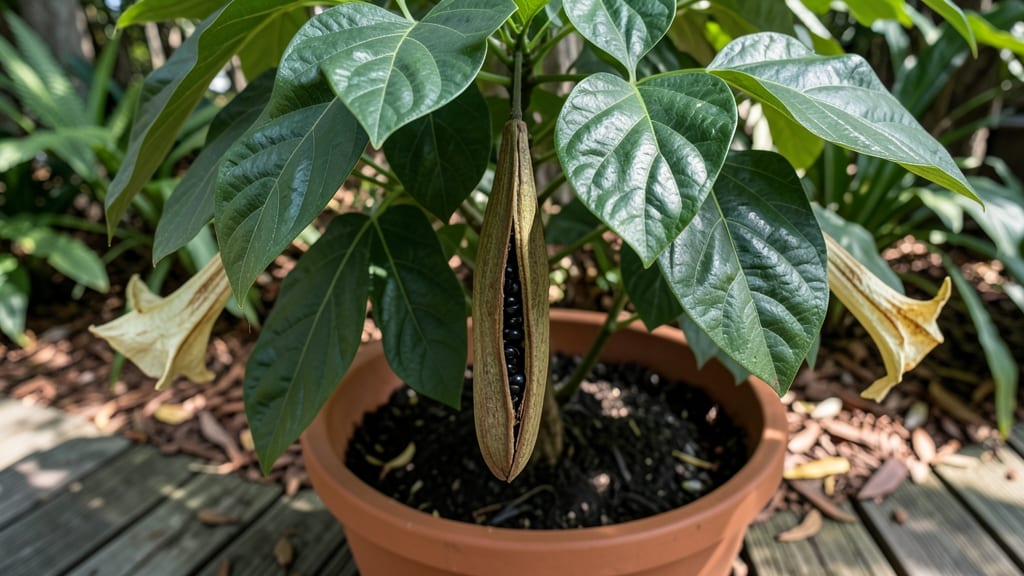
Harvesting angel trumpet seed pods means unlocking free, dramatic plants for your garden—if you know when and how to collect them. 🌿 These thick, papery pods turn from green to brown when ready, and one pod can yield dozens of seeds for next season’s jungle of blooms.
The key? Timing and gentle handling to avoid wasting viable seeds.
You’ll need a pair of pruning shears, a paper bag for collecting pods, and a dry, shaded spot for processing. Safety first: wear gloves—every part of the angel trumpet is toxic, including the seeds.
Once you spot mature pods (they’ll rattle when shaken), snip them carefully and let them dry indoors for a week before cracking them open.
After drying, you’ll see flat, papery seeds inside. Plant them in well-draining soil, barely covering them, and keep them warm (70-75°F) for germination. It can take 4-8 weeks—patience is key.
These seeds store well for up to a year if kept dry and cool, so you’ll never need to buy plants again.
Even experienced gardeners struggle with angel trumpet seeds—low germination rates are normal. The trick is consistency: keep soil moist but not soggy, and avoid disturbing seedlings once they sprout. With the right approach, you’ll soon have your own thriving collection of these stunning, fragrant plants.
📚 In This Guide
- What you need
- Instructions
- Tips and common mistakes
- Wrapping up and next steps
What you need
- ● Mature angel trumpet seed pods – 5–10 fully ripened pods (brown, dry, and slightly papery to the touch). Pro tip: 🌡️ Harvest when pods split open naturally or after a light frost for optimal seed viability.
- ● Sharp pruning shears or scissors – For cleanly snipping pods from the stem (sterilize blades with rubbing alcohol for hygiene).
- ● Paper towels or newspaper – 2–3 sheets to line a tray or workspace and catch seeds.
- ○ Damp paper towels or seed-starting mix – For short-term seed storage (optional but recommended for freshness).
- ● Small breathable bags (paper or mesh) – 1–2 bags to store dried seeds in a cool, dark place.
- ● Gloves (nitrile or gardening) – Protects hands from mild irritants in the plant sap.
- ● Fine-mesh strainer or sifter – Helps separate seeds from chaff if pods are overly fibrous.
- ● Labeling tags & permanent marker – To mark seed bags with the harvest date and variety.
- ● Spray bottle with water – For lightly misting seeds if storing in damp paper towels.
- ● Seed tray or small pots – If you’re ready to germinate seeds immediately (6–8" pots work well).
- ● Work in a well-ventilated area – Angel trumpet contains mild toxins; avoid inhaling dust or sap.
- ● Wash hands thoroughly after handling seeds or pods.
- ● Check local regulations – Some regions restrict Brugmansia due to its psychoactive properties; verify legality before planting.
How to harvest angel trumpet seed pods for future growth
Angel trumpet seed pods contain the future of your garden—here’s how to collect them without stress.
🌿 Step 1: Identify Mature Seed Pods
Wait until the seed pods turn a deep brown color and begin splitting open naturally—this usually happens in late summer or early fall. The pods should feel dry to the touch and rattle slightly when shaken. If you harvest too early, the seeds won’t be fully developed.
Gently twist the pods off the stem, being careful not to damage the plant. I like to work on a dry day when the pods are fully mature, as humidity can encourage mold growth. Collect pods in a paper bag to let them dry further before processing.
💧 Step 2: Dry and Clean the Seeds
Spread the collected pods on a clean, dry surface in a well-ventilated area for 3-5 days to ensure they’re completely dry. You’ll know they’re ready when the pods crumble easily between your fingers. Avoid direct sunlight, which can overheat the seeds and reduce viability.
Once dry, open the pods carefully and separate the seeds from the chaff. I use a small sieve or fine mesh screen to sift out debris while keeping the seeds intact. Store the clean seeds in a labeled paper envelope in a cool, dark place until ready to plant.
⏰ Step 3: Store Seeds Properly for Long-Term Viability
Angel trumpet seeds can remain viable for 2-3 years if stored correctly. Place the seeds in an airtight container with a desiccant packet to absorb moisture. I like to add a silica gel packet to keep humidity low—this prevents mold and extends shelf life.
Label the container with the date and variety to track freshness. Store it in a refrigerator or cool basement where temperatures stay between 40-50°F. Check periodically for signs of pests or moisture buildup, which can compromise seed quality.
🌱 Step 4: Prepare Seeds for Planting Next Season
Before sowing, soak the seeds in lukewarm water for 12-24 hours to soften the outer coating and speed up germination. This step is especially helpful if you’re starting seeds indoors in early spring. After soaking, plant them ¼ inch deep in well-draining soil.
Keep the soil consistently moist but not soggy, and place the containers in a warm, bright spot. Germination can take 2-4 weeks, so patience is key. Once seedlings emerge, provide bright, indirect light to prevent leggy growth.
Tips & tricks for perfect angel trumpet seed pod harvesting
Here's what nobody tells you about making sure your angel trumpet seeds stay viable and ready for next season.
Timing Secret: The 3-5 day drying period in Step 2 is non-negotiable—this is when the seeds fully mature and harden. I've learned the hard way that rushing this step leads to moldy seeds. Place your pods on a screen or wire rack in a breezy spot to speed up drying while preventing direct sunlight exposure. A small fan on low can help circulate air without disturbing the pods.
Storage Wisdom: For that 2-3 year viability window mentioned in Step 3, don't just toss seeds in any container. I use glass jars with tight-sealing lids—they're reusable and create an airtight seal better than plastic bags. Place the jar in the back of your fridge where it's consistently cool (40-50°F) and dark. The silica gel packet is your best friend here; replace it every 6 months to maintain dry conditions.
Make-Ahead Move: You can actually prep your seeds for planting up to 2 weeks in advance by completing all steps through Step 3. Store the dried, cleaned seeds in your labeled envelope in the refrigerator until planting season. This way, when spring arrives, you're ready to soak and plant immediately without last-minute prep. Just remember to bring them to room temperature before soaking to prevent temperature shock.
Visual Cues: In Step 4, when soaking your seeds for 12-24 hours, you'll know they're ready when they look plump and slightly swollen. If they float to the top, they're not viable—discard those immediately. For the planting depth of ¼ inch, think of a standard pencil's lead thickness—that's your perfect guideline. Press gently but firmly to ensure good soil contact without burying too deeply.
Pro Tips for Angel Trumpet Seed Pod
- Here's what nobody tells you about making sure your angel trumpet seeds stay viable and ready for next season.
- Timing Secret: The 3-5 day drying period in Step 2 is non-negotiable—this is when the seeds fully mature and harden. ...
- Storage Wisdom: For that 2-3 year viability window mentioned in Step 3, don't just toss seeds in any container. I use...
Frequently asked questions
Got questions about harvesting angel trumpet seed pods? You’re not alone! Here are some of the most common concerns—and their answers—to help you stress-free through the process.
When is the best time to harvest angel trumpet seed pods?
The ideal time is late summer to early fall, once the pods turn light brown and start splitting open. Harvest them before seeds scatter naturally—typically 4-6 weeks after flowering. Morning harvests prevent humidity-related mold risks.
How do I tell if the seeds inside are still viable?
Viable seeds should be plump, dark brown, and slightly wrinkled. Test them by placing a few in a jar of water: if they sink, they’re likely good. Avoid hollow or shriveled seeds—they won’t sprout. Store viable seeds in a cool, dry place for up to 2 years.
What should I do if my pods are rotting before I can harvest?
Rotting pods usually mean excess moisture. Prune affected plants to improve airflow, and harvest pods immediately if rain is forecasted. If pods are already moldy, discard them—fungus can spread to healthy seeds. Use a fungicide spray as a preventative measure.
Can I use angel trumpet seed pods for anything other than planting?
Dried pods make unique decorations (e.g., wreaths, centerpieces) or even natural confetti for events. Just ensure they’re completely dry to avoid mold. Avoid consuming them—they’re toxic if ingested. For crafts, pair with non-toxic glue and seal with varnish.
What’s the easiest way to store harvested seeds long-term?
Store seeds in paper envelopes or airtight containers with a desiccant packet to absorb moisture. Label them with the harvest date and store in a cool, dark place (like a fridge). Test germination every 6-12 months to check viability. Pro tip: Freeze seeds for 24 hours before storage to kill pests!
Wrapping up and next steps
Harvesting angel trumpet seed pods doesn’t have to be a challenge—with the right timing, tools, and techniques, you can collect viable seeds effortlessly! Whether you're a seasoned gardener or a curious beginner, this process opens the door to growing more of these stunning, drought-tolerant plants. 🌿
Ready to take the next step? Start by monitoring your angel trumpets this season—watch for those telltale seed pods, and when they’re ripe, grab your pruners and follow the steps you’ve learned.
Before you know it, you’ll be sharing (or saving!) seeds to expand your garden’s beauty—and maybe even trade with fellow plant lovers!