
Plants
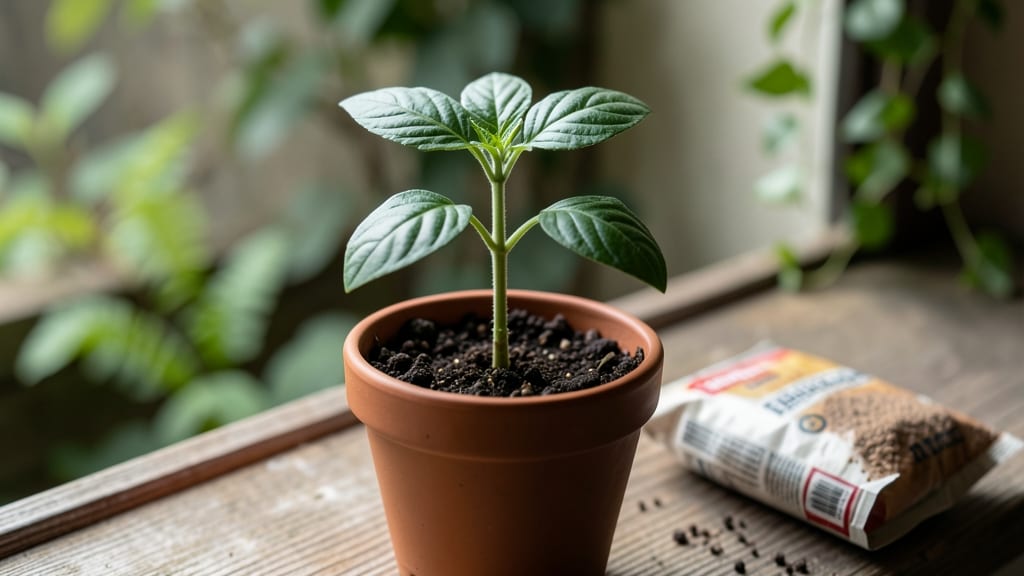
A jalapeño seedling's first leaves, called cotyledons, are smooth and oval-shaped, but don't mistake them for true leaves. 🌱 The real jalapeño identifiers appear when those first elongated leaves sprout—look for the characteristic serrated edges and waxy coating that distinguish them from other pepper varieties.
These leaves grow in pairs along the stem, creating a distinct zigzag pattern that's a dead giveaway for jalapeños.
What sets jalapeño seedlings apart from bell pepper seedlings is their leaf shape—jalapeños develop narrower, more pointed leaves with pronounced serrations, while bell peppers tend to have broader, smoother foliage.
The waxy texture also helps repel moisture, which is why healthy jalapeño seedlings maintain that glossy appearance even in humid conditions.
If you're growing from seeds, pay attention to these early stages—they're your best chance to catch problems like yellowing leaves or stunted growth before they become serious. Within just a few weeks, those tiny seedlings will start showing their true pepper personality through their distinctive leaf patterns.
💡 In This Article
- Identifying Jalapeño Seedling Stages by Leaf Morphology
- Common Mistakes When Recognizing Young Jalapeño Plants
Identifying jalapeño seedling stages by leaf morphology
The jalapeño seedling's journey begins with its cotyledons, the first leaves that emerge from the seed. These are typically oval-shaped, smooth-edged, and a lighter green than true leaves, measuring about 0.5 to 1 inch long.
Unlike true leaves, cotyledons lack the characteristic serrations and waxy coating, making them appear almost delicate and paper-thin. 🌱 This stage lasts only a few days before the real jalapeño identifiers appear.
Within 7 to 14 days after germination, the first true leaves sprout, marking a dramatic shift in appearance. These leaves are narrower and elongated, with deep green coloration and serrated edges that resemble tiny, jagged teeth.
The waxy texture, a hallmark of mature jalapeño plants, starts developing here, giving the leaves a slight sheen that helps repel moisture. Unlike bell pepper seedlings, which tend to have broader, smoother leaves, jalapeños develop a zigzag pattern as the leaves grow alternately along the stem.
The leaf arrangement is another key identifier. Jalapeño seedlings exhibit alternate phyllotaxy, meaning each leaf grows at a different height along the stem, creating a spiral pattern. This contrasts with some weeds or other pepper varieties, which may have opposite or whorled leaf arrangements.
The pointed tips of the leaves further distinguish them from rounder-leaved plants like tomatoes or basil.
As the seedling matures, the leaves become more pronounced in shape and texture, with serrations growing sharper and the waxy coating becoming more noticeable.
By 3 to 4 weeks, the plant will resemble a miniature jalapeño, complete with small buds forming at the leaf axils (the angle between the leaf and stem). This is where early flowering cues begin to appear, signaling the transition from seedling to young plant.
One fascinating detail is how the leaf shape evolves—early true leaves are narrower and more lance-shaped, while later leaves become broader but retain their serrated edges. This progression is driven by the plant's hormonal changes, particularly the increase in gibberellins, which promote leaf expansion and differentiation.
The waxy coating, meanwhile, is a natural defense mechanism against fungal infections and excessive moisture loss, a trait jalapeños share with other members of the Capsicum family.
To verify authenticity, compare your seedlings to known jalapeño plants or reference images. Look for the combination of serrated edges, waxy texture, and alternate leaf arrangement—these are the hallmarks of a true jalapeño seedling.
If the leaves appear too smooth or lack the characteristic shape, it might be a different pepper variety or even a weed.
Understanding these stages helps gardeners catch issues early, such as nutrient deficiencies (yellowing leaves) or pest damage (irregular edges). With patience, those tiny cotyledons will transform into a thriving jalapeño plant, ready to produce the fiery peppers you know and love! 🌿