
Plants
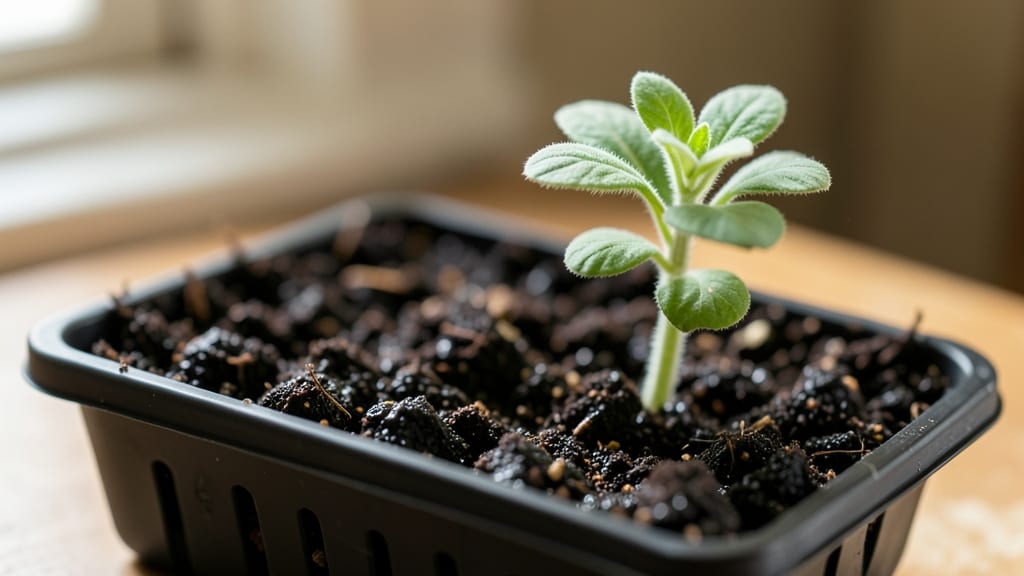
Quinoa seedlings look like tiny round cotyledons with a soft, slightly fuzzy texture when they first emerge, gradually transforming into oval-shaped true leaves along a slender, upright stem that reaches about 1-3 inches in early growth. Their bright green color helps them stand out against weeds.
Quinoa's early growth stages are fascinating to watch—those first leaves, called cotyledons, are actually the seed's stored nutrients unfolding. 🌱 Within days, you'll notice the true leaves emerging, which are more elongated and serrated along the edges.
The seedlings' vibrant green color isn't just pretty; it's nature's way of maximizing photosynthesis while they're still small and vulnerable. I've found that keeping them in well-draining soil with consistent moisture helps them develop these distinctive features faster, making them easier to identify among other plants in your garden.
What's particularly helpful is understanding how these seedlings compare to common weeds. For example, lambsquarters often have broader leaves with a slightly waxy texture, while pigweed grows more aggressively with a reddish stem. Knowing these differences saves time during thinning, ensuring your quinoa gets the space it needs to thrive.
If you're growing quinoa from seed, pay special attention to the first 1-2 weeks of growth—the cotyledon stage is when they're most delicate. Proper spacing (about 1 inch apart) at this early phase prevents competition for nutrients and helps each plant develop its signature oval leaves more uniformly.
💡 In This Article
- Identifying Quinoa Seedling Stages by Leaf Shape and Growth Patterns
- Quinoa Seedling vs. Common Weed Look-Alikes: Visual Comparison Guide
Identifying quinoa seedling stages by leaf shape and growth patterns
Quinoa seedlings undergo two distinct leaf phases that serve as clear markers in their early development. The first leaves you'll see are cotyledons—those tiny, round seed leaves that emerge within 3-7 days after planting.
These initial leaves are about 0.25-0.5 inches wide and have a delicate, almost fuzzy texture due to fine trichomes (hair-like structures) that help conserve moisture in dry conditions. Their bright green color comes from high chlorophyll content, which is essential for capturing sunlight while the plant's root system establishes itself.
The transition to true leaves happens about 7-14 days after germination, when you'll notice slender stems elongating to 1-3 inches tall. These true leaves are oval-shaped with slightly serrated edges and grow alternately along the stem, creating a zigzag pattern.
What's fascinating is how the leaf arrangement follows a 1/2 phyllotaxis—meaning each new leaf emerges at a 180-degree angle from the previous one—this maximizes sunlight exposure for each leaf.
The stem itself remains surprisingly delicate at this stage, often just 1/8-inch thick, making it vulnerable to breakage if handled roughly.
Environmental conditions dramatically influence these growth patterns. Quinoa seedlings thrive in 60-75°F temperatures with 12-16 hours of daylight, which accelerates their development.
In cooler conditions (50°F), seedlings may take 10-14 days longer to reach the true leaf stage, while excessive heat (> 85°F) can cause the cotyledons to yellow prematurely.
Moisture plays a crucial role too—seedlings need consistently damp (not soggy) soil to prevent stress, as their shallow root systems can't access deep water sources yet. 🌱 The combination of these factors explains why quinoa seedlings in optimal conditions can grow 0.5 inches per week during this early phase.
What most gardeners don't realize is how the leaf shape changes subtly as the plant matures. Early true leaves are more rounded, while later leaves become progressively more lance-shaped with more pronounced serrations. This progression helps distinguish young quinoa from weeds that maintain consistent leaf shapes.
The stem also develops a slight reddish tint near the base in some varieties, which can be a helpful identification marker when comparing seedlings side by-side in your garden beds.
For accurate identification, focus on these three key characteristics: the cotyledon's fuzzy texture, the zigzag leaf arrangement on the stem, and the 1-3 inch height range during early growth. These features create a distinctive "signature" that sets quinoa apart from other crops.
In my experience working with organic farms, paying attention to these details during the first 3 weeks of growth makes weed management significantly easier later in the season.
Here's what to watch for when monitoring your seedlings:
- Week 1: Cotyledons fully unfurled, stem 0.5-1 inch tall, fuzzy texture visible under magnification
- Week 2: First true leaves emerge, stem reaches 1-2 inches, serrated edges become visible
- Week 3: Stem elongates to 2-3 inches, leaf arrangement shows clear 180-degree pattern
The vibrant green color isn't just aesthetic—it's a biological adaptation that maximizes photosynthesis efficiency during this critical growth phase when the plant is establishing its root system and preparing for rapid stem elongation. 💚