
Succulent
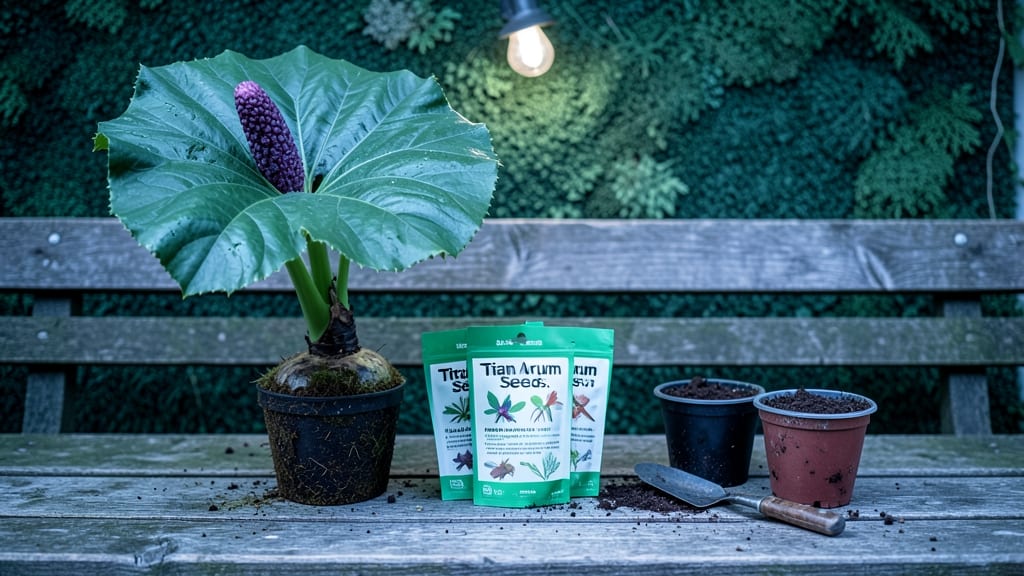
Finding titan arum seeds for sale is challenging due to their extreme rarity, but these exotic bloomers are worth the effort for collectors seeking a showstopping plant. Legal acquisition demands patience and research through specialized nurseries or seed banks that handle permits.
These seeds are prized for producing the corpse flower, a plant famous for its massive, foul-smelling bloom that appears only once every 7-10 years. 🌿 The difficulty in sourcing stems from strict international regulations—many countries classify titan arum as endangered or protected species.
I recommend starting with reputable suppliers like Kew Gardens or verified rare plant auctions, where seeds are often accompanied by germination instructions. Success rates improve when you mimic tropical forest conditions, including warm temperatures and high humidity during the early growth stages.
Growing from seed requires 3-6 months of stratification before germination, and even then, survival rates are low. That’s why many collectors opt to purchase mature plants instead—but the thrill of nurturing one from seed makes it a rewarding challenge for dedicated plant enthusiasts.
💡 In This Article
- Why Titan Arum Seeds Are So Hard to Find
- Legal Sources for Titan Arum Seeds and Germination Tips
Why titan arum seeds are so hard to find
The titan arum (Amorphophallus titanum), also known as the corpse flower, is one of the most sought-after plants in the world—but its seeds are notoriously difficult to obtain.
The primary challenge lies in its extremely slow growth rate: from seed to first bloom, it can take 7-10 years under ideal conditions. Unlike fast-growing annuals, titan arum seeds require precise environmental cues to germinate, including warmth (75-85°F) and high humidity, mimicking its native Indonesian rainforest habitat. 🌱
Legal restrictions further complicate sourcing. Many countries classify titan arum as endangered or protected under the Convention on International Trade in Endangered Species (CITES). Even seeds collected from cultivated plants often require special permits for international shipment.
Availability fluctuates wildly—some years, only a handful of seeds are legally released, while other years, none at all. Wild-collected seeds are nearly impossible to find due to habitat destruction and illegal poaching in Sumatra, where the plant originates.
Botanical hurdles add to the scarcity. Titan arum seeds have a short viability window—they lose viability within 2-3 weeks if not stored under controlled conditions (high humidity, 60-70°F). The seeds also contain a natural germination inhibitor that must be broken through soaking or scarification.
Without proper preparation, even viable seeds may fail to sprout, leading to frustration for collectors. 🌿
Another layer of complexity is the plant's unpredictable flowering cycle. Once mature, titan arum blooms only once every 7-10 years, making seed production sporadic.
Nurseries that do offer seeds often prioritize selling mature plants (which bloom faster) over seeds, since the latter require years of patience and specialized care. This creates a supply-demand imbalance, driving up prices for the rare batches that do become available.
For context, compare this to more common houseplants like monstera or pothos, which produce seeds easily and grow rapidly. Titan arum seeds are 10-20 times rarer than those of typical tropical plants, and their cultivation success rate hovers around 30-50%—even for experienced growers.
This combination of legal, botanical, and logistical challenges explains why titan arum seeds are treated like botanical gold. ✨
If you're considering growing one, be prepared for a decade-long commitment. The reward—a 10-foot-tall plant with a 3-foot-wide bloom that smells like rotting meat to attract flies—is unmatched, but the journey demands dedication, research, and often a bit of luck. 💫