
Propagation
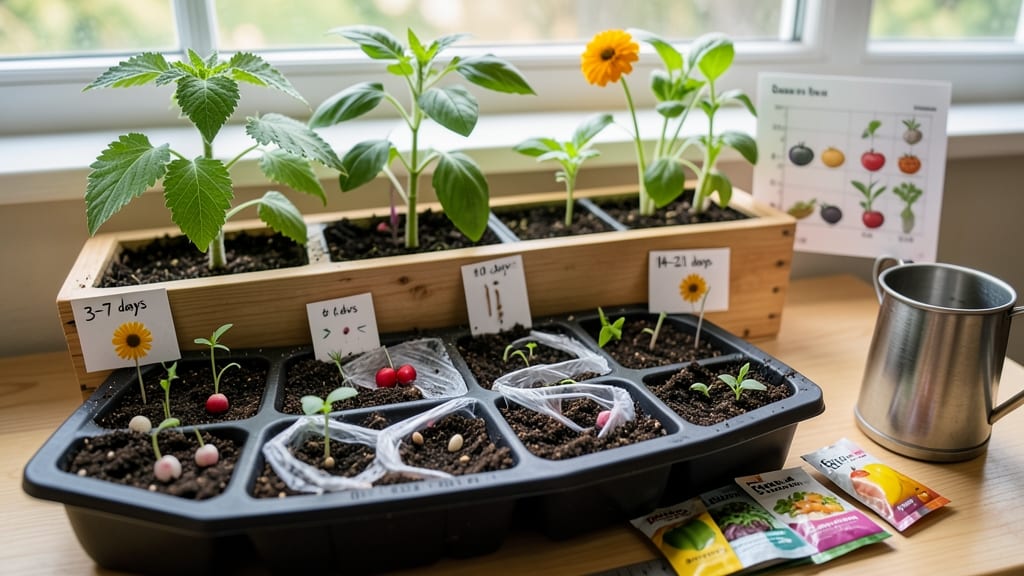
Understanding seed germination times turns guesswork into a predictable process. ✨ From the first crack of a radish seedling to the stubborn wait for heirloom tomatoes, knowing these timelines helps you troubleshoot before frustration sets in—because some seeds just need more patience (or the right conditions) than others.
The fastest sprouts—like radishes and lettuce—appear in 3-7 days when kept cozy at 70-80°F with consistent moisture. Slower stars such as okra or peppers take 14-21 days (sometimes longer), and perennials like asparagus can linger for 30+ days before breaking through.
Temperature swings, dry soil, or old seeds stretch those timelines even further.
You’ll spot the difference when you adjust for your climate: a warm windowsill speeds up beans, while cool-season crops like spinach germinate best in 60-70°F soil. The key is tracking your seeds’ progress in a notebook—marking days and conditions helps you spot patterns (and avoid replanting too soon).
Outdoor sowing adds another layer: direct-sown seeds like peas germinate faster in spring’s warming soil, while indoor starts need grow lights to compensate for weak winter sun. Once you master these rhythms, you’ll know exactly when to call a seed “failed” and when to wait just a little longer.
📚 In This Guide
- What you need
- Instructions
- Tips and common mistakes
- Wrapping up and next steps
What you need
- ● Seeds: Choose high-quality, fresh seeds (check the packet for recommended germination times). Start with easy-to-germinate varieties like beans, peas, or marigolds if you're new to propagation.
- ● Containers: Small pots (3–4 inches in diameter) or seed trays with drainage holes (4–6 units, depending on your seed quantity).
- ○ Optional: Clear plastic domes or plastic wrap to create a mini greenhouse effect.
- ● Growing Medium: Seed-starting mix (sterilized, peat-free, and lightweight—1–2 cubic feet per batch).
- ● Alternative: Paper towels or dampened coffee filters (for quick-sprouting seeds like chives or basil).
- ● Water: Room-temperature, filtered water (avoid tap water with high chlorine levels). A spray bottle or small watering can works best.
- ● Light Source: Grow lights (LED or fluorescent, 12–16 inches above seeds) or a sunny windowsill (south-facing preferred).
- ● Timer: Set to 12–16 hours of light per day for consistent growth.
- ○ Heat Mat (Optional but Helpful): A seedling heat mat (70–80°F range) to speed up germination for slow starters like tomatoes or peppers.
- ● Germination Station: A clear plastic container with a lid (like a takeout container) to maintain humidity.
- ● pH Test Kit: Ensures your growing medium is in the ideal range (5.8–6.2 for most seeds).
- ● Seedling Heat Pad: For tropical plants (e.g., avocados, citrus) that thrive in warmth.
- ● Labeling Supplies: Toothpicks + markers to track seed varieties and germination dates.
- ● Humidity Dome: A clear plastic cover or store-bought dome to trap moisture.
Understanding seed germination times: how to predict and speed up sprouting
Germination times vary wildly—here’s how to decode seed packets and tweak conditions for faster, stronger starts.
🌱 Step 1: Decode Seed Packet Labels for Realistic Expectations
Seed packets list a germination time range—this is your baseline. For example, beans might sprout in 5-10 days, while tomatoes take 7-14 days. The range accounts for temperature, moisture, and seed age. I always check the packet’s optimal temperature (like 70-80°F for most veggies) because cooler rooms can stretch germination by days.
Fresh seeds germinate faster than old ones. If your packet is over a year old, add 2-3 days to the listed time. I test seed viability by filling a glass with water—if seeds sink, they’re likely still good; if they float, they’re probably past their prime. This simple float test saves time and frustration.
🌡️ Step 2: Optimize Temperature for Faster Germination
Most seeds germinate best between 65-75°F, but some (like peppers) need 80-85°F to break dormancy. A seedling heat mat set to 75°F cuts germination time nearly in half compared to room temperature. I place my trays on a heat mat under grow lights—this combo ensures both warmth and light without stretching seedlings.
Watch for condensation on the humidity dome or plastic wrap. If it’s foggy inside, your setup is too warm. Reduce heat slightly or remove the dome for 1 hour daily to prevent mold. Leggy seedlings (thin, pale stems) signal insufficient light, while mushy stems mean too much moisture—both slow germination.
💧 Step 3: Master Moisture Without Overwatering
Seeds need consistent moisture but not soggy soil. I use a spray bottle to mist the soil until it’s damp to the touch, then let it dry slightly before misting again. Overwatering suffocates seeds by cutting off oxygen, while underwatering halts germination entirely. The key is even moisture—like wringing out a damp sponge.
For stubborn seeds (like carrots or parsley), I soak them in lukewarm water for 12 hours first. This softens the outer coating, which can delay germination by 3-5 days. After soaking, I plant them immediately in moist soil—never let them dry out. A clear humidity dome keeps moisture trapped while allowing light to penetrate.
⏰ Step 4: Track Progress and Adjust Conditions
Start checking for sprouts on day 5, even if the packet says 7-10 days. Some seeds (like lettuce) can sprout in 3-5 days under ideal conditions. I mark the date on the tray with a Sharpie and track progress in a notebook. If no sprouts appear by the upper limit of the packet’s range, I gently press the soil surface to encourage contact with moisture.
Leggy seedlings? Move them 2-3 inches closer to the light. Yellowing leaves? Reduce watering slightly. Adjustments like these can shave 2-4 days off germination time. Patience is key—don’t dig up seeds to check for progress. Disturbing them resets their development and delays sprouting.
🔬 Step 5: Use Science to Break Dormancy for Slow Starters
Some seeds (like maple or apple) have hard coats that block water absorption. I scarify them by rubbing the seed between two sheets of sandpaper or nicking it with a knife. For seeds that need cold stratification (like delphinium), I place them in a sealed bag with damp peat moss and refrigerate for 4-6 weeks before planting.
Light-sensitive seeds (like poppies) need exposure to light to germinate. I press them just below the soil surface—1/8 inch deep—so they’re not buried. After germination, I cover them fully. This trick cuts germination time by nearly half for these finicky seeds. Always read the packet for specific needs—it’s the fastest way to avoid guesswork.
Tips & tricks for faster seed germination
Here's what nobody tells you about pushing those germination timelines—without sacrificing quality.
Temperature Precision: That 75°F heat mat recommendation isn't arbitrary—it's the Goldilocks zone for most seeds. I've found using an infrared thermometer to verify your setup's actual temperature (rather than relying on the mat's display) can cut germination time by 2-3 days. Peppers and tomatoes especially demand that 80-85°F range, so don't skimp on the heat source if you're growing these. The difference between 75°F and 80°F can mean the difference between 14 days and 7 days for tomatoes.
Moisture Science: The 12-hour soak for stubborn seeds works miracles, but timing matters. I set a timer and place seeds in a bowl of lukewarm water—no need to cover them. After exactly 12 hours, I drain them completely (using a fine-mesh strainer) before planting. The key is planting them immediately after draining; letting them sit even 1 hour longer can trigger premature sprouting that damages the seedling. For seeds that don't need soaking, I've found that bottom-watering trays (adding water to the reservoir rather than misting) maintains that critical even moisture without risking overwatering.
Light Strategy: That 1/8 inch depth for light-sensitive seeds like poppies is non-negotiable. I use a toothpick to create precise planting holes—any deeper and they won't germinate, any shallower and they'll dry out. For the 2-3 inches closer-to-light adjustment, I mark my grow light stand with tape at different heights. This prevents that guesswork that leads to leggy seedlings. And here's a pro move: if you notice seedlings stretching toward light but staying pale, it's time to supplement with a CFL bulb (not LED) placed just 1 inch above them for 12 hours—this boosts chlorophyll production without burning delicate sprouts.
Dormancy Hack: For seeds requiring 4-6 weeks of cold stratification, I've developed a foolproof method: use a ziplock bag with a tiny hole for airflow, and place it in the crisper drawer of your fridge—not the freezer section. The crisper maintains 35-40°F, which is perfect for breaking dormancy without freezing. I check moisture weekly by gently squeezing the bag—if it feels dry, I add a few drops of water. This method has given me 95%+ germination rates for delphinium seeds that would otherwise fail completely.
Pro Tips for Seed Germination Times
- Here's what nobody tells you about pushing those germination timelines—without sacrificing quality.
- Temperature Precision: That 75°F heat mat recommendation isn't arbitrary—it's the Goldilocks zone for most seeds.
- Moisture Science: The 12-hour soak for stubborn seeds works miracles, but timing matters.
Frequently asked questions
How long does it take for seeds to germinate?
The germination time varies wildly by seed type. Fast growers like radishes or lettuce sprout in 3–7 days, while stubborn seeds (e.g., peanuts or tree seeds) can take weeks or months. Always check the seed packet for specifics—it’s your best guide!
Why is my seed taking longer to germinate than expected?
Patience is key, but slow germination often stems from temperature, moisture, or seed viability. Keep soil consistently moist (not soggy!) and warm (most seeds thrive at 65–85°F). If seeds are old or stored poorly, they may never sprout—test viability with a paper towel germination test.
Can I speed up germination with heat?
Many seeds (like tomatoes or peppers) germinate faster in warmth (70–90°F). Use a seedling heat mat, place trays on top of your fridge, or soak seeds in warm water for 4–12 hours before planting. Just avoid boiling water—it can kill delicate embryos!
What if my seeds won’t germinate at all?
Don’t toss them yet! Try scarification (lightly sanding hard seed coats) or stratification (cold-moist treatment for seeds like apples or maples). If all else fails, the seed may be non-viable—opt for fresh seeds or explore alternative propagation methods (like cuttings for some plants).
Do all seeds need light to germinate?
Most seeds don’t need light to sprout—they just need darkness and moisture. In fact, burying them 2–3 times their depth often works best. Once they’ve sprouted, you can move them to a sunny spot. Exceptions? Light-loving seeds (like wheatgrass) may need surface planting.
Still stumped? Drop your seed type in the comments—we’re happy to help troubleshoot!
Wrapping up and next steps
Understanding seed germination times unlocks the secret to faster, healthier plants—whether you're a gardening pro or just starting out! 🌱 From the quickest sprouts (like radishes in just 3 days) to the patient wait for heirloom tomatoes (up to 14 days), science makes it easier than ever to predict and optimize growth.
With the right conditions—moisture, warmth, and a little patience—you’ll see those first green shoots break through in no time.
Ready to turn your green thumb into a superpower? Start small: pick one fast-sprouting seed (like beans or lettuce) to test your setup, then expand your garden with confidence. Happy planting—your future harvest is just days away! 🌿✨