
Propagation
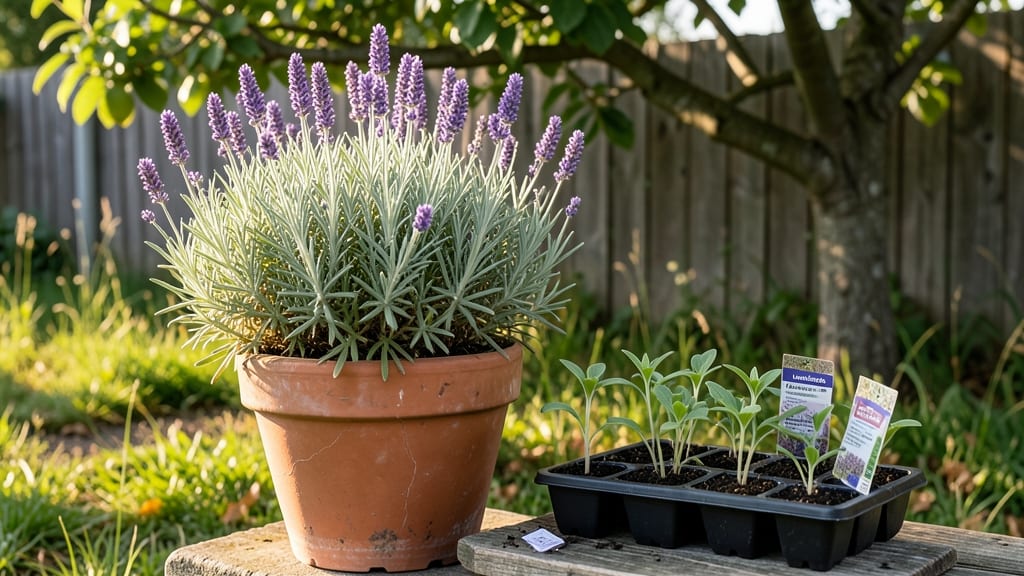
Growing lavender from seed is hard but doable with the right conditions: seeds need cold stratification, take 2-3 weeks to sprout, and require careful moisture control. Most gardeners choose cuttings instead for quicker, more predictable growth.
Lavender seeds are notoriously difficult to germinate because they naturally resist sprouting until they've undergone a cold period—this is called dormancy. 🌱 Without proper cold stratification (typically 4-6 weeks in the fridge), most seeds simply won't break through the soil.
Even when they do sprout, lavender seedlings are delicate and need precise care to survive their early stages. That's why experienced growers often recommend starting with cuttings instead—they establish roots in just a few weeks and mimic mature plants more closely.
What makes seed-starting even trickier is lavender's slow growth rate. Unlike fast-sprouting annuals, these seeds can take weeks just to crack the surface, and they're sensitive to both overwatering and drought.
Many gardeners give up after a few failed attempts, which is why propagation from cuttings remains the preferred method for most. If you're determined to try seeds, be prepared for patience and attention to detail—it's a rewarding challenge, but not for the faint of heart!
💡 In This Article
- Why Lavender Seeds Struggle to Germinate
- Best Alternatives to Growing Lavender from Seed
Why lavender seeds struggle to germinate
Lavender seeds enter a natural state called dormancy to survive harsh conditions. This means they won't sprout immediately even when planted in ideal soil. The key trigger is cold stratification—a process mimicking winter's chilling effect.
Without this 4-6 week cold treatment (typically in your fridge), most seeds remain dormant. 🌱 The science behind this is fascinating: lavender seeds produce a hard outer coating that only softens when exposed to consistent cold temperatures around 35-45°F.
Once stratified, seeds need precise conditions to break through dormancy. Light plays a crucial role—lavender seeds require bright, indirect light (like a south-facing window) to germinate properly. Direct sunlight can overheat the soil, while too little light results in leggy, weak seedlings.
The soil temperature should stay between 60-70°F during germination, which is why many growers use a seedling heat mat. Even then, germination rates average only 30-50%, with some varieties like English lavender being particularly finicky.
Moisture control is another critical factor that explains why so many attempts fail. Lavender seeds need consistently damp (not soggy) soil—think of a wrung-out sponge. Overwatering suffocates seeds by cutting off oxygen, while underwatering prevents them from absorbing moisture to swell and crack open.
The tiny seeds also struggle to compete with weeds, which is why many gardeners use seed-starting trays with fine mesh covers to maintain humidity while blocking debris. 💧
What most people don't realize is that lavender seeds contain abscisic acid, a natural growth inhibitor that prevents premature sprouting. This chemical breaks down during cold stratification, allowing germination hormones to take over.
The process is similar to how some tree seeds need fire to germinate—nature's way of ensuring plants only grow when conditions are favorable. This biological safeguard is why lavender seeds often fail when planted directly in the garden without proper preparation.
Even when seeds finally sprout, the real challenge begins. Lavender seedlings grow extremely slowly—often less than 1/4 inch per week—and are prone to damping-off disease if the soil stays too moist. Their delicate root systems make them vulnerable to transplant shock when moved to larger pots.
This is why many experienced growers recommend starting with cuttings instead: they bypass the germination phase entirely and grow at a much faster pace.
Consider these key factors when attempting seed germination:
- Cold stratification: 4-6 weeks in fridge at 35-45°F with moist paper towel
- Light requirements: Bright indirect light (12-16 hours daily)
- Soil temperature: Maintain 60-70°F during germination
- Moisture balance: Keep soil consistently damp but never waterlogged
- Patience: Germination can take 2-4 weeks after stratification