
Propagation
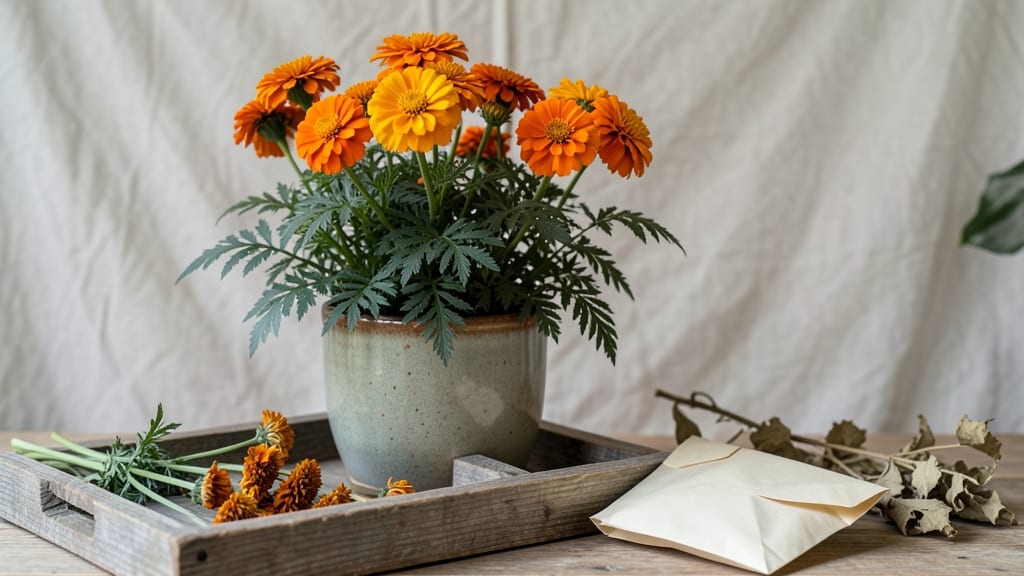
Storing marigold seeds properly means next spring’s garden starts with a head start. 🌻 I’ve saved seeds for years, and the key is keeping them dry, cool, and protected from light—just like a good winter nap.
The difference between viable seeds and dust is often just a few simple steps after harvest.
You’ll need clean, dry seed heads, an airtight container (paper envelopes or glass jars work best), and a dark, cool spot—think basement or fridge. Harvest seeds when the flower heads turn brown and papery, then let them dry completely before storing.
Moisture is the enemy here, so avoid plastic bags or damp conditions.
By spring, you’ll have seeds that germinate just as well as fresh ones, ready to plant for vibrant blooms all season. The best part? You’ll save money and ensure the marigolds you love return year after year. Just don’t forget to label your containers—nothing ruins gardening joy like mystery seeds!
Test a few seeds in early spring to confirm viability. If they sprout within 10–14 days, you’re golden. If not, try again or source fresh ones. Simple, reliable, and foolproof—just like marigolds themselves.
📚 In This Guide
- What you need
- Instructions
- Tips and common mistakes
- Wrapping up and next steps
What you need
- ● Marigold seeds: Fully mature, dry seeds harvested from healthy plants (aim for at least 1 teaspoon per variety if saving for multiple beds).
- ● Paper envelopes or seed packets: Small, breathable envelopes (e.g., 3x5-inch) to store seeds individually by variety. Label them clearly!
- ○ Air-tight containers: Small jars (e.g., 1-2 oz mason jars) or resealable plastic bags with silica gel packets (optional but helpful for humidity control).
- ○ Silica gel packets: 1-2 packets (optional, for extra dryness in containers).
- ● Pencil or permanent marker: For labeling seed packets/containers with the variety name and harvest date.
- ● Desiccant packets: Extra silica gel or uncooked rice (placed in a small cloth bag) to absorb moisture.
- ● Vacuum-seal bags: For long-term storage (up to 5 years) if you have a vacuum sealer.
- ● Small mesh bags: Breathable fabric bags (e.g., organza or cotton) to prevent mold in humid climates.
- ● Refrigerator or freezer: For extra-long storage (beyond 1 year), though most seeds thrive in room-temperature conditions.
- ● A cool, dark, and dry storage spot (e.g., a pantry, basement, or closet with 50-60°F temperatures).
- ● Patience! Let seeds fully dry for 7-10 days after harvest before storing to avoid mold.
- ● Knowledge of your marigold variety—some (like French marigolds) store better than others!
Step-by-step guide to storing marigold seeds long-term
Here's my foolproof method to keep marigold seeds fresh and ready for next spring—no fancy tools needed.
🌱 Step 1: Harvest Seeds at Peak Maturity
Wait until marigold flowers fade completely and form dry, papery seed heads—these look like tiny brown pom-poms. Gently twist the dried flower head between your fingers to release the seeds inside. Avoid harvesting when flowers are still vibrant or slightly wilted, as seeds won't be fully matured.
Spread the harvested seeds on a clean paper towel to dry for 24-48 hours in a warm, dry spot. This extra drying step prevents mold during storage. You'll know they're ready when they feel light and brittle—almost like tiny crunchy beads.
🪴 Step 2: Choose Storage Containers and Label Them
Use small, airtight containers like glass jars with tight lids or paper envelopes for storage. I prefer glass jars because they keep out moisture better than plastic, which can trap humidity. Label each container with the variety name and harvest year—marigold varieties like 'French' or 'African' have different colors and growth habits.
If using paper envelopes, place them in a cool, dry location like a pantry or seed drawer. For glass jars, store them in a dark cabinet—light exposure breaks down seed viability faster than you'd expect. I always write the date in pencil on the label, as ink can fade over time.
💧 Step 3: Control Moisture and Temperature
Seeds need low humidity to stay viable. Place a small silica gel packet (the kind that comes in shoe boxes) in each container to absorb any excess moisture. These packets are reusable—just dry them in the oven at 200°F for 1 hour once they turn pink.
Store seeds in a spot where temperatures stay consistent between 35-50°F. A refrigerator's crisper drawer works well, but avoid the freezer—temperature fluctuations damage seeds faster than cold alone. Check containers every 6 months to ensure the silica packets are still dry and effective.
⏰ Step 4: Test Viability Before Next Planting Season
About 2 months before your last frost date, test a few seeds to confirm they're still good. Place 10 seeds between two damp paper towels in a sealed plastic bag. Keep them in a warm spot (70-75°F) and check daily. Seeds should sprout within 7-14 days—if fewer than 50% germinate, consider buying fresh seeds for better success.
If germination is strong, your stored seeds are ready to plant. I like to sow marigolds 4-6 weeks before the last frost for early blooms. The key is patience—properly stored seeds can last 2-3 years, but their vigor decreases over time, so test them annually.
Tips & tricks for perfect marigold seed preservation
Here's what nobody tells you about keeping marigold seeds viable for years—these little details make all the difference.
Harvest Timing: Those 24-48 hours of drying after harvest are non-negotiable. I've learned this the hard way—seeds harvested too early (when flowers are still slightly green) won't germinate properly. Look for completely dried seed heads that crumble easily between your fingers. Place them on a paper towel in a single layer to prevent clumping, which traps moisture and encourages mold.
Container Selection: Glass jars with tight lids are your best bet for long-term storage, but if you're using paper envelopes, fold them tightly and seal with a bit of wax paper to create an extra moisture barrier. I've found that storing envelopes in a ziplock bag with a silica packet adds another layer of protection against humidity. The key is eliminating any air pockets that could introduce moisture during storage.
Temperature Consistency: Maintaining that 35-50°F range is crucial—your refrigerator's crisper drawer is perfect for this. I've noticed that seeds stored in basements or garages can suffer from temperature swings, especially in unheated spaces during winter. If you don't have a refrigerator option, consider a dedicated seed storage box in your coolest, most stable indoor space. Remember, seeds are living organisms that respond to their environment!
Silica Packet Refresh: Those reusable silica gel packets are a game-changer, but don't forget to refresh them! When they turn pink, simply dry them in your oven at 200°F for exactly one hour. I set a timer and check them every 30 minutes to ensure they don't overheat. A properly dried packet can be reused multiple times—just keep track of how many refresh cycles it's had.
Pro Tips for Store Marigold Seeds For Next Year
- Here's what nobody tells you about keeping marigold seeds viable for years—these little details make all the difference.
- Harvest Timing: Those 24-48 hours of drying after harvest are non-negotiable.
- Container Selection: Glass jars with tight lids are your best bet for long-term storage, but if you're using paper envelopes, fold them tightly and seal with a bit of wax paper to create an extra moisture barrier.
Frequently asked questions
about storing marigold seeds can save you time and frustration. Here are some common queries answered in simple terms:How long can I store marigold seeds before they lose viability?
Marigold seeds typically stay viable for 1–2 years if stored properly in cool, dry conditions. After that, germination rates may drop, but they can sometimes still sprout—just expect slower or less consistent growth. Test a few seeds each year to check viability!
When is the best time to harvest seeds from marigolds?
Harvest seeds once the flower heads turn brown and dry out, usually 6–8 weeks after blooming. Wait until the seed pods are crispy and split open naturally—this ensures full maturity. Avoid harvesting too early, or the seeds won’t store well.
Can I store marigold seeds in the fridge or freezer?
Yes! A refrigerator (35–40°F) or freezer (-4°F or lower) extends seed life by slowing moisture loss and decay. Place seeds in a sealed, airtight container with a desiccant (like silica gel) to prevent humidity buildup. Label and date them for easy tracking.
What if my stored seeds smell musty or moldy?
Musty or moldy seeds are a red flag—discard them immediately! This usually happens due to high humidity or poor airflow during storage. Always use dry, sterile containers and avoid plastic bags without ventilation. If you’re unsure, test a few seeds in damp paper towels to check for mold.
Are there alternatives to storing seeds if I don’t have a seed bank?
No seed bank? No problem! Store seeds in a cool, dark pantry (like a cupboard) in a sealed jar with rice or cat litter (as a natural desiccant). Avoid basements if they’re damp—consistent humidity ruins seeds faster. Just ensure the container is airtight and labeled!
Wrapping up and next steps
Storing marigold seeds for next year is simpler than you think—just keep them dry, cool, and dark! With the right preparation and storage methods, you’ll enjoy vibrant blooms season after season.
Whether you’re a seasoned gardener or just starting out, your patience will pay off with fresh, viable seeds ready to plant.
Now that you’re equipped with the know-how, grab those seeds and get storing! Next, why not explore how to plant them for the best results? Happy gardening! 🌱✨