
Propagation
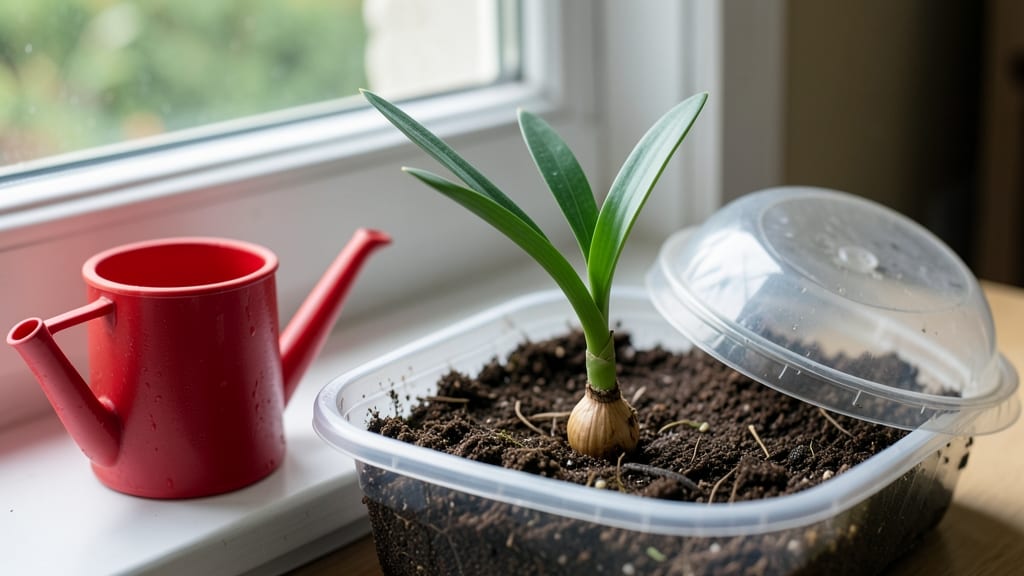
Growing amaryllis from seed takes 12 to 18 months to reach flowering size, with germination occurring in 4 to 12 weeks, followed by bulb development over 10 to 14 months before blooms appear. Patience and consistent care are key for successful cultivation.
Growing amaryllis from seed is a marathon, not a sprint. 🌱 The long wait comes from nature's design—these seeds need time to develop sturdy bulbs before they can support those iconic blooms.
Most growers start with store-bought bulbs because they flower in just 6-8 weeks, but seed-grown plants reward you with genetic diversity and hardiness. The first 4 weeks are critical: keep seeds in warmth (70-75°F) with consistent moisture, then transition to bright, indirect light as sprouts emerge.
What surprises many is that even after germination, the real work begins—the bulb needs 10-14 months of steady growth before it's ready to flower.
The secret to faster results lies in mimicking their natural habitat. 💫 Use a well-draining mix of peat moss and perlite, and avoid overwatering—soggy soil invites rot. I've found that moving seedlings to larger pots every 3-4 months gives roots the space they need to thicken.
The biggest mistake? Expecting speed—amaryllis seeds grow slowly because they're building a food reserve in that bulb, not just leaves. Think of it like saving for a big purchase: the longer you nurture the roots, the bigger the payoff when those first blooms finally appear.
💡 In This Article
- Amaryllis Seed Germination Science and Growth Phases
- Speeding Up Amaryllis Seed Growth: Pro Tips for Faster Blooms
Amaryllis seed germination science and growth phases
Amaryllis seeds enter a natural dormancy period that explains their slow start. The key trigger is temperature—seeds need consistent warmth between 70-75°F to break dormancy and begin metabolic activity. This warm environment activates enzymes that convert stored seed oils into sugars, fueling early root development.
Without this warmth, seeds may remain dormant for months, which is why many growers use heat mats or place trays on top of refrigerators to create ideal conditions. 🌱 The process mirrors how wild amaryllis seeds germinate during the warm, humid seasons in their native South African habitats.
Once germinated, amaryllis seedlings progress through three distinct growth phases. The first phase lasts 4-8 weeks and focuses on leaf development—tiny, grass-like shoots emerge first, followed by broader foliage as the plant establishes its photosynthetic capacity.
During this time, the seedling's primary goal is to build leaf surface area to capture sunlight, which powers the next critical phase: bulb formation.
This second phase spans 8-12 months and involves the plant redirecting energy from leaves to underground storage, thickening the bulb's scales where nutrients are stored for future blooms.
The final phase—flowering—only occurs when the bulb reaches 2-3 inches in diameter, a milestone that takes 10-14 months of steady growth. What's fascinating is how the plant prioritizes resources: during bulb development, you'll notice leaves yellowing and dying back as the plant shifts energy underground.
This might look alarming, but it's a normal part of the process. The bulb's scale layers act like a biological battery, storing starches that will later fuel the dramatic 18-inch flower stalks that amaryllis is famous for. 🌸
Comparing seed-grown amaryllis to bulb-grown plants reveals why the timeline differs so dramatically. Store-bought bulbs already contain years of stored energy, allowing them to flower in just 6-8 weeks with proper care. Seedlings, however, must build this energy reserve from scratch—a process that requires time, light, and consistent moisture.
Even with optimal conditions, some hybrid varieties may take up to 24 months to flower, as breeders often prioritize showy blooms over rapid bulb development.
One often-overlooked factor is light exposure during these phases. Seedlings need bright, indirect light (like a north-facing window) to prevent leggy growth, while maturing bulbs benefit from 6-8 hours of direct sunlight daily to maximize photosynthesis.
The transition between these light requirements is crucial—too much direct light too soon can scorch delicate seedlings, while insufficient light during bulb development results in weak, underdeveloped storage organs. 💡
Understanding these biological processes helps explain why amaryllis seeds take so long to flower. The plant's energy allocation strategy—prioritizing leaf growth first, then bulb development, then flowering—reflects an evolutionary adaptation to survive in unpredictable environments.
In cultivation, replicating these natural conditions (warmth, light progression, and gradual resource allocation) is how you coax seeds to mature into blooming plants. The patience required isn't just about time—it's about understanding and supporting each growth phase's unique needs.