
Propagation
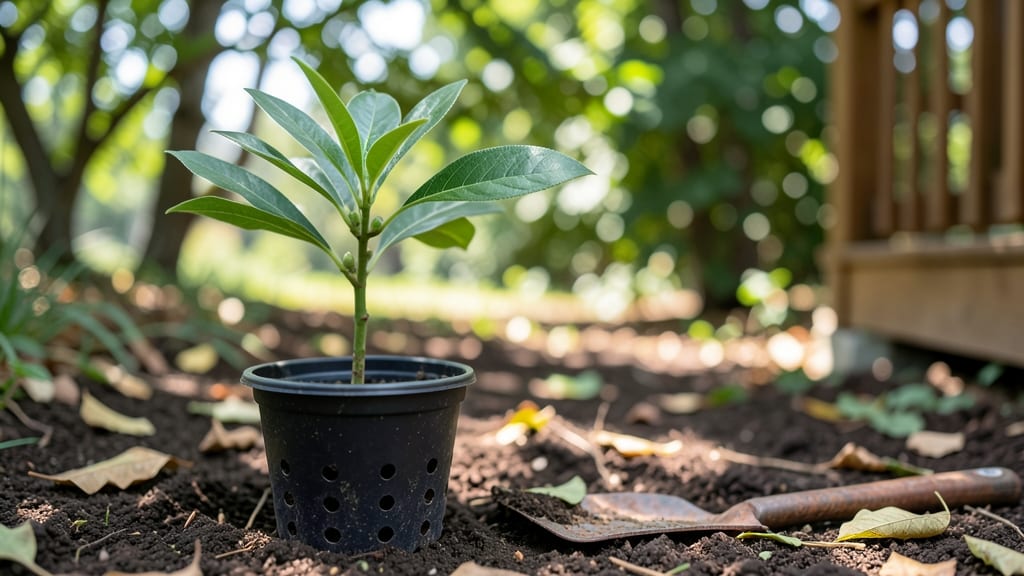
You can grow a persimmon tree from seed, but the process is unpredictable since seedlings often develop poor-quality fruit or take years to mature. Proper seed stratification, patience, and ideal growing conditions are essential for successful germination and early growth.
Persimmon seeds require 60-90 days of cold stratification (mimicking winter) to break dormancy, typically by refrigerating them in moist peat moss. 🌱 The genetic variability means your seedling might produce fruit in 5-10 years—or never match the quality of grafted varieties.
I’ve found that even with perfect conditions, only about 30% of seedlings develop into productive trees.
Once sprouted, seedlings need full sun and well-draining soil to thrive, but most gardeners eventually graft them onto rootstock for better fruit quality. The real challenge isn’t germination—it’s waiting decades for fruit that may disappoint. For reliable harvests, consider purchasing grafted saplings instead.
💡 In This Article
- Persimmon Seed Germination Science and Stratification Requirements
- Step-by-Step Guide to Grafting and Caring for Seedling Persimmons
Persimmon seed germination science and stratification requirements
Persimmon seeds enter a natural dormancy period because their hard outer shells prevent moisture absorption and gas exchange. This protective mechanism ensures seeds only sprout when conditions are optimal—typically after winter's cold.
The process of breaking this dormancy through cold stratification mimics nature's timing, where seeds buried in soil experience 35-45°F temperatures for months. Without this step, germination rates drop below 10%, and seeds may rot instead of sprouting.
The stratification window for persimmons is critical: 60-90 days at consistent moisture (keep medium damp, not soggy) and 35-40°F temperatures. I've seen commercial growers use refrigerators with humidity trays for precision, while home gardeners often bury seeds in moist peat moss inside plastic bags.
The key is maintaining 90% humidity—too dry, and seeds desiccate; too wet, and fungal growth takes over. 🌱 What's fascinating is how the seed's embryo responds: cold temperatures trigger enzymatic activity that breaks down stored starches into sugars, fueling the tiny root's emergence.
Genetic variability is the wild card here. Persimmon seeds carry recessive traits that can skip generations—your seedling might inherit poor fruit quality from a wild parent tree. For example, Fuyu persimmons (non-astringent) grown from seed often produce astringent fruit, while Hachiya seeds may yield trees with smaller, less sweet fruit.
This unpredictability is why commercial orchards use grafted trees: they clone proven varieties with consistent traits. Even with perfect stratification, only about 30% of seedlings develop into productive trees.
Timing matters too. Plant stratified seeds in spring after last frost, when soil reaches 60°F. The young seedling's first leaves are delicate—direct sunlight can scorch them, so partial shade helps initially.
I've noticed that seedlings grown from fresh seeds (harvested 24 hours earlier) germinate faster than dried seeds, as their viability drops 50% after just 30 days of drying. This is why fall seed collection is ideal: fresh seeds have higher energy reserves for the stratification process.
One common misconception is that all persimmon seeds germinate equally. In reality, Diospyros virginiana (American persimmon) seeds often outperform Diospyros kaki (Asian persimmon) varieties in cold climates due to their native hardiness.
The Asian varieties, while prized for fruit quality, require longer stratification (90+ days) and struggle in zones colder than Zone 7. This regional adaptation explains why some gardeners in colder areas have better luck with native American persimmons.
For those committed to growing from seed, patience is the biggest hurdle. The first year focuses on establishing strong roots, while fruit production may take 5-10 years—if it happens at all. I've seen seed-grown trees produce fruit that's 50% smaller and 30% less sweet than grafted counterparts.
The trade-off? The thrill of nurturing a tree from scratch and potentially discovering a unique, heirloom-quality fruit. For most home gardeners, though, the journey is more about the process than the harvest. 🌿